Get Full Government Meeting Transcripts, Videos, & Alerts Forever!
Get email alerts on the State Housing Legislation topic
No spam. Unsubscribe anytime.
Residents press Lafayette council to resist new state housing rules; council seeks legal briefing on transit-area and parking mandates
Summary
Dozens of residents urged Lafayette City Council on March 4 to resist House Bill 24-1313 and related state land‑use mandates; planning staff described technical deadlines and calculations and councilors asked staff to schedule a legal briefing focused on transit-area requirements and minimum-parking rules.
Dozens of residents urged Lafayette City Council on March 4 to resist state land-use changes they said would strip local home-rule authority and force denser development along transit corridors, and councilors directed staff to schedule a closed briefing with the city attorney to review legal options.
The public comment period focused on House Bill 24-1313, a new state law that requires cities to calculate a housing opportunity goal (HOG) tied to state-defined transit areas and to permit substantially greater zoning capacity near those corridors. Phil Pleiser of the city’s planning and building department told the council the city must submit a preliminary HOG assessment in June and that a final compliance pathway and potential funding opportunities follow in 2026–2028.
Why it matters: Lafayette staff said the state rules could require zoning capacity at an average of 40 dwelling units per acre inside designated transit areas unless exemptions apply. Public speakers warned that the change could overload water supplies, emergency services and transportation, and could accelerate displacement of lower-income residents and small businesses.
“the state's prohibition on growth management in 2023 also removed the city's ability to phase development predictably, limiting the city's control over the pace of housing construction after rezoning,” said Karen Norbeck, a Lafayette resident who spoke during public input about the bill’s implications for local home-rule authority. Several other residents described similar concerns about water, traffic and public safety.
Planning staff described how the HOG will be computed and the practical limits on the law. The staff estimate presented at the meeting shows Lafayette’s citywide housing stock at roughly 13,000 units and current zoning capacity in the primary transit area in the low thousands; a raw HOG calculation without exemptions initially produced a much larger number that staff said falls once state-defined exemptions (for example, mobile-home parks and certain public parcels) are removed. Pleiser said staff’s parcel‑by‑parcel review is well under way and that the numbers will be submitted to the state model when it is finalized.
Public concerns centered on three themes: water supply, municipal service capacity, and displacement. Several speakers connected water-supply limits to the state law’s pace of development and urged council to use water analyses and infrastructure limits to oppose or condition proposals. Resident Steve Soller told councilors, “Take back your power and authority over our city. Take up the banner of Home Rule and do not support House Bill 24-1313.” Others asked the council to coordinate with neighboring cities and pursue legal options if needed.
Council response and next steps
Councilors and staff agreed they needed legal advice about Lafayette’s home-rule authority and options for responding to the state laws. After discussion, council directed staff to schedule an executive session for legal counsel to brief councilors on land‑use authority and potential responses; councilors indicated they want the closed briefing to focus first on HB24-1313 (the transit-area/HOG obligations) and on the minimum-parking law the state passed for certain transit areas. No formal vote on litigation or noncompliance was taken at this meeting; the direction was a request for legal advice and policy discussion.
Key technical points staff presented
- Preliminary HOG and mapping: staff are using the state’s transit-area map and are running parcel-level exemptions (examples: mobile-home parks, public parcels) to compute Lafayette’s HOG. A draft HOG number will be supplied to the state in June. - Deadlines: staff said some implementing elements (ADU and minimum-parking ordinances) carry a June 30 compliance window; the transit-area/HOG process includes preliminary submittals in mid‑year and an implementation/compliance window through 2027–2028 for rezoning and other changes tied to funding eligibility. - Water analysis and deferral: the law includes a technical process by which a city can present a water‑supply analysis and request a reduced HOG or a temporary deferral (the statute offers a three‑year deferral pathway in certain circumstances), but staff noted that major water projects can require decades to plan and build.
What the public asked the council to do
Speakers requested the council: (a) publicly oppose or delay local implementation and seek coordination with other home‑rule cities; (b) require that resources and infrastructure be demonstrably in place before any rezoning permits are issued; and (c) explore litigation or coalition action if the city’s home‑rule authority is threatened. Several speakers pointed to Lafayette projects the city already supports — including Willoughby Corner and a recent mobile‑home park purchase — as evidence the city has taken action on housing and should retain land‑use control.
Limits and uncertainties
Staff cautioned that the state will use a standard model to calculate the HOG and that the city’s initial numbers may shift after the state review. Staff also noted that a “zoning capacity” requirement is not the same as immediate construction — zoning allows capacity, but actual building depends on market, financing and infrastructure. The state’s transit-area map and the ability to count “optional” areas affect the ultimate capacity calculation.
Next scheduled steps
Staff will complete the parcel‑level HOG work, review the state’s final guidance, and return to council with options. Council asked the city attorney to prepare a legal briefing (executive session) on home‑rule authority and the city’s options for responding to the transit‑area and parking mandates; staff said they will provide a timeline for the June submissions and bring draft code changes for ADUs and minimum parking where needed.
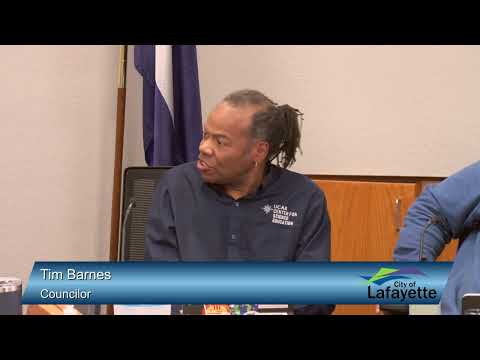
Speakers (selected): Karen Norbeck, resident; Steve Soller, resident; Twila Ryan, resident; Joe Polish, resident; Vicky Euland, resident; Cindy Lurie, resident; Seth White, resident; Phil Pleiser, Planning and Building (staff); City Attorney (staff); Mayor Mongat (presiding); Mayor Pro Tem Wong; Councilor Tim Barnes; Councilor Friedland; Councilor Sampson; Councilor Tapia Vega.
Ending
Councilors concluded the discussion by asking staff to continue the technical work on the HOG number and to schedule a council executive session with the city attorney on home‑rule and land‑use legal options. The city will submit preliminary HOG materials to the state on the schedule that staff outlined and will return to council with draft ordinance language and policy options for any required rezonings.