Get Full Government Meeting Transcripts, Videos, & Alerts Forever!
Get email alerts on the Community Conflict And Accountability topic
No spam. Unsubscribe anytime.
Champaign residents demand accountability over councilmember's swastika profile; activists press for Gaza ceasefire and divestment
Summary
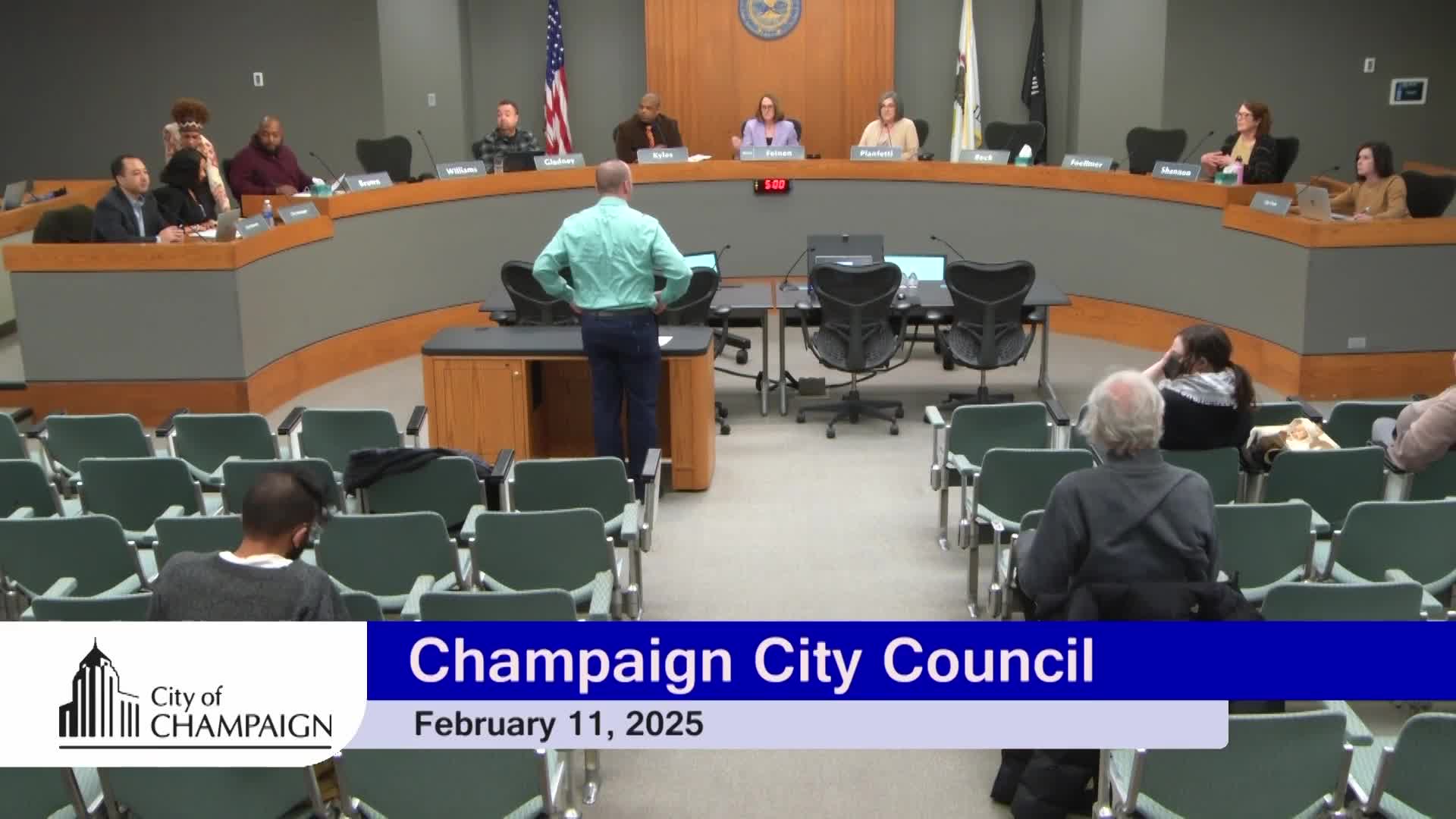
Several speakers at the Feb. 11 City Council study session renewed calls for accountability after Councilmember Davian Williams used a social‑media profile image that residents say displayed a swastika, and activists urged the council to consider a ceasefire and divestment resolution related to the conflict in Gaza.
Several speakers at the Feb. 11 City Council study session renewed calls for accountability after Councilmember Davian Williams used a social‑media profile image that residents say displayed a swastika, and activists urged the council to consider a ceasefire and divestment resolution related to the conflict in Gaza.
Eris Cohen, executive director of Hillel at the University of Illinois, told the council that Williams’ profile image "represents Nazi Germany" and said his statement that he "did not mean to cause harm" was "absurd," adding that the symbol is banned in Germany because of the hate it represents. Cohen invited council members and the public to local Holocaust education events and urged actions she said would repair community harms.
Speakers representing an interfaith coalition and campus advocacy groups urged the council to place a ceasefire resolution on the agenda and to adopt socially responsible investment policies. A commenter identified as Russian Christian said a petition asking the council to pass a ceasefire resolution now has "over 2,000 individuals and 48 local businesses and organizations" signed.
Multiple commenters, including Isabel Scott and Al Kagan, said Palestinian, Muslim and Arab residents in Champaign‑Urbana have felt alienated or threatened and criticized the council for not responding to their concerns. Scott said some constituents no longer feel comfortable attending meetings because of what she described as council silence on the conflict and its local impacts. Kagan urged donations to legal and humanitarian organizations if the council will not act immediately.
Gwyneth Crep, identified as a local nonprofit CEO, said public apologies alone are insufficient and urged a public forum and individualized meetings between the council member and affected groups as steps toward “repair and accountability.” Crep also suggested that Williams consider a temporary step back from voting or commenting while the community process proceeds.
Speakers repeatedly asked the City Council to put a ceasefire/divestment measure on a future agenda. No formal council action on those requests was taken during the study session; council members did not place an item on the meeting agenda or take votes on resolutions during the session.
City officials present did not announce disciplinary or removal options; several speakers acknowledged that councilors had limited mechanisms to remove an elected member and asked for restorative or accountability processes instead. Public commenters also provided event information and suggested community learning opportunities to address intercommunal harms.
Speakers and advocates referenced a range of outside organizations and aid groups when urging local action, and one speaker noted pending Illinois legislation (House Bill 2723) that would amend a 2015 law concerning public funding restrictions related to boycotts of Israel.