Get Full Government Meeting Transcripts, Videos, & Alerts Forever!
Get email alerts on the Weights And Measures topic
No spam. Unsubscribe anytime.
Lake County agricultural office summarizes 2023–24 weights and measures work, flags new device challenges
Summary
At a Lake County Board of Supervisors meeting, Agricultural Commissioner and Sealer of Weights and Measures Catherine VanderWaal and Deputy Sam Upton presented the office's 2023–24 fiscal-year activity, including inspections, consumer complaints, a newly acquired test truck and concerns about rapidly changing metering technology.
Catherine VanderWaal, Lake County agricultural commissioner and sealer of weights and measures, told the Lake County Board of Supervisors that her office's 2023–24 annual report documents routine inspections, consumer complaints and new challenges as metering technology shifts to digital platforms.
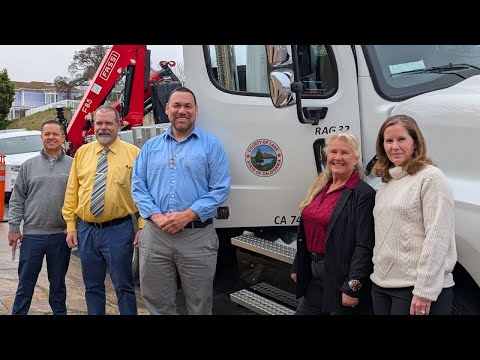
The report, presented during the board's meeting, covers the department's fiscal-year work because the office must submit its report to the state of California on a fiscal-year basis. VanderWaal said the office inspected business locations and commercial devices and responded to consumer complaints during the reporting period; the presentation also highlighted a new county weight-testing truck parked outside the meeting venue for board members to view.
Why it matters: weights and measures work affects everyday consumer transactions such as fuel dispensed at gas pumps, produce sold by the pound, propane deliveries and billing for submetered utilities. VanderWaal said the function is "one of those things that maybe a lot of people are not aware of, but it impacts every consumer almost every single day." That routine enforcement helps ensure consumers receive the quantities they pay for and businesses use devices appropriate and legal for commercial trade.
Key findings and activity - Fiscal-year 2023'1, the office reported inspecting 213 business locations, testing 889 commercial devices and responding to 17 consumer complaints, according to the presentation. The department uses a county device-registration ordinance (recently amended and approved by the board) to catalog commercial weighing and measuring devices. - Device types under the office's purview include gasoline pumps, point-of-sale and deli scales, large-capacity livestock and truck scales, propane and vapor meters, electric submeters, water fill stations and cannabis scales used in regulated "track-and-trace" processes. - Petroleum inspections include accuracy checks, fuel-quality sampling sent to the state lab, advertising and labeling reviews and searches for payment-card skimming devices. - The office inspects delivery meters such as propane delivery truck meters and submeters used in multiunit properties (for example, some mobile home parks and apartment complexes). VanderWaal said the county does not test meters owned by utilities such as PG&E or municipal water systems; those remain under other regulators.
Technology and regulatory challenges VanderWaal and Deputy Agricultural Commissioner Sam Upton told the board that rapidly evolving electric vehicle chargers and digital meters pose new testing and enforcement challenges. Many newer devices have remote-access features and manufacturers are introducing new models faster than the state can complete formal "type approval" testing for commercial use.
Sam Upton described a risk with some new digital devices: "Where it has the capability for somebody to access it and change, you know, from cubic feet for water meter, for example, to gallons and back and forth without, any way of preventing that from happening once we've checked it." VanderWaal said counties are often asked to evaluate devices in the field before the state finalizes type-approval standards: "For a commercial device to be in use, it has to be type approved by the state of California. So that's where we're seeing like a lot of these new devices that have not been fully vetted or type approved for use."
Price verification and enforcement practices Lake County currently does not have a formal price-verification ordinance; staff respond to price-related complaints rather than conducting a countywide random price-verification program. VanderWaal noted that, under California law, a posted sale price must be honored even if the sign is not removed, and that price-complaint inspections remain complaint-driven in Lake County.
Submetering and billing Board members asked about submeters for multiunit and accessory dwelling unit (ADU) situations. VanderWaal said the jurisdictional line can vary: the county inspects submeters it regulates, but meters and rates set or owned by utilities (for example, PG&E) or governed by the California Public Utilities Commission are regulated outside the county's direct authority. VanderWaal told a public questioner that many submeters the office inspects follow a 10-year reinspection interval.
Public comment and questions Julia Carrera of Upper Lake thanked staff for the presentation and asked for clarification about residential meter inspections. VanderWaal said the California Public Utilities Commission would handle certain residential or utility-controlled metering disputes. The board asked several technical and timing questions about inspection cycles; VanderWaal said inspections are ongoing through the year and staff try to schedule tests when devices are less active (for example, testing propane delivery trucks outside peak winter delivery season).
What the department will watch next The office will continue routine inspections, complaint responses and sampling, and has prioritized adapting to digital and remote-enabled devices that require updated standards and access protections. The presentation noted the department's recent purchase of a weight-testing truck to support field work.
"It allows us to get out there and test these devices," VanderWaal said, thanking the board for support in acquiring the vehicle.
No formal board action or vote was recorded on the presentation item.
Ending note: the presentation covered the fiscal-year report, technology concerns about new digital meters and ongoing consumer-protection work in Lake County.