Get Full Government Meeting Transcripts, Videos, & Alerts Forever!
Get email alerts on the Strategic Planning topic
No spam. Unsubscribe anytime.
Collier County to shrink public strategic-priority list from 57 to about 25 projects
Summary
County staff told commissioners at a workshop that Collier County will pare its public-facing priority project list to improve tracking and focus, moving many operational items back to individual departments while keeping the strategic plan’s vision and four focus areas unchanged.
Collier County officials said at a Board of County Commissioners workshop that they will shrink the county’s public priority-project list from 57 items to about 25 for 2025, while keeping the county’s overarching strategic plan, mission, vision and four focus areas unchanged.
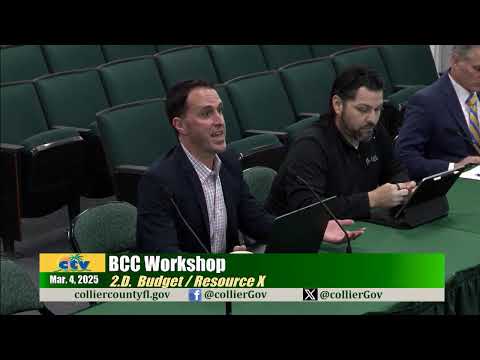
Mike Neman, who presented the plan as part of the county’s new Strategic Initiatives division, told the board: “This is a very important item and it's important that the board takes ownership of this — the strategic plan.” He said the change aims to make the public list more achievable and to ensure projects show meaningful, measurable work during the calendar year.
The proposed change would remove or roll up projects that staff judged to be operational, multi‑phased in ways that made high‑level reporting difficult, or that produced few quarterly updates. Neman said many of the items being removed will continue to be tracked by the departments that own them, not abandoned: “They’re not being removed from our strategic focus. They’re just being removed from your strategic focus necessarily. They’re still being necessarily attended to.”
Why it matters: County staff said the public priority list was intended as a transparency and education tool — a concise public snapshot of high‑visibility, high‑importance work that receives quarterly updates. Presenters said the previous list’s size (57 projects) made it hard to deliver substantive updates each quarter and created reporting gaps. The pared list is meant to present only priorities with measurable work planned during the current calendar year and strong alignment to the county’s stated goals.
Details and context: The county’s two‑page strategic plan retains the four focus areas — quality of place, infrastructure, community development and responsible governance — and the LEADS values (leadership, ethics, accountability, dedication, service). Staff emphasized there is no proposed change to those top‑level elements.
Neman laid out three criteria used to select priority projects: high visibility/importance to the board, staff and public; measurable work planned during the calendar year; and alignment with priority‑based budgeting work being implemented with ResourceX (Tyler Technologies).
During discussion, several commissioners urged clearer language on public materials so that an external reader would not interpret “removed” as “ignored.” Commissioner Hall suggested labeling items redirected to departments as “priority shifted to the department” rather than simply “removed.” Commissioner McDaniel and others sought assurance that large, multi‑phase programs (water resources, stormwater, housing) would be monitored in the internal tracking table even if not listed on the public two‑page summary.
What happens next: Staff said the revised priority list is a proposal and the board can add or subtract items during follow‑up meetings; staff will present a final list for approval in upcoming meetings and will continue quarterly reporting on the projects that remain on the public list.
Ending: Presenters said the visual layout of the two‑page public plan will also be updated to match county communications branding. Commissioners asked staff to ensure the public materials clearly explain which priorities were redirected to departments versus discontinued, and to include tracking dates so the board and public can follow implementation progress over time.