Get Full Government Meeting Transcripts, Videos, & Alerts Forever!
Get email alerts on the Oig Longevity Everett topic
No spam. Unsubscribe anytime.
Everett City Council moves to recover $180,000, orders audits and policy changes after OIG report
Summary
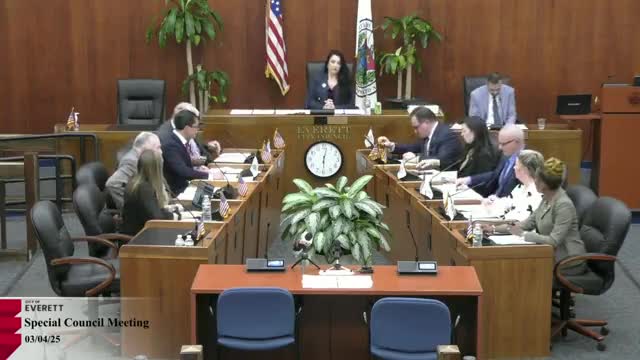
At a special Everett City Council meeting convened after an Office of the Inspector General letter shared with the council on Feb. 27, the council voted to demand return of $180,000 in longevity overpayments to Mayor Carl DeMaria, request a municipal audit and pursue changes to internal financial controls.
At a special Everett City Council meeting convened after an Office of the Inspector General letter shared with the council on Feb. 27, the council voted to demand return of $180,000 in longevity overpayments to Mayor Carl DeMaria, request a city audit of longevity payments, and to pursue changes to internal financial controls.
The council acted after the city clerk read the OIG report conclusion: “The OIG found that Mayor DeMaria used his position to unjustly enrich himself by orchestrating a city ordinance that provided him with a considerable bonus,” and that the mayor’s administration concealed the payments from the council and the public. The OIG recommended an audit of payments from fiscal year 2016 to the present, recovery of $180,000 and other overpayments, referral to the state Ethics Commission, elimination of longevity payments to elected officials, specialized fiduciary training for relevant officials, stronger finance controls and separation of the CFO and auditor positions.
Why it matters: The council framed its actions as measures to protect public funds and restore public trust after the OIG’s findings and public comment urging quick action. Council members said they are duty-bound to pursue the recommendations; residents in the chamber urged swift repayment and an independent audit.
Council action and votes
• An appropriation request of $150,000 to fund a council-ordered audit and related legal expenses (item 1) was moved for favorable action and deferred to the mayor’s office with a roll-call vote of 8-0. Council requested the administration transmit the appropriation order by 5 p.m. the next day for possible inclusion on the March 10 agenda.
• A resolution demanding that Mayor DeMaria return $180,000 in overpayments (item 2, language amended from “requested” to “demanded”) was approved 8-0 and referred to the mayor’s office for action. The resolution follows the OIG recommendation that the amount be recovered and returned to the city treasury within 30 days.
• An ordinance (item 3) to delete the municipal code section governing mayoral longevity payments (identified as 7-167 in the posted materials) was moved to the City Council Committee on Legislative Affairs and Elections for vetting; the referral passed 8-0.
• A resolution (item 4) asking the DeMaria administration to separate the city auditor and chief financial officer positions and implement the OIG’s other recommendations was approved 8-0 and referred to the mayor’s office with a requested response by the March 10 council meeting.
• The council also voted to authorize the council president to retain outside legal counsel using up to $15,000 from the council’s professional services account; that authorization passed 7-1 (one recorded no vote).
Public comment and counsel for mayor
Attorneys for the mayor and the mayor’s CFO addressed the council. Young Paik, identifying himself as counsel for the mayor and the CFO, urged the council “to act only when it has the benefit of all the facts and all perspectives,” and said the OIG process “was not an adjudicatory process” with no hearings, no burden of proof and no opportunity for confrontation of witnesses. John Papalardo of Greenberg Traurig told the council the administration had cooperated with the OIG, producing records and making current and former employees available for interviews.
Multiple residents urged rapid reimbursement and stronger controls. Peggy Serino said the OIG recommendation to separate the auditor and CFO was “needed” and urged the council to act “swift[ly]” to preserve taxpayers’ confidence. Tony Grama (Ward 3) said the overpayments amounted to “a scam” and that the mayor should repay the funds and resign. Alex DeMaria, identifying herself as the mayor’s daughter, described personal impacts from the public controversy and urged the council to “be better than the politics.” Several other speakers—including retired teacher Kathy McNeil, Thomas Abruzzese and Paula Storidi—asked for prompt action and for additional investigation or state involvement.
Discussion vs. decision
Council discussion emphasized protecting public funds and following the OIG’s recommendations. Some councilors urged procedural caution: one councilor asked that the proposed ordinance language receive full committee review because the ordinance text had not been attached to the posted agenda. Another councilor announced recusal from the meeting because of an appearance-of-conflict concern and said they would seek guidance from the state ethics office. Formal decisions (votes and referrals listed above) were recorded on the public record.
Clarifying details and next steps
The OIG recommended an audit of longevity payments covering fiscal year 2016 through the present and recovery of $180,000 in identified overpayments. The council requested a written appropriation order from the administration by 5 p.m. on the day after the meeting so the item could be placed on the March 10 agenda. The council requested a response from the administration on items referred to the mayor’s office by the March 10 meeting. The OIG recommended referring information to the state Ethics Commission to determine whether conflict-of-interest laws were violated.
Ending note
Council President Stephanie Martins closed by noting the council will follow the OIG’s recommendations as protectors of public funds and thanked speakers on both sides for observing the meeting rules.