Get Full Government Meeting Transcripts, Videos, & Alerts Forever!
Get email alerts on the Salary Survey topic
No spam. Unsubscribe anytime.
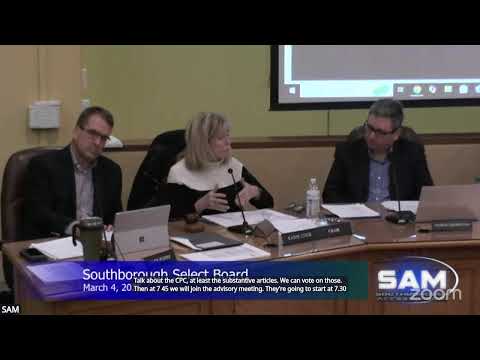
Select Board hears push for early pay classification study to address staff pay inequities
Summary
Personnel Board and Select Board members debated a $25,000 pay-classification (salary survey) article the Personnel Board has placed on the warrant to address perceived pay inequities and turnover among town employees.
The Personnel Board asked the Select Board on March 4 to approve a $25,000 appropriation on the annual warrant for a pay classification (salary) study to address apparent inequities in nonunion and SAP employee pay and to reset the town’s four-year survey cycle.
Jason Llanoski, Personnel Board chair, said the board is obliged to do a pay study periodically and described the last study as poorly executed by a vendor; he said the town needs a more credible, better-managed review. He said a targeted consultant engagement could identify which positions are most out of market and provide defensible, implementable recommendations. “We are certainly united that we need to do something,” Llanoski said, adding the Personnel Board’s top objective is retention and fairness.
Select Board members acknowledged turnover among SAP employees and the challenge of employees hired above midpoint creating internal inequities. The board heard staff estimate roughly six SAP departures and total SAP staffing of about 60 full-time employees; several members described a mix of causes for turnover, including promotion and outside-market pay.
Nut graf: The Personnel Board framed the consultant-led pay classification study as a way to create an unbiased, defensible analysis of positions and pay ranges. Alternatives discussed included a narrower, staff-led self-study of a few priority positions or modest longevity stipend increases, but members cautioned those fixes could leave other employees who expect adjustments dissatisfied.
Board members and staff discussed timing and scope. If voters fund the $25,000 article from free cash on April 8, the Personnel Office would run a procurement process immediately; staff estimated a mid‑April start and “a couple of months” to complete interviews, market comparisons and a deliverable. The Personnel Board acknowledged the study is unlikely to equalize pay for every employee immediately; attendees said they expected the consultant to identify perhaps a limited set of positions (anecdotally 6–10) in need of adjustment.
Several Select Board members expressed caution about adding recurring headcount or large budget items but said they support pursuing a fair, evidence-based approach to pay. The Select Board indicated general support for placing the $25,000 article on the warrant and planned to confirm a formal Select Board recommendation after advisory and further review.
Ending: The Personnel Board asked the Select Board to weigh in with advisory on Tuesday and to decide whether to print the article on the warrant. If funded, staff said the procurement could begin immediately and a consultant engagement could be completed in a matter of months.