Get Full Government Meeting Transcripts, Videos, & Alerts Forever!
Get email alerts on the Hb3362 topic
No spam. Unsubscribe anytime.
Lawmakers, agencies and industry split over proposed tire tax to fund 6PPD mitigation, wildlife crossings and transit
Summary
Sponsor and agency witnesses told the Joint Committee on Transportation on March 4 that House Bill 3362 would dedicate a 4% surcharge on tires to treat tire-wear pollutants (notably 6PPD quinone), build wildlife crossings and support rail and transit projects.
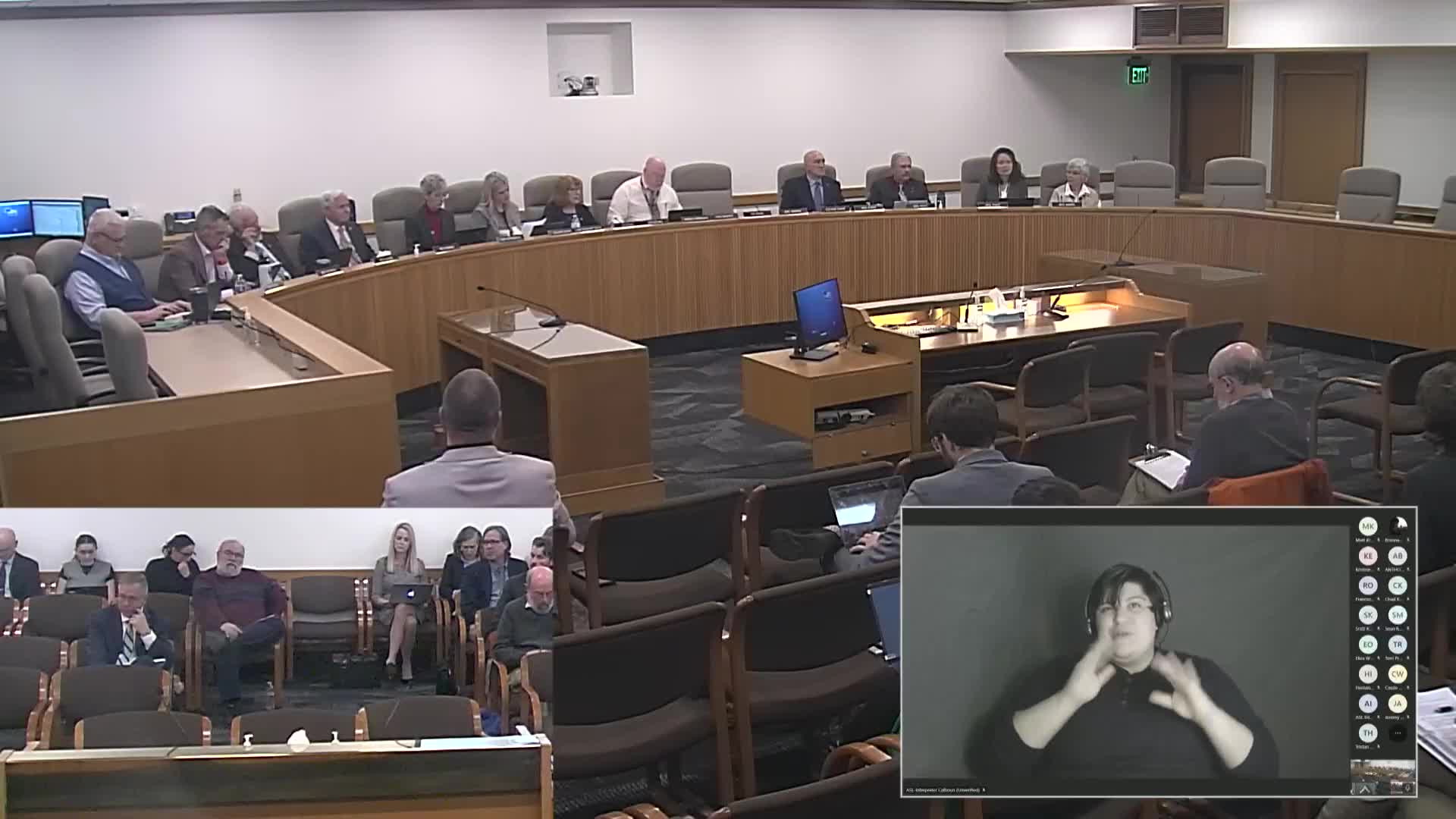
State Senator Chris Gorsick introduced House Bill 3362 — described in testimony as the "Tire Pollution Act" — at a public hearing of the Joint Committee on Transportation on March 4. The bill would impose a 4% surcharge on tire sales and dedicate revenue to three main areas: treatment to remove tire-wear pollutants (notably 6PPD quinone) from stormwater, construction and fencing for wildlife crossings to reduce wildlife–vehicle collisions, and support for rail and other public-transportation projects.
"Protecting Oregon's waterways is what we're after with HB 33 62," Senator Chris Gorsick told the committee, framing the bill around the discovery that a tire additive can convert to a chemical lethal to some salmon species.
The Department of Fish and Wildlife provided technical background on the pollutant. Becky Anthony, a water-quality specialist with ODFW, explained that 6PPD — a tire additive — reacts with ozone to form 6PPD quinone ("6PPD‑q"), which researchers have linked to coho salmon deaths. "6PPD interacts with ozone and slowly migrates over the life of the tire to the surface where [it] wears off on road surfaces into small tire wear particles," Anthony said, and added that laboratory work showed mortality in salmon at extremely low concentrations: "as little as 41 drops in a trillion gallons of water . . . is lethal to juvenile salmon." ODFW said it is in the early stages of assessing Oregon streams but called the finding cause for concern.
Proponents argued the revenue would pay for proven interventions. Representative Ken Helm, who has led prior statewide efforts on wildlife crossings, told the committee that properly sited crossings reduce wildlife–vehicle collisions by over 90% and cited statewide collision and cost figures: "Each year, there are over 7,000 wildlife vehicle collisions in Oregon," Helm said, adding that deer collisions alone cost an estimated $19,000 per crash on average.
Supporters included conservation groups, regional wildlife advocates and local officials who said the bill would allow Oregon to match federal discretionary grants for crossings and to install stormwater treatment systems targeted at tire-related pollutants. Dr. Srishti Kamal of the Western Environmental Law Center and other witnesses pointed to public polling cited in testimony showing broad voter backing for more crossings and for increased state funding to build them.
Industry and business groups opposed the bill or recommended significant changes. The U.S. Tire Manufacturers Association told the committee the proposal would be regressive and could raise the cost of a set of four passenger tires by about $40–$70. "This bill is a regressive tax that would disproportionately impact low and middle income earners," Sean Moore of USTMA testified. Vehicle dealers, the trucking association and Oregon Business & Industry also opposed the measure, citing administrative complexity in a state that does not impose a sales tax, potential regressivity, the burden on local retailers and questions about whether a tire surcharge is the most direct funding mechanism for the bill’s stated goals.
Several witnesses raised safety and equity concerns. Sean Moore told the committee that higher tire prices could lead some motorists to delay necessary replacement and that worn tires raise crash risk; TJ Crockett of Salem-Keizer Public Schools warned that, without a carve-out, school districts’ tire purchases could be paid from the State School Fund and asked the committee to preserve existing exemptions used for diesel taxation. Opponents also argued the bill’s section directing funds to "public transportation by rail or other forms of public transportation" was too broad and could subsidize projects outside the intended nexus.
Legislators and witnesses discussed a dash‑1 amendment that would exempt certain large or heavy vehicles from the surcharge; several speakers called for clearer carve-outs for school buses and heavy commercial fleets to avoid unintended impacts on public services.
At the close of the hearing the committee opened the record for additional written testimony and set a 48‑hour window for supplementary submissions. Committee leaders said they would collect follow‑up questions for agencies and other parties and circulate answers through staff.