Get Full Government Meeting Transcripts, Videos, & Alerts Forever!
Get email alerts on the Education Survey topic
No spam. Unsubscribe anytime.
Albert Lea presents district 'daily desired experiences' survey; students show lower recognition and engagement
Summary
The Albert Lea school board reviewed results from a November districtwide survey of students, families and staff. Families responded most favorably; student responses showed lower scores for recognition and engagement. District leaders said principals will unpack building-level results and aim for a spring follow-up.
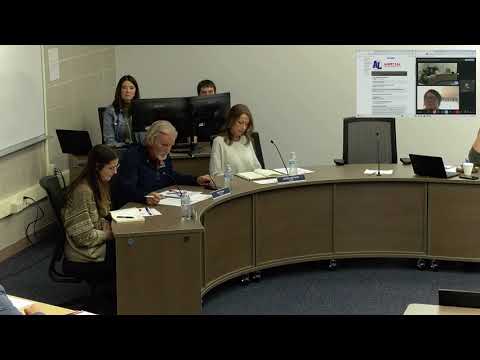
The Albert Lea Public School District school board heard the results of a November “daily desired experiences” survey showing generally favorable family responses but mixed results among students and staff.
The presentation, led by Executive Director Franks, covered three stakeholder surveys (students in grades 6–12, families and all staff) and highlighted the district’s goal threshold for statistically reliable results: roughly 60% favorable, no more than 30% neutral and under 10% unfavorable.
The survey is intended to give district leaders “annual surveys of those 3 stakeholder groups to gather survey data,” Executive Director Franks said during the presentation. Franks told the board the district collected 886 student responses (grades 6–12), 388 family responses and staff responses from all employee groups, and that principals will receive building-level reports to guide local improvement work.
The student results showed strengths and weaknesses. On the item “I am safe,” 69% of surveyed students responded favorably and 8.4% responded unfavorably. Students reporting that they felt recognized and appreciated fell to 57.6% favorable (9.4% unfavorable). “Engaging activities that help me learn in class” registered 60% favorable and 10.6% unfavorable. Franks noted one district aim is to move neutral responses toward the favorable column.
Family responses were more positive overall: 100% of family survey items met or exceeded the 60% favorable threshold, and every family item had under 10% in the strongly disagree category. Franks said family data will inform building-level family and community engagement plans that are part of Title requirements.
Staff results were mixed. Franks said six of nine staff items exceeded the 60% favorable threshold, but several staff items raised concerns: 31.9% of staff indicated a need for more time and resources to do their jobs; 27.7% indicated room for improvement in district and site communication; and 21.7% of staff reported that students’ social and emotional needs were not being met.
Superintendent Wagner urged the board to use the survey as a starting point for qualitative follow-up. “This is opportunity to go dive deeper even though this is a quantitative measure, what’s the qualitative?” Wagner said, recommending principals and building leadership teams engage students, staff and families to interpret the neutral responses and develop targeted actions.
Board members asked about response rates and outreach. Franks said the family survey was distributed districtwide (newsletter, principal newsletters and at elementary conferences) and acknowledged the district will pursue higher response rates in future administrations. Franks also said the district reopened the student survey briefly to increase responses from the Area Learning Center and Online Academy.
Next steps as described to the board included principal-level unpacking of building data at the Principal Leadership Network in January, focused site conversations led by principals and coaches, and a planned spring update to the board tied to continuous improvement and MTSS implementation work.
Board members and staff said the survey will be used to set SMART goals tied to district strategic directions and to inform the district’s MTSS (Multi-Tiered System of Supports) practices and supports.
The board did not take formal action on the survey results; members directed staff to continue building-level follow-up and to return with progress as principals craft continuous-improvement plans.