Get Full Government Meeting Transcripts, Videos, & Alerts Forever!
Get email alerts on the Transportation Streetcar topic
No spam. Unsubscribe anytime.
Omaha mayor, planning director outline Omaha streetcar project, funding and timeline
Summary
Omaha Mayor Jean Stothert and Steve Jensen presented the Omaha streetcar plan, described a funding model based on tax-increment growth along a 3.5-mile route, said the project requires no citywide property tax increase and projected service to begin around Memorial Day 2028.
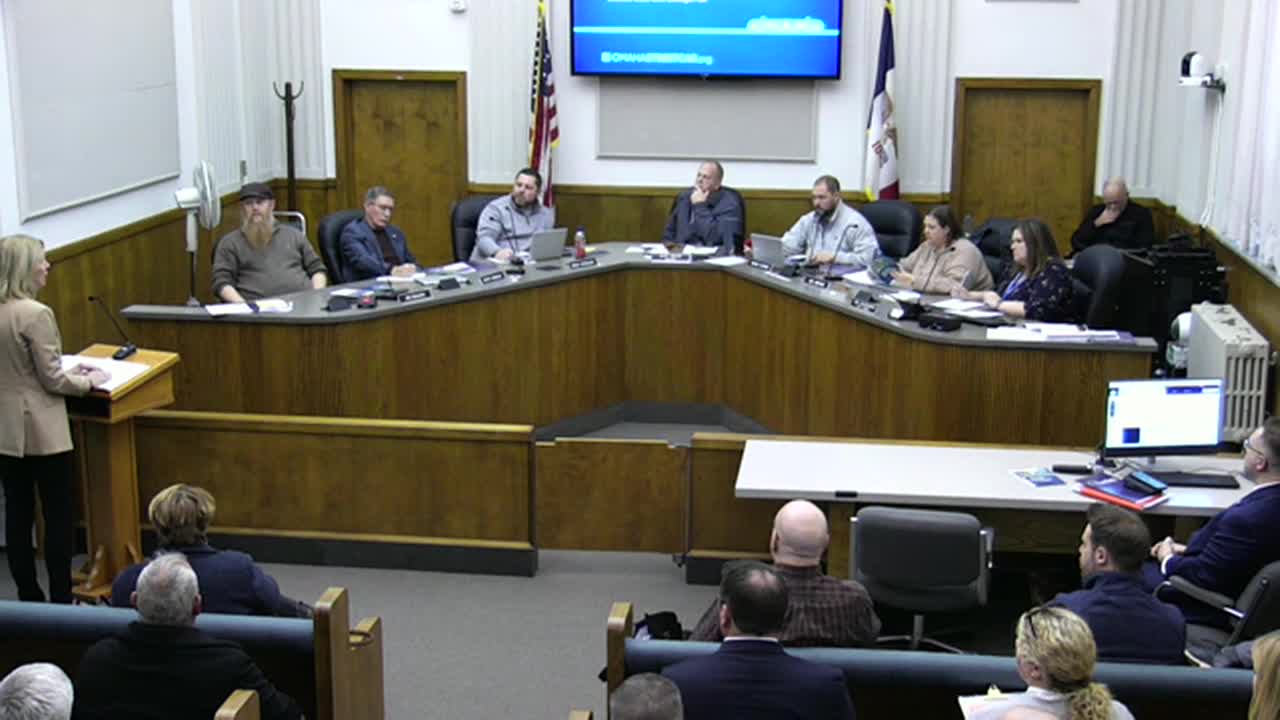
Omaha Mayor Jean Stothert and Steve Jensen delivered a presentation to the Council Bluffs City Council describing Omaha’s planned streetcar, its route, funding strategy and schedule.
The mayor said the initial line is roughly 3.5 miles and that the city is financing construction largely through tax increment from new development along the corridor rather than a new levy or citywide property tax increase. “The only people that will really be paying for the streetcar are income producing commercial properties along the route,” Stothert said. She added that single-family homes, duplexes and small residential buildings would not pay for the streetcar.
Jensen, who led the technical portion of the presentation and described himself as former planning director for the City of Omaha and now working in economic development, said the city’s concept relies on increased property value along the route to generate revenue to pay bonds issued for construction. Jensen described previous consultant estimates and the updated projection: an original conceptual cost near $306 million, a council authorization of up to $440 million in bonds, and a current design-phase cost of about $389 million driven largely by utility relocation. He said projected tax-increment from development is close to $940 million to $1 billion over 15 years, which he said would cover the streetcar cost and leave capacity for other uses such as affordable housing and bikeways.
Jensen said vehicles have been ordered from CAF (a Spanish manufacturer). The cars are low-floor and accessible; sections of the route will run on overhead wire and sections on battery power. He described stops as frequent (roughly every 10 minutes) and level-board platforms. Jensen said construction on utility relocations began the month of the presentation, mainline construction will start in late this year or next, vehicle testing will follow, and service is expected “around Memorial Day in 2028.”
Both speakers cited observed development already occurring along the planned corridor and studies estimating multi-billion-dollar increases in development value. “We already have $1.5 billion worth of development along the route,” Stothert said, and consultants told the city they expect more growth over the next 15 years. Jensen said the project team estimated nearly $4 billion in development over 15 years in updated projections and that a portion of the incremental tax revenue could be used for housing and mobility projects.
On operations, presenters said they plan no fare on the initial service, citing ridership and access benefits; they estimated annual operations and maintenance at roughly $6.5–8 million per year and said parking enterprise revenue and increased garage usage would help cover operating costs. Jensen described a vehicle maintenance facility to be located under the interstate on Lot A south of the CHI Health Center and said Samsung Construction was awarded the maintenance facility contract.
The presenters also addressed safety and staffing questions: cameras on vehicles, possible ambassadors on trains (as used in other cities), and coordination with police and fire for increased downtown service and public-safety needs. Mayor Stothert said council-approved bonds for other public facilities include a new combined police/fire precinct to support growing downtown calls for service.
The presentation included discussion of possible future extensions — north toward UNMC and the airport and south toward the zoo — and the city’s application for a federal grant to study a northward extension. The presenters said the Omaha City Council has already voted on the approvals the project needed to proceed to the design and construction phases and that the project team intends to continue public outreach and work with adjacent jurisdictions on alignments and extensions.
The presenters opened for questions from Council Bluffs members and attendees; Council Bluffs staff and council members asked about hours, safety, how operations would interact with existing bus service and planned coordination for emergency services and staffing.
The session concluded after roughly a 30-minute presentation and Q&A, and the Omaha delegation left materials and brochures for Council Bluffs staff.