Get Full Government Meeting Transcripts, Videos, & Alerts Forever!
Get email alerts on the School Facilities Tax topic
No spam. Unsubscribe anytime.
Rutherford County steering committee backs clarifying changes to school facilities tax for commercial buildings
Summary
The steering committee recommended forwarding to the full commission policy changes clarifying what counts as "heated" or "air‑conditioned" space and how the school facilities tax is collected for shell commercial buildings.
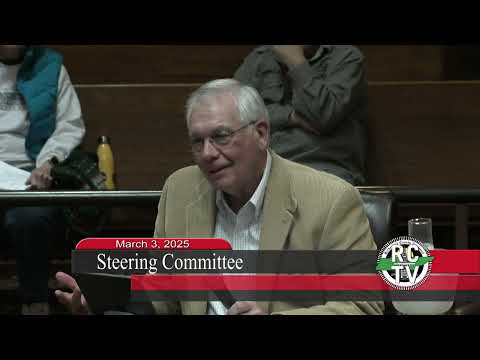
Rutherford County’s steering committee on Tuesday recommended the full county commission approve changes to the county’s School Facilities Tax Collection policy that clarify which commercial floor areas count toward the tax and when the tax is payable.
The revisions, presented by Tanya Bell, a county staff member, define "heated space" and "cooled or air conditioned space" and set rules for so‑called shell or "box" buildings, where a developer builds an unfinished shell and tenants finish individual units later.
The changes matter because in October the county began applying the school facilities tax to commercial property and county staff encountered commercial permit applications where applicants said warehouse areas would not be heated or cooled and therefore not subject to the tax. Bell said the proposed language was developed with input from the mayor, the county attorney and other staff.
Bell read the proposed definitions aloud to the committee. She said, "Heated space is an enclosed area within a building or structure where heat is provided by a system, process, or equipment designed to distribute heat, including but not limited to a central heating system, gas, fuel fired, package unit, or other similar equipment." She said the draft defines cooled or air conditioned space to include package units, window units, ceiling fans and "other similar equipment," language intended to encompass most commercial arrangements.
The draft also addresses shell buildings. Under the proposed language, an owner who constructs a shell building would sign an affidavit acknowledging the assessed liability based on the shell plans, but the county would collect the school facilities tax only when individual tenant units receive certificates of occupancy. Bell gave a 20,000‑square‑foot example to illustrate that the county could collect multiple SFT payments as tenant spaces are finished and occupied, and she pointed the committee to the draft language at page 4.3(b).
Commissioner Mike raised a hypothetical in which most of a large manufacturing facility is never climate‑controlled while small operator stations are. Bell said staff would review plans, ask for documentation and rely on city inspectors at final inspection: "If they genuinely are not heating and cooling a space, it doesn't apply," she said, adding the payment is due at substantial completion but before certificate of occupancy is issued as specified in the law.
County Attorney review: Bell said the county attorney reviewed and approved the draft changes. After discussion the steering committee voted to forward the amended School Facilities Tax Collection policy to the full commission with a recommendation. Roll call recorded unanimous support from Commissioners Kush, Beverly, McAdoo, Rather, Johnson, Reid and Chairman Harris (7 yes, 0 no). The steering committee's action was to recommend adoption by the full commission; the full commission will make the final decision.
The committee chair asked Bell to attend the subsequent full commission meeting to present the changes. Bell told the committee staff would continue to monitor commercial applications and bring further clarifications back if other questions arise.