Get Full Government Meeting Transcripts, Videos, & Alerts Forever!
Get email alerts on the Housing topic
No spam. Unsubscribe anytime.
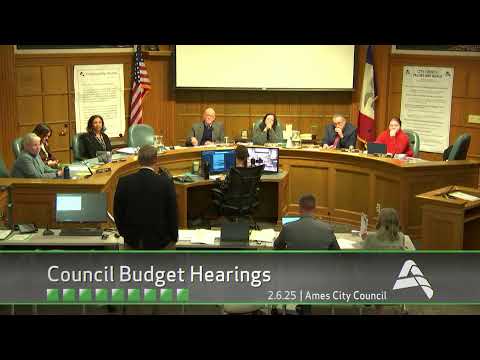
Council hears planning office on housing pipeline, CDBG/HOME balances and Baker subdivision lots
Summary
Planning staff told the council that single‑family production has slowed, several affordable projects are coming online, CDBG and HOME balances are substantial and that the city must plan how to deploy funds and sell Baker subdivision lots in 2025 without violating timeliness rules.
Kelly (Planning Department staff) briefed the Ames City Council on housing production, federal program balances and options for moving vacant city lots toward construction.
Kelly said single‑family home starts have declined for three consecutive years and attributed the slowdown to sustained higher mortgage rates. Council members were told that most apartment projects already approved will come online in 2025–26 and that the largest private proposal under discussion remains the multi‑phase Link project, which could start building in 2026 if it proceeds.
On federally supported housing programs, staff summarized balances and constraints. Community Development Block Grant (CDBG) funds remain unspent in part because major projects—most notably a water main replacement in the Oak‑Riverside neighborhood—are still in environmental review and scheduling. Kelly said CDBG carries a large balance but cautioned about the HUD “timeliness” requirement that can limit future awards if funds are not spent on schedule.
HOME program funds are committed in part to the Creekside townhomes project; Kelly told council that some HOME dollars are already designated and that future HOME awards require local match. “For the $2.1 million committed to Creekside, we have local match identified now, but going forward we will have to identify local match to continue using HOME funds,” Kelly said.
Councilors focused on the Baker subdivision, where the city holds buildable lots. Kelly said the city will offer 12 market‑rate lots for sale in the spring. Because lots created with federal investment must be sold at market value, staff said the city cannot simply set artificially lower lot prices to guarantee moderate‑priced homes unless a developer uses a separate subsidy program. Staff noted an option: builders could apply for state workforce housing tax credits (application window opens in June) and use those credits to lower development costs; that process requires a multi‑lot commitment.
Kelly also described using CDBG or other federal sources to acquire and place a modular home on an affordable lot as a way to speed occupancy. The council and staff discussed timing: some funding outcomes require quick action late in the budget cycle to avoid creating a timeliness problem that could affect future entitlement allocations.
On HOME‑ARP (American Rescue Plan) funds, Kelly reminded the council that the city approved the type of activities those dollars will fund (non‑congregate shelter units for people experiencing or at risk of homelessness) and noted the program’s longer spend‑down window (through 2030). Staff said an RFP will be drafted to identify local providers that can develop or operate non‑congregate units.
Kelly asked the council for direction about selling Baker lots and about using program income to accelerate affordable development while staying compliant with HUD timing rules. No formal votes were taken; councilmembers asked staff to return with options and timelines for lot sales, modular housing pilots and local match strategies for HOME funds.