Get Full Government Meeting Transcripts, Videos, & Alerts Forever!
Get email alerts on the Drinking Water topic
No spam. Unsubscribe anytime.
Utilities department outlines water safety, PFAS testing, lead service‑line inventory and wastewater plant upgrades
Summary
Utilities staff told the council the city meets state and federal drinking-water standards, described PFAS monitoring and a 2016 service line inventory, and detailed a multi‑year upgrade at the Water Pollution Control facility with a contractor-targeted completion in late 2026.
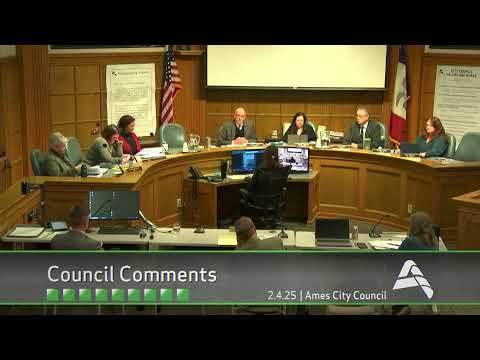
John, the utilities presenter, told the council on Feb. 4 that Ames water “meets all state and federal requirements and customers can be assured of the safety of their drinking water.” His presentation covered treatment, monitoring and major capital work in the department’s operating and capital budgets.
He said the department has monitored PFAS in source wells, shut off a well that had higher PFAS levels before federal maximum contaminant levels (MCLs) were final, and that when the EPA’s new lead rules required a service-line inventory the city had already completed and posted an inventory in 2016. “We did it because it was the right thing to do,” John said.
Staff reported approximately 39 full‑time employees in the utilities department, with another 10–13 part‑time positions seasonally for student operators. The water treatment overview emphasized three customer priorities: safety, reliability and affordability. Department slides referenced a recurring statewide drinking-water rate survey comparing the city’s rates to peer utilities; the department said Ames historically ran below the statewide median and was at the 19th percentile in the 2024 survey.
On lead service lines, the presenter said there were about 248 properties in the city’s inventory that met the EPA definition for lead service line or conditions that could indicate lead. The city policy, he said, is to replace lead service lines when they are disturbed by a public works project and to require replacement rather than repair when a line is damaged.
The Water Pollution Control (WPC) facility — the presenter said — has long compliance records. Staff noted they submitted an application for the National Association of Clean Water Agencies platinum 35 peak performance award for 35 consecutive years without a numeric permit violation; the presenter said the staff had passed “in excess of 58,000 individual numeric limits without a violation.” The WPC presentation also laid out the construction work under way: a new administration building to be turned over by contractor Woodruff in September, additions to sludge pumping, a new electrical service building and a relocated grit building; the project critical path is scheduled to run into late calendar 2026.
The utilities laboratory was described as analyzing more than 3,000 samples a year and performing over 12,000 analyses, supporting both drinking-water and wastewater compliance monitoring. Staff said the laboratory will be running the next round of lead-and-copper sampling and will see increased sample volumes as the new WPC modifications operate in parallel with the old plant during commissioning.
Council members asked about the aquifer status and the department’s long‑term supply planning. Utilities staff said the aquifer is monitored via piezometers and that, while local pockets can be stressed, the system has a source water management plan with planning for at least 50 years and land purchased east of I‑35 for a future well field. The presenter and council also discussed the proposed EPA requirement (part of the proposed lead rule at the federal level) that would require utilities to replace 10% of lead service lines per year; staff noted that provision — specifically the requirement that utilities pay for customer‑side service lines — is under legal challenge and subject to court review.
The presenter closed by announcing a public open house for the water treatment plant on Saturday, April 19, with tours and exhibits timed near Earth Day.
No formal council action on utility rates or capital appropriations was taken at the meeting; the session was an informational budget review.