Get Full Government Meeting Transcripts, Videos, & Alerts Forever!
Get email alerts on the Seniors Services topic
No spam. Unsubscribe anytime.
Seniors say Atlanta’s Clean Energy Fund money, water bill relief still hasn’t reached them
Summary
Several senior residents urged the City Council to ensure the Clean Energy Fund and other promised assistance reach low-income seniors; Mercy Housing residents asked for a fix to a Watershed billing rule that blocks an apartment-wide discount.
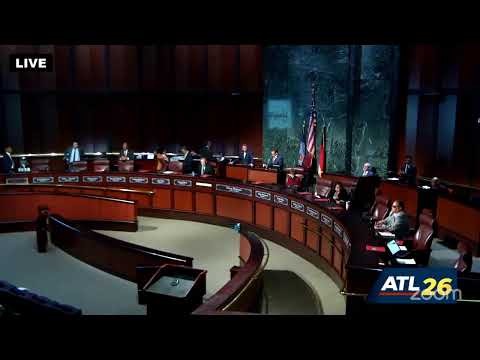
Multiple senior residents told the Atlanta City Council on March 3 that money and services promised through the city’s Clean Energy Fund and other programs have yet to reach people on fixed incomes.
Anne Clark, Fran White and Betty Brown—each introducing themselves during the public-comment period—said the Clean Energy Fund was created to help older residents with rising utility bills but, a year after the program’s approval, they had not seen promised assistance. "A little help can go a long way to make sure seniors can continue to live with stability and dignity," Anne Clark said.
Penny Steele, who identified herself as a resident of Mercy Housing’s Reynoldstown senior residence, asked the council to consider a policy fix for low-income senior apartment buildings. Steele said residents cannot receive Atlanta Watershed’s 30% discount because the water bill is paid by the property manager and not sent directly to residents—one Watershed rule requires a customer to receive their own billing to qualify. "Because our water bills are included in our rent payments, we cannot get the 30% discount," she said, and asked the council for a blanket discount for qualifying low-income senior residents or an ordinance requiring a remedy.
Steele requested three specific items: (1) a blanket discount for residents in low-income senior properties where the property manager pays the water bill; (2) that the $25,000 maximum-income cut-off for certain benefits be adjusted for inflation; and (3) if the first request is not feasible, a new ordinance to require time-limited relief or a procedural fix so eligible seniors receive the Watershed discount.
Council members thanked the speakers and directed staff to coordinate with relevant departments. Councilmember Michael Julian Bond and other members acknowledged the concern and said staff could follow up through the Department of Watershed Management and the mayor’s office. No binding ordinance was passed at the meeting.
Why it matters: Seniors living on fixed incomes are particularly vulnerable to rising utility costs. City officials have said the Clean Energy Fund is aimed at reducing the burden, but community members say implementation delays and technical billing rules have prevented intended beneficiaries from receiving relief.
What’s next: Council members asked staff to follow up with Watershed and relevant program offices to report options, including whether a city-level mechanism can extend the discount to covered residents when the property manager receives billing.