Get Full Government Meeting Transcripts, Videos, & Alerts Forever!
Get email alerts on the School Chaplains topic
No spam. Unsubscribe anytime.
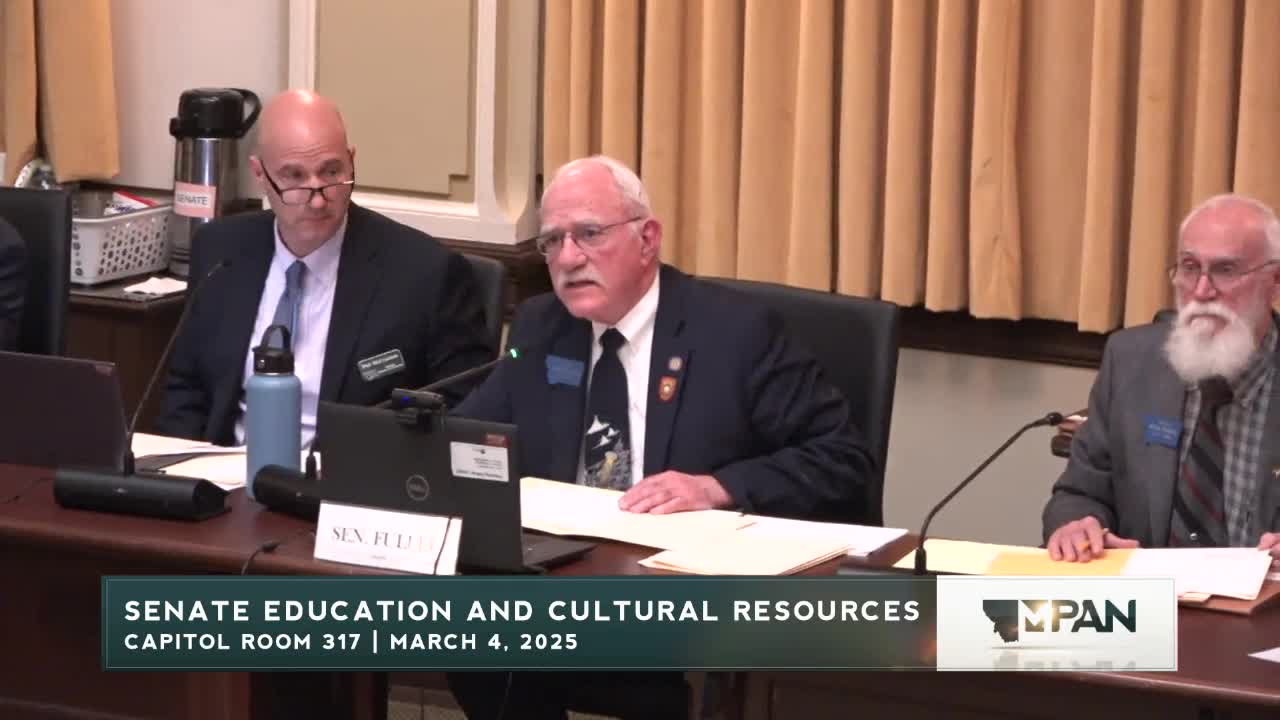
Senate Education Committee approves bill allowing school chaplains amid split testimony
Summary
The Senate Education Committee voted 8-6 to advance Senate Bill 525, which would permit school districts and public charter schools to authorize paid or volunteer school chaplains to provide optional supports and services. Supporters cited mental‑health gaps; opponents raised constitutional and licensure concerns.
The Senate Education Committee voted 8-6 to pass Senate Bill 525, a measure that would allow school districts and public charter schools to adopt policies authorizing paid or volunteer school chaplains to provide supports and services, sponsor Sen. Teresa Manzella said.
The bill’s sponsors and supporters described chaplains as an optional, locally chosen resource to help schools meet rising needs for mental‑health and crisis support. Opponents, including school counselor groups and civil‑liberties lawyers, warned the measure could undermine existing licensure standards for school counselors and raise Establishment Clause concerns.
Sen. Teresa Manzella, the bill sponsor, told committee members the bill is “a choice” for local districts and said she was open to amendments that would make the bill “more friendly and workable.” Proponents said chaplains can fill gaps in rural areas that lack licensed counselors. Johnny Davis, identified in testimony as Chief Development Officer for the National School Chaplain Association, said, “School chaplain legislation is a critical and bipartisan initiative that seeks to address the urgent challenges facing students, teachers, and schools across the state,” and described chaplains’ work in trauma care, crisis intervention and active‑shooter preparedness.
Supporters also included Matt Furlong of the Montana Child Protection Alliance, who said rural communities lack adults who can readily provide support to students, and Joseph Suchanek, who cited student mental‑health and counselor shortfalls and suggested chaplains could reduce disciplinary referrals in some districts.
Opponents said the bill does not align with state licensure standards. McCall Flynn, executive director of the Board of Public Education, told the committee that the board “opposes this bill” and argued the bill’s minimum qualifications—18 years of age and “good moral character”—do not match the Board’s requirements for school counselors. Flynn said the bill “is a huge overreach.”
Other opponents included the Montana Federation of Public Employees (represented in testimony by Kim Popham), the ACLU of Montana (Henry Seaton), and licensed clinicians including Dr. Megan Bailey and Lindsay De Groot, a licensed clinical professional counselor. They warned the bill could permit unqualified individuals to provide services that should be handled by licensed professionals. Henry Seaton of the ACLU said the measure “improperly inserts religion into our public schools” and called it “a constitutional time bomb.”
The bill requires written parental consent for students to participate in chaplain‑provided supports. That provision drew questions from committee members who noted parental‑consent rules differ for licensed school counselors. Sen. John Emmerich asked whether the parental‑consent language should be amended; Manzella said she had advocated for parental rights in education and favored consent handled in advance of crises.
During executive action, Vice Chair Temple moved the bill to pass. The roll call recorded the following individual votes as read into the record: Sen. Beard — yes; Sen. Emmerich — yes; Sen. Esp — aye by proxy; Sen. Mandeville — yes; Sen. Manzella — aye by proxy; Sen. Morgeau — no; Sen. Olson — no by proxy; Sen. Trevis — yes; Sen. Vinton — yes; Sen. Weber — no; Sen. Novak — no; Sen. Temple — no; Sen. Fuller — yes. The committee recorded a tally of 8 yes, 6 no, and advanced the bill to the full Senate.
The sponsor said she is open to amendments on the Senate floor to clarify the relationship between chaplains and licensed counselors and to address the board‑licensure concerns raised at the hearing.
Committee action now sends SB 525 to the full Senate for further consideration.