Town of Babylon planning board hears opposition and support for 14-condo Panello Estates proposal
Loading...
Summary
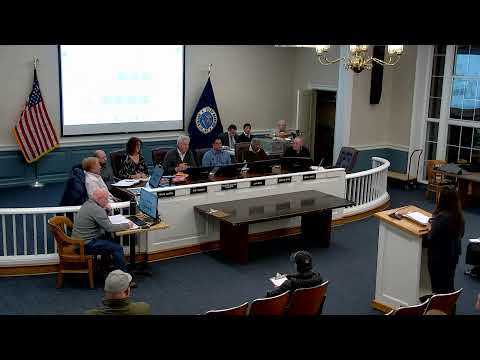
The Town of Babylon Planning Board on March 3 held a public hearing on an application by Panello Estates 109 LLC to subdivide an 89,532‑square‑foot parcel at 404 Route 109 into two lots, rezone most of the site from G (industry) to MR (multiple residence) and build seven duplex buildings containing 14 three‑bedroom condominium units.
The Town of Babylon Planning Board on March 3 held a public hearing on an application by Panello Estates 109 LLC to subdivide an 89,532‑square‑foot parcel at 404 Route 109 into two lots, rezone most of the site from G (industry) to MR (multiple residence) and build seven duplex buildings containing 14 three‑bedroom condominium units.
The applicant’s attorney, Nicole Blanda of Bizzell Blanda & Visconti, told the board the project was revised after community feedback and is now a condominium development with all units for sale and “no basements.” She said Lot 1 would retain an existing 2,062‑square‑foot office building to be restricted by covenant to a single tenant and expressly barred from medical uses; Lot 2 would contain the 14 owner‑occupied units. Architect Charles (Chuck) Lembo described the duplexes as two‑story attached homes with internal garages. Blanda said the applicant has submitted a curb‑cut application to the New York State Department of Transportation for Lot 1 and that parking on the combined site would meet the town requirement of 42 spaces.
The hearing drew more than a dozen residents, many of whom live on East Drive and adjacent streets, who cited traffic, flooding and environmental concerns. Julianne Nolan, of 31 Karen Street, said, “To even consider building 7 buildings with 14 condos on this otherwise residential acreage is unthinkable,” and described recent crashes and pedestrian safety problems at the Route 109/East Drive intersection. Several speakers cited recurring backyard flooding they attribute to Santa Pogue (transcribed as Santopog) Creek and questioned whether the development could worsen runoff and basement flooding.
Environmental issues were a frequent theme. Resident Zach Williams noted information he said he had received from DEC staff that suggested the parcel contains about 0.3 acres of wetlands and that approximately 1.6 acres would be upland — details the applicant said are under DEC review. Robin Silvestri, executive director of Save the Great South Bay, urged the board to preserve mature trees and favor native plantings, saying, “The creeks are the arteries of fresh water to the bay.” Town environmental analyst Rich Grow told the board the watershed has a history of problems, that historical fill exists on the site, and that the town is coordinating closely with the DEC; he said there will be no bulkhead and that native plantings and stormwater controls are expected.
Applicants described site measures intended to limit impacts. The developer proposes a 50‑foot non‑disturbance buffer near the freshwater wetland, DEC‑approved plantings in the buffer area, permeable pavers for driveways and the internal drive aisle, underground leaching galleries to retain stormwater on site, a gated emergency vehicle access built with grass pavers, and a screened refuse enclosure serving both lots. The applicant said the town traffic consultant, IMEG (formerly Cameron Engineering), issued memos for this project on July 18 and Nov. 15, 2024, and concluded the development would generate a “negligible” number of trips (about six to seven per hour total) and would not require a full traffic study; the applicant offered to meet with the town traffic engineer to discuss neighborhood concerns.
Public commenters also raised wildlife and habitat concerns, including reports of bats, birds and other species using the wooded areas along the creek; at least one resident said DEC guidance limited certain kinds of bank hardening. Several residents urged a smaller proposal or detached single‑family homes rather than duplex condos; others supported the project as preferable to an industrial use or a storage facility that they fear would lower neighborhood property values.
Board members closed the public hearing and reserved decision so staff and the board can review public comments, outstanding site‑plan details and agency reviews. Planning staff indicated the DEC review and the applicant’s responses to environmental comments are pending; the zoning change required for the MR designation will be addressed separately by the Town Board. The planning board record remains open for written comments filed with the planning department.
A motion to close the public hearing and reserve decision was made and seconded by board members, and the chair announced the hearing closed with the board taking the action to reserve decision.