Get Full Government Meeting Transcripts, Videos, & Alerts Forever!
Get email alerts on the Accessory Dwelling Units topic
No spam. Unsubscribe anytime.
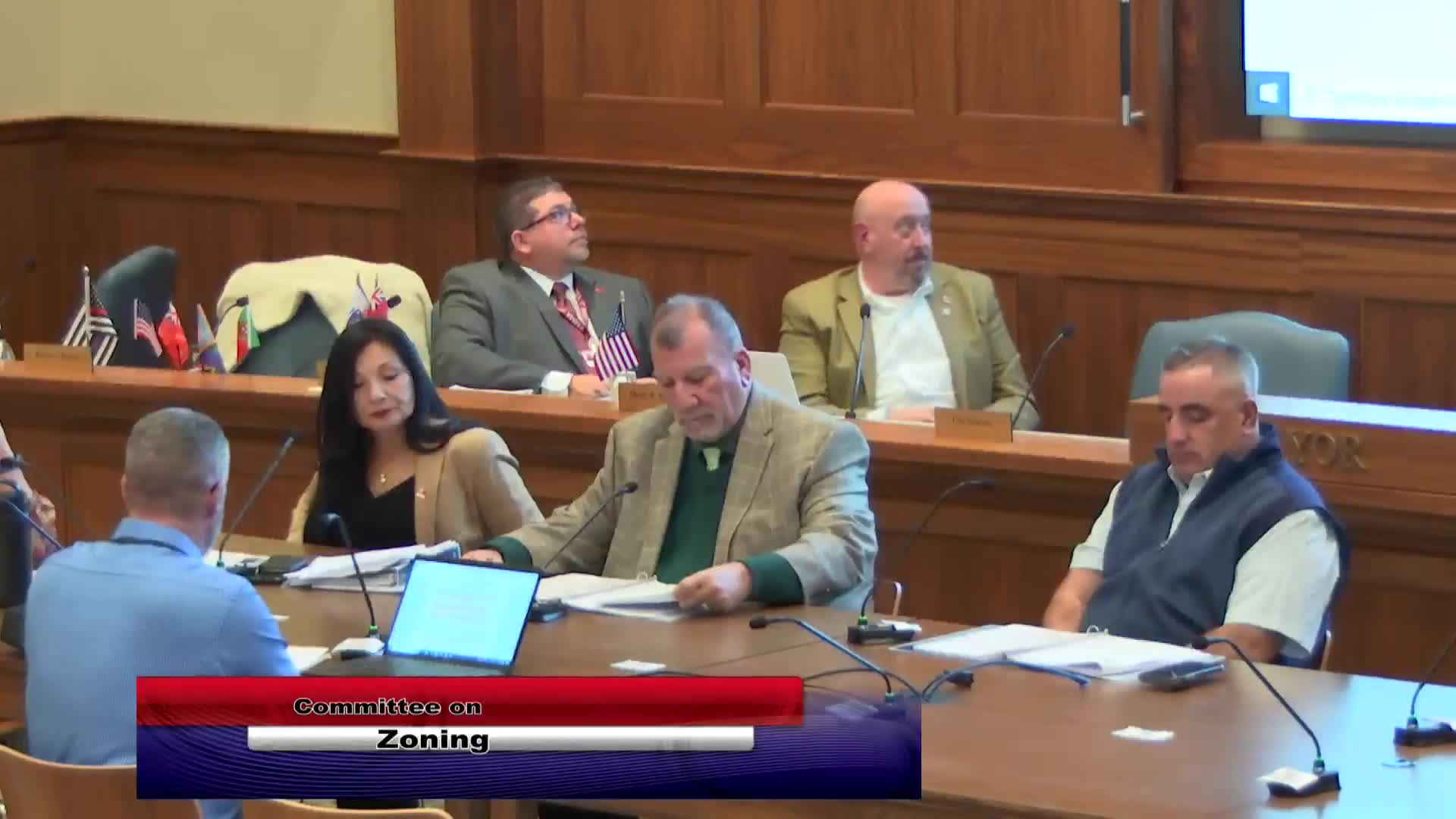
Taunton council sends ADU and mixed-use zoning changes to public hearing after long debate
Summary
City planner said state ADU rules require Taunton to loosen some local limits; councillors debated whether to restrict single-family and ADUs in commercial districts or to allow ADUs by right. Council voted to send the full package of proposed changes on ADUs, accessory-structure setbacks and mixed-use thresholds to public hearing.
The Taunton City Council voted to send a package of proposed zoning changes — covering accessory dwelling units (ADUs), accessory-structure setbacks and mixed-use/multifamily development standards — to public hearing after an extended discussion about housing demand and protecting commercial land.
City Planner Kevin Scanlon told councillors the state’s final ADU regulations make three substantive changes to local practice: ADUs must be allowed where single-family dwellings are permitted (including some commercial districts where single-family homes are allowed by right or special permit); ADUs can be permitted on lots with two- and three-family structures (one ADU per lot); and detached ADUs are subject to the state’s “least restrictive setback” rule, which in Taunton currently references accessory-structure setbacks that are half of standard lot setbacks.
Scanlon said those state rules force local edits to Taunton’s zoning text. He presented two options for councillors:
- Option A: Remove the special-permit requirement and allow ADUs where a qualifying principal dwelling exists in the listed districts (effectively aligning local code with recent state regs). - Option B: Prohibit single-family lots and ADUs in specified commercial districts (central business, business office, highway business and industrial), thereby preventing ADUs there by removing the qualifying principal dwelling.
Councillors split on the tradeoffs. Supporters of Option A, including Councillor Quait and Councilor Martin, said the city faces a housing shortage and allowing ADUs will help increase housing supply. Councillor Coit and others warned that letting single-family and ADUs proliferate in commercial districts could permanently remove commercial acreage and recommended either tighter limits or a focus on higher-density multifamily or mixed-use instead.
Council members also questioned the state’s application of accessory-structure (shed) setbacks — currently half the standard setback — to detached ADUs, and suggested alternatives (for example, two-thirds of the standard setback or limiting the reduced setback to side and rear yards but not front yards) to avoid ADUs being built very close to property lines.
On mixed-use and multifamily development, Scanlon said the committee is seeing developers meet the letter of the rule by adding small “token” first-floor commercial spaces while locating most residential square footage on the parcel; his draft proposes a threshold (40% commercial by total project square footage) to ensure meaningful commercial presence in business districts. Some councillors favored a strict 40% minimum for commercial to preserve ground-floor commercial vitality; others said a blanket percentage may not suit all parcels — particularly multi-building projects — and suggested tailoring requirements to frontage and site context.
After extended discussion and input from the city’s Office of Economic and Community Development (representatives Jay Patekis and Jim Holland joined the meeting), the council voted to refer the full set of proposed changes (sections on ADUs, accessory structures, and mixed-use/multifamily) to the public hearing process so residents and stakeholders can comment before the council takes final action.
The council also confirmed its prior decision that short-term rentals (Airbnb-style uses) remain prohibited under the draft changes discussed in December.