Get Full Government Meeting Transcripts, Videos, & Alerts Forever!
Get email alerts on the Property Disposition topic
No spam. Unsubscribe anytime.
Taunton council declines to surplus former nursing home; asks city to collect demolition cost bids
Summary
After extended public comment and debate about possible veteran housing, recreation or future municipal use, Taunton council voted 6–3 to decline declaring the former Taunton Nursing Home at 350 Norton Ave surplus and requested demolition cost proposals for the deteriorating building.
Taunton Municipal Council on Tuesday voted 6–3 not to declare the former Taunton Nursing Home at 350 Norton Ave surplus, and asked city staff to solicit bids for demolition costs so the council can consider whether to remove the unsafe structure.
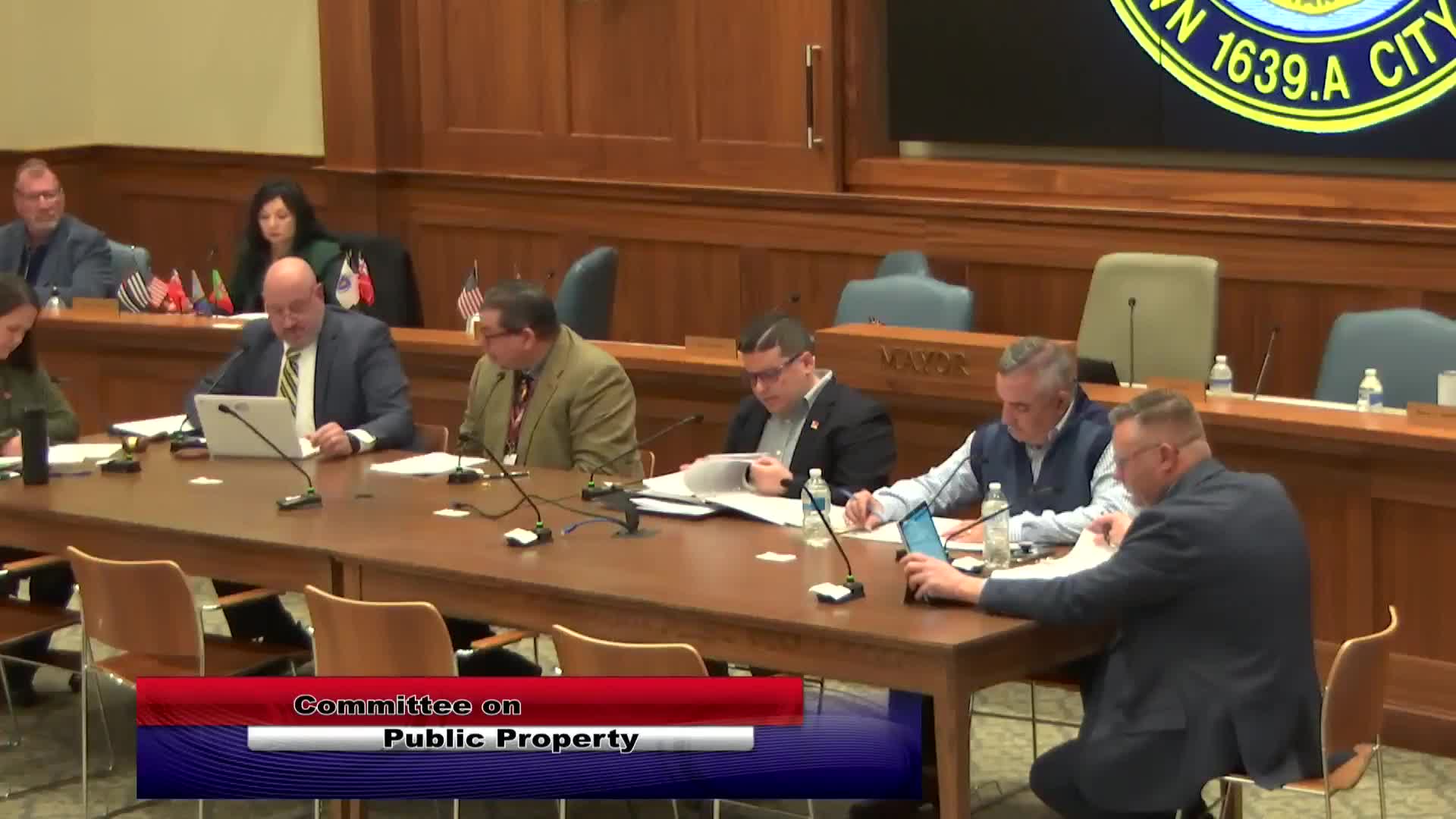
The vote follows a lengthy public-property committee session and more than two hours of public comment in which neighbors, youth-sports volunteers, veterans’ advocates and city officials debated housing, recreation and long-term municipal needs for the site. Supporters of keeping the parcel under city control argued the land should be preserved for future school or recreational uses; advocates for redevelopment emphasized the city’s maintenance costs and veterans’ housing needs.
Why it matters: The vacant nursing-home building has been unused since mid-2019 and, city officials said, is costing taxpayers roughly $200,000 a year to maintain. Councilors and members of the public raised competing priorities — preserving open space near two schools and youth sports complexes versus using the existing building or site to add affordable or veterans housing — while city staff warned the structure is deteriorating and will require either significant repairs or removal.
Council discussion and motion
Councilor Coit moved that the council decline to declare the property surplus. The motion included an amendment directing the city superintendent of buildings to solicit and report demolition cost estimates to the council. That amendment, and the underlying motion, were ratified by the full council 6–3.
After discussion, the council recorded the roll-call ratification as: Yes — Councilors McCall, Borges, Martin, Quintel, Postel and Coit; No — Councilors Pottier, Sanders and Duarte. The motion’s passage means the council will keep the parcel under municipal ownership and have concrete cost estimates for demolition available for future decisions.
What officials said
Chris Conlichael, listed in the meeting as superintendent of buildings, described the building’s deteriorating systems and said the city has spent money on roof work, boilers and sprinkler system maintenance. Patrick Dallers, identified as the city CFO in the meeting, joined administration staff in urging the council to consider all options; he said staff had spoken with several housing developers informally but no formal proposals had been submitted by the private sector before the meeting.
Councilor Martin said he would prefer demolition and retaining the land for future municipal needs, arguing that land is scarce and might be needed for a future school, fire station or other public use. “If I got to make my own decision it would be the unpopular one of tearing the building down and keeping that land for the city's use for the future,” Martin said during committee discussion.
Councilor Coit and others who favored retaining the property pointed to its context: the parcel sits adjacent to East Taunton Elementary, Chamberlain and Friedman middle school grounds, and two youth ball complexes. Coit said that the parcel’s rural-residential zoning limits new dense development there without rezoning or special permitting. “That area is a rural residential area… having a potentially dense housing project there would not fit with the character of the neighborhood,” Coit said.
Public comment and veterans’ housing
The meeting drew near-unanimous turnout from neighborhood residents and youth-sports volunteers who opposed substantial housing on the site and urged the council to keep the land open and to preserve safe outdoor space for children. Dozens of residents described daily use of the trails and fields and said they fear a housing redevelopment would alter neighborhood safety and character.
Veterans advocates and the city’s veterans director, Ally Rodriguez (identified in the meeting as director of veteran services), urged the council to consider veteran housing opportunities. Volunteers of America Massachusetts told the council it would consider responding to a formal request for interest and stressed that the organization would pursue state and federal affordable-housing funding if selected.
Study findings and planning constraints
Councilors and staff cited prior studies and constraints discussed earlier in the planning process: one market-development study referenced by staff estimated that adaptive reuse of the nursing-home footprint could yield roughly 25 residential units (12 units in the historic portion and 13 in the addition), but that multifamily construction for the broader lot would require rezoning or a friendly Chapter 40B process. Multiple councilors emphasized the difference between marketing analyses that assume “highest and best use” financially and city-led decisions that weigh community values and zoning.
Costs and next steps
City staff told the committee demolition estimates received more than a year ago ranged in the low millions; speakers mentioned a rough range of $1.5 million to $2.5 million depending on environmental findings and required abatement work. The council’s instruction to city staff was narrowly procedural: obtain demolition cost proposals and return that information to the council for a future public decision.
The council repeatedly stressed that a surplus declaration is not required to solicit expressions of interest or proposals and emphasized the council retains authority to reject offers or rescind any decision later. The motion’s passage preserves municipal ownership while allowing the council to compare demolition costs with potential private-sector proposals in deliberate public review.
Ending
The council’s action leaves the property owned by the city while creating a near-term deliverable — demolition cost estimates — for the council to consider. The issue is likely to reappear on council and committee agendas as staff present bids, any developer proposals that arrive, and further details on zoning, wetlands and funding possibilities.