Get Full Government Meeting Transcripts, Videos, & Alerts Forever!
Worcester providers warn state changes to emergency shelter rules could send some families out of region; city groups set working group, short-term hotel plan
Summary
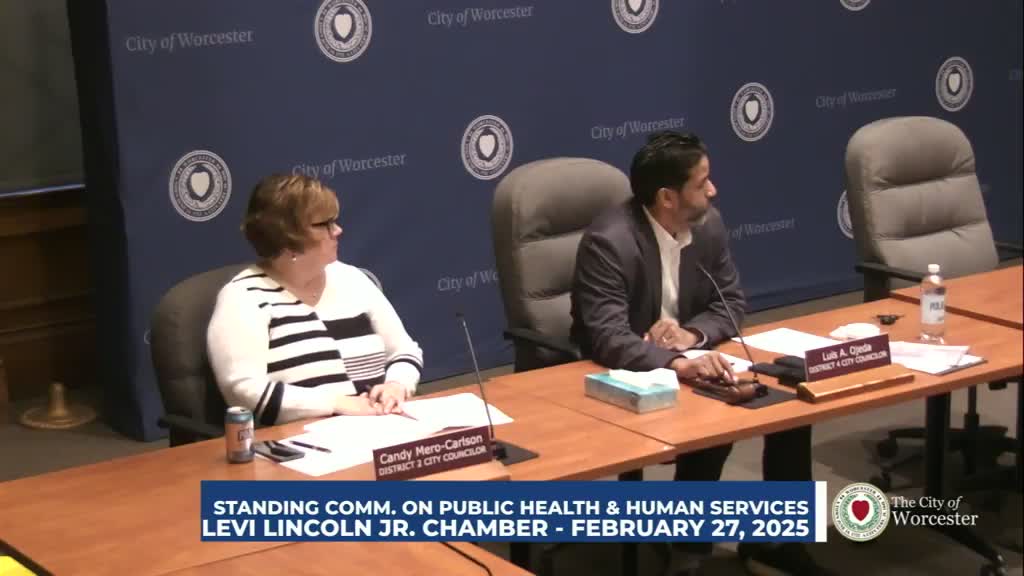
WORCESTER, Mass. — Leaders of Central Massachusetts housing providers told the Worcester City Council’s Public Health and Human Services Committee on Feb. 27 that proposed state changes to emergency assistance could reduce how long families may stay in bridge shelter from nine months to six months and, if enacted, could push some families out of the city to temporary respite centers in the eastern part of the state.
WORCESTER, Mass. — Leaders of Central Massachusetts housing providers told the Worcester City Council’s Public Health and Human Services Committee on Feb. 27 that proposed state changes to emergency assistance could reduce how long families may stay in bridge shelter from nine months to six months and, if enacted, could push some families out of the city to temporary respite centers in the eastern part of the state.
The providers said the current system places families who meet “priority 1 through 3” criteria into shelter or a clinical assessment center immediately, and that the bridge shelter now allows nine months with some three-month extensions. “When the governor signs the supplemental budget, that will change to six months with no extensions, with a hardship waiver,” said Leah Bradley of the Central Massachusetts Housing Alliance, describing language in the proposed state changes.
Why this matters: Providers and city officials said shortening shelter stays and narrowing eligibility could disrupt children’s schooling and family stability if families are relocated out of Worcester. Local agencies described steps they are taking now to reduce the chance that people will be discharged to the street, and to coordinate resources…
Already have an account? Log in
Subscribe to keep reading
Unlock the rest of this article — and every article on Citizen Portal.
- Unlimited articles
- AI-powered breakdowns of topics, speakers, decisions, and budgets
- Instant alerts when your location has a new meeting
- Follow topics and more locations
- 1,000 AI Insights / month, plus AI Chat