Get Full Government Meeting Transcripts, Videos, & Alerts Forever!
Get email alerts on the Hydrant Visibility topic
No spam. Unsubscribe anytime.
Worcester officials decline citywide hydrant pole‑attachments, direct water department to study reflectors and upkeep
Summary
The Public Safety Committee heard results of earlier hydrant pole‑attachment pilots, including operational and maintenance concerns, was told a full citywide installation could cost about $250,000, and directed the Water Department to review painting and reflective markers to improve hydrant visibility.
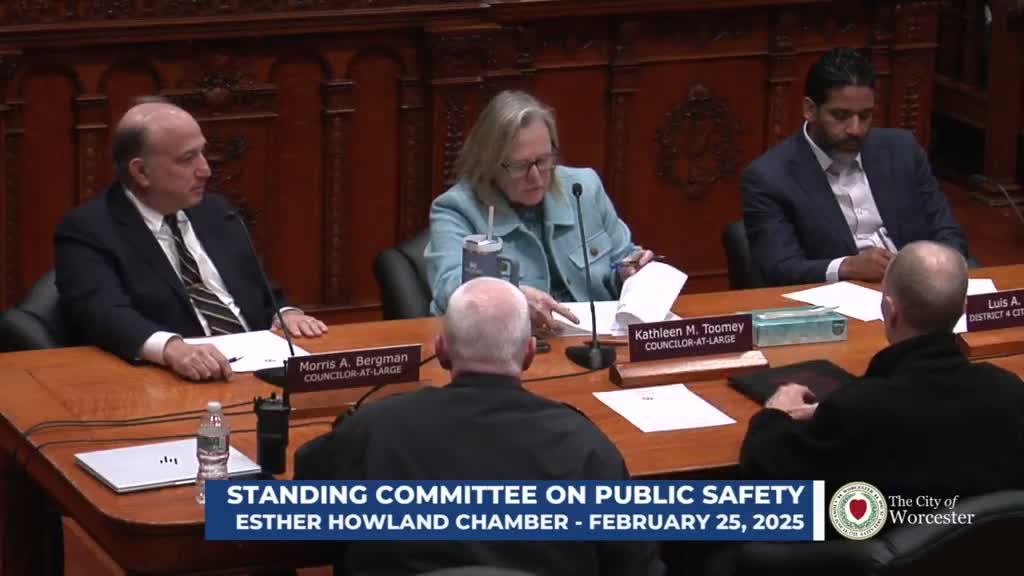
The City of Worcester Public Safety Committee discussed the feasibility of installing pole‑attachment markers on fire hydrants and decided not to move forward with a full citywide installation after hearing staff concerns about operational interference, vandalism and cost.
Fire Chief Martin Dyer told the committee that a pilot years earlier tested pole attachments but that “they do tend to get in the way when you're actually trying to take the hydrant.” He added that modern incident response uses an electronic hydrant layer on department iPads, which helps crews locate hydrants accurately. Dyer said a citywide installation “would cost probably at least $250,000, to install on every hydrant, and then there would be more for maintenance costs going forward.”
Committee members raised maintenance and visibility questions: springs or mechanical parts on attachments can be damaged by vandalism or wear, and differing materials (plastic or metal attachments) would affect repainting and repair costs. The chief said many Worcester hydrants are located at intersections and spaced about every 500 feet, and repeated the department's view that the current GIS/iPad technology mitigates the operational need for attachments in the city’s largely urban layout.
A resident suggested reflective materials for markers and another asked about city trucks marking hydrants in snow; Chief Dyer praised the city's Department of Innovation and Technology and its GIS layer for hydrant location but said the painting and physical upkeep of hydrants is the responsibility of the Water Department. Chair Kate Toomey said she would file a chairman's order requesting the Water Department review hydrant painting, reflective material and general upkeep to improve nighttime and snow‑time visibility.
Committee members also discussed nontechnical options for hydrant visibility and upkeep: public service reminders to clear hydrants in snow, possible involvement of summer youth employment programs for basic upkeep around hydrants, and coordination with the Water Department and DPW on a report back to the committee.
No formal vote was recorded on a purchase or installation; the committee directed staff to request a study from the Water Department about painting, reflective markers and maintenance.