Get Full Government Meeting Transcripts, Videos, & Alerts Forever!
Get email alerts on the Local Government Fees topic
No spam. Unsubscribe anytime.
House passes law setting guardrails for local fees, narrows exemptions for religious property — HB 454 passes 70–3
Summary
After a monthslong negotiation and several floor amendments, the Utah House on March 3 approved HB 454 governing local transportation and utility fees, adding public notice and expiration requirements and carving a narrow exemption for certain religious meeting houses. The measure passed 70–3.
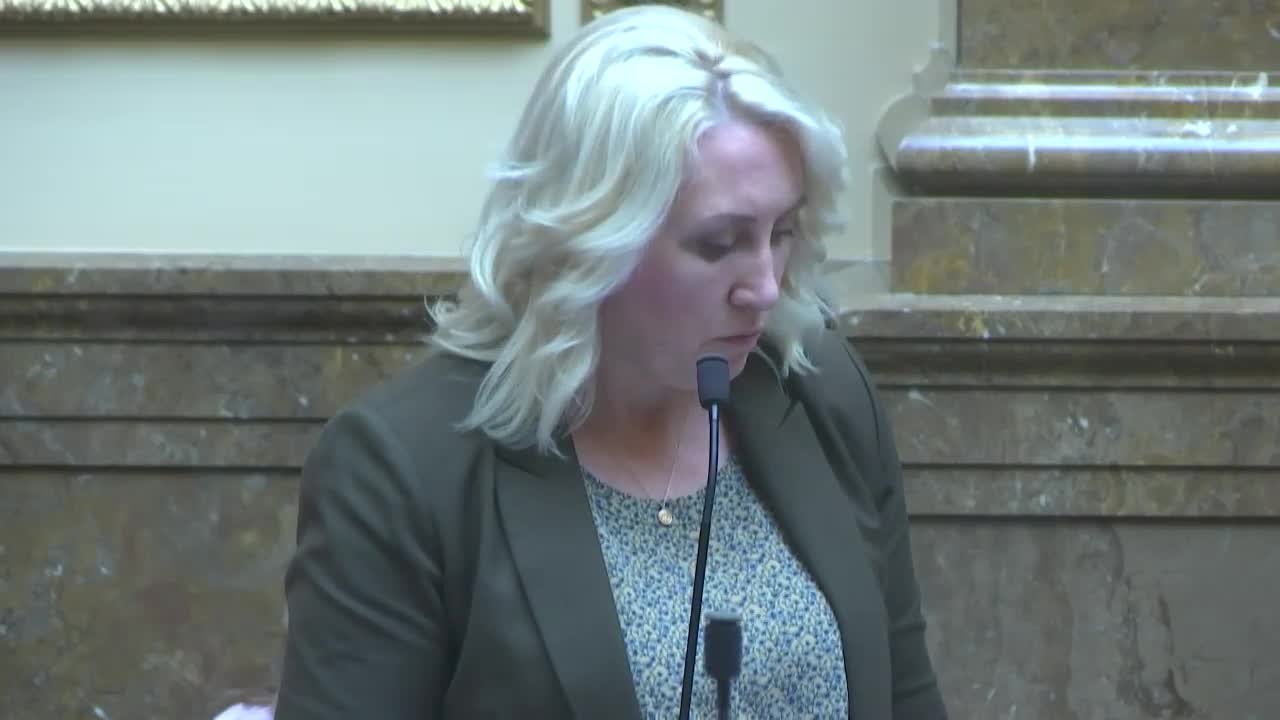
The Utah House on March 3 approved HB 454, local government fees modifications, after floor debate over whether religious organizations should receive exemptions from certain fees. Representative Karen Peterson, the sponsor, described the substitute as a compromise she said preserves cities’ ability to charge user‑based fees while protecting meeting houses and certain administrative church buildings from specified charges.
What the bill does: Representative Peterson said the measure precludes some general fees (narrowly drawn to transportation utility fees) from being imposed without a public, quasi-truth-in-taxation style process and requires fees to expire every 10 years. The substitute also aims to keep a tight nexus between users and fees and preserves charging by volunteer fire departments. She said the substitute was negotiated over roughly two years with cities, counties and faith organizations to find a workable compromise.
Debate and dissent: Several members, including Representative Thurston and Representative Snyder, opposed an early substitute that would have provided broader exemptions. Thurston and others warned that exempting large nonprofit landowners shifts costs to other property owners; Snyder said water-related costs are effectively already borne by property-tax payers and cautioned against new carve-outs. Supporters including League of Cities and Towns representatives expressed support on the floor for the final substitute.
Outcome: The House considered and rejected a first substitute attempt at an exemption, then took up the underlying substitute. The final vote on the adopted bill was 70 yeas to 3 nays. Representative Peterson said the package provides guardrails for fee administration, including public hearings and a 10-year expiration on fees.
Ending: The bill moves to the Senate. Sponsor and municipal-government supporters said the measure balances municipal revenue needs for infrastructure with public-notice and sunset protections; opponents urged caution about the long-term distribution of local costs.