Get Full Government Meeting Transcripts, Videos, & Alerts Forever!
Get email alerts on the Election Administration topic
No spam. Unsubscribe anytime.
House approves election-record preservation bill requiring digital copies, 60–13
Summary
After floor debate about access and cost, the Utah House on March 3 passed HB 263 (election records amendments) requiring county clerks to create and retain digital copies of election records for up to 12 years and to permit research under defined safeguards. The bill passed 60–13.
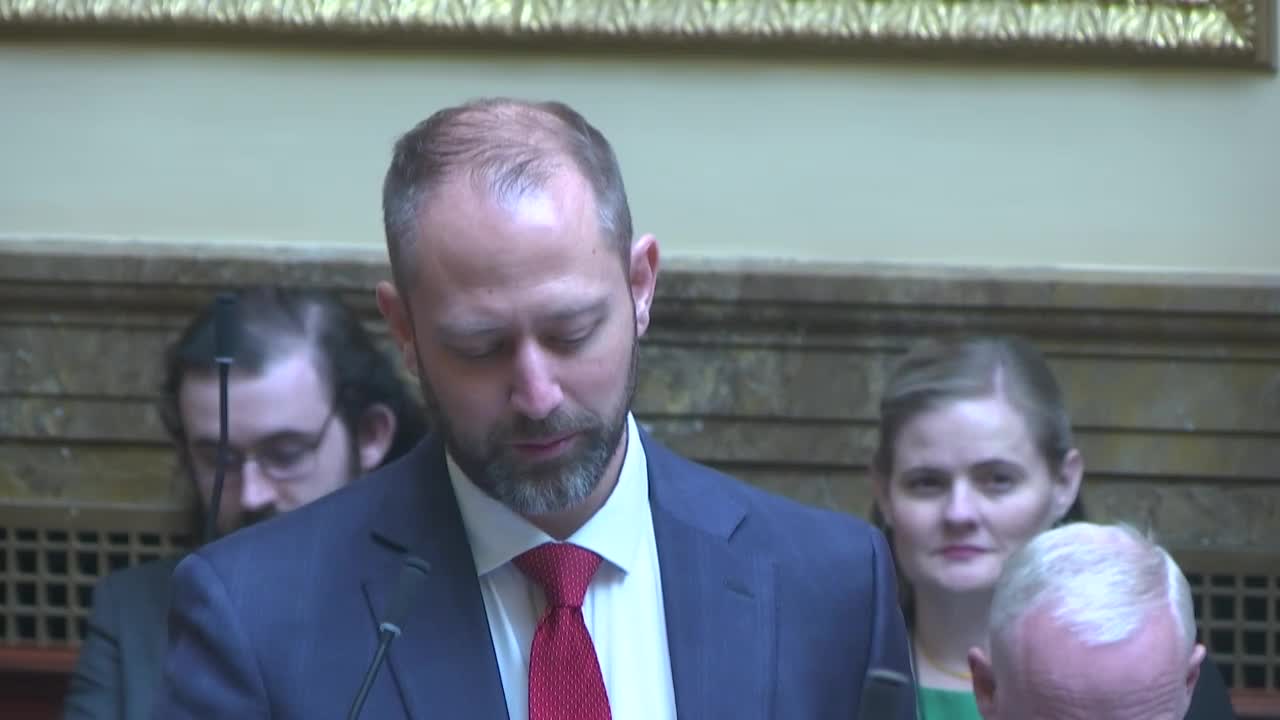
The Utah House passed HB 263 (election records amendments) on March 3 after lawmakers debated whether county clerks should be required to preserve electronic images of election documents and who may access them for research. Representative Thurston, the sponsor, said the measure responds to practical barriers staff encountered when attempting to research postmark and delivery data from prior elections.
Thurston told the body clerks already create digital images of some ballots when they scan incoming mail and drop-box returns, but he said statute and retention rules had led clerks to destroy scanned records after a statutory retention period. “So what this bill does is it does three things,” Thurston said: it clarifies what election records should be kept; requires counties to create an electronic copy and preserve it; and establishes limited, controlled access for research by legislative committees, certain state offices and county officials, with county-commission approval required in some cases.
Financial and operational impact: Thurston and questioners discussed cost and implementation. The sponsor said the average county cost would be in the low single-digit thousands of dollars (for example, an estimate described on the floor was roughly $100,000 divided by 29 counties, i.e., about $2,000–$4,000 per county depending on existing capacity). The bill does not require new scanning equipment in most cases; it focuses on long-term storage and preservation with safeguards described on the floor.
Safeguards and access: The bill authorizes limited research access for legislative committees, the lieutenant governor’s office, the attorney general and the state auditor; county clerks and county legislative bodies can request or approve research as appropriate. Sponsors said the statutory changes include guidelines to protect ballot integrity and private data while giving the legislature the ability to request post-election research.
Outcome: The House passed the bill 60 yeas to 13 nays; the measure will be transmitted to the Senate for consideration.
Ending: Supporters framed the bill as a simple, practical step to ensure the Legislature and election officials can study election administration issues without losing records; some county clerks and officials warned about operational burdens and urged more centralized solutions, but the sponsor said the state archives director offered help and guidance.