Get Full Government Meeting Transcripts, Videos, & Alerts Forever!
Get email alerts on the State Procurement topic
No spam. Unsubscribe anytime.
Idaho House debates procurement reforms; House Bill 301 fails after floor vote
Summary
House Bill 301 proposed new procurement timelines and requirements for agencies requesting line-item appropriations and for RFP processes; sponsors said the bill would provide consistency and reduce litigation; bill failed to pass the House.
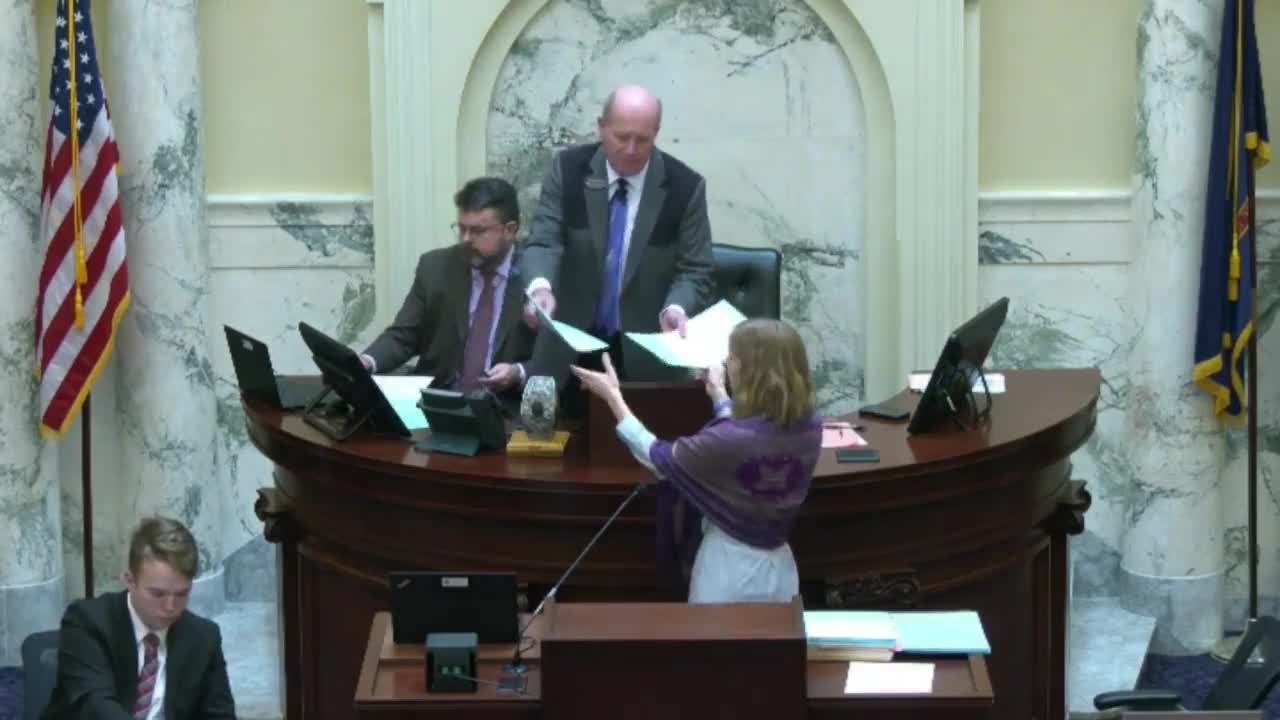
House Bill 301, a broad package of procurement and purchasing changes for Idaho state agencies, was debated on the House floor on March 3 and failed to pass.
Representative, District 34 presented the bill as an attempt to standardize procurement steps, require agencies to pursue RFIs or RFQs for requests above $250,000, publish intent-to-solicit notices, and set specific timelines for solicitations, reviews and award notifications. The sponsor said the bill would increase certainty for vendors and reduce litigation stemming from inconsistent treatment of solicitations. She described provisions to preserve an agency’s ability to respond to emergencies and to permit multiple awards where appropriate.
During floor questioning, other members asked whether these requirements are already handled in existing legislative or committee review processes; the sponsor responded that practice varies by agency and the bill was intended to bring consistency. One question asked whether the governor’s emergency declaration provision would allow the executive to allocate funds without legislative approval; the sponsor replied it would not change the legislature’s role.
On a subsequent recorded vote the bill failed to pass the House. The clerk announced the final status as "failed to pass the House" and the measure will not advance from the House in its present form.
Supporters said the bill would require agencies to demonstrate market information for large line-item budget requests and impose predictable timelines (60 days for vendor response, 60 days for state review, and an additional 30-day extension by request). Opponents and some questioners said committees already require backup during budget review and that the bill may be prescriptive in law rather than administrative rule.
The failure leaves the status quo in place; sponsors indicated some provisions could be revisited in committee-level work or in future sessions.