Get Full Government Meeting Transcripts, Videos, & Alerts Forever!
Get email alerts on the Education School Leadership topic
No spam. Unsubscribe anytime.
Committee backs apprenticeship route to help rural districts fill administrator vacancies
Summary
The House Committee on Education voted to send House Bill 295 to the floor with a due-pass recommendation after debate over whether an apprenticeship pathway will ease administrator shortages in rural Idaho school districts.
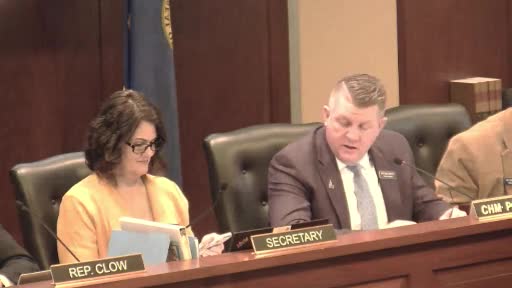
House Committee on Education Chairman Pickett on Friday moved House Bill 295 to the full House with a due-pass recommendation after roughly an hour of questions and public testimony.
The bill, sponsored by Representative Dale Hawkins, would create an administrator leadership apprenticeship program to expand the pipeline for principals and superintendents by allowing experienced professionals from other industries to pursue school administrative certification through supervised apprenticeships and coursework at regionally accredited Idaho higher education institutions.
The measure is aimed at rural districts that say they struggle to recruit and retain school leaders. "We have a gap, we have an issue; small communities are the ones suffering," Representative Dale Hawkins said, describing why he brought the bill. Hawkins told the committee apprenticeship participants still would have to meet existing educational requirements: principals must hold at least a bachelor's degree and superintendents a master's degree and be sponsored by a public school district or local education agency before becoming eligible for certification.
Opponents told the committee the bill does not address underlying causes of turnover. "The issue hasn't been can we find somebody that's certified. The issue is how do we attract and retain people and it generally is rural districts," Andy Grover, executive director of the Idaho Association of School Administrators, testified in opposition. Grover cited statewide certification numbers and local recruitment patterns, arguing that certification alone has not solved turnover in the same handful of districts.
Committee members pressed the sponsor and witnesses on details the bill does not specify, including whether Idaho universities have apprenticeship programs in place, how mentoring would work in districts that lack experienced administrators, and whether an Office of Performance Evaluation study should be done to identify causes of vacancies. Representative Hawkins said universities had not reached consensus and that program design and oversight would still involve Idaho institutions and the state education system.
After public testimony and questions, Representative Ehart moved to send the bill to the House floor with a due-pass recommendation. A roll call recorded nine ayes (Pickett, Hawkins, Clow, Mendyff, Ehart, Vishnevski, Harris, Marmon, Tanner) and five nays (Garner, Nelson, Sauter, Matthias, Church); the motion carried. The committee record shows no amendments and no change to certification requirements in the bill text as discussed at the hearing.
Committee discussion and testimony highlighted recurring concerns that apprenticeship alone may not overcome pay differentials, community conditions, or workload in small districts. Supporters said the bill provides an additional option — not a replacement — for districts that cannot recruit certified administrators through existing paths.
The bill will proceed to the House for floor consideration.