Council hears agritourism zoning draft and farm-stay pitch including small 'box house' overnight units
Loading...
Summary
City staff introduced a draft agritourism definition and zoning approach; Dustin and Curtis Rowley described event venue operations and a proposal to allow short-term stays (box houses/ yurt-style units) on orchards. Council discussed utility hookups, parking, conditional-use standards, taxation and next steps through planning commission.
City planning staff and residents briefed the Santaquin City Council on a draft agritourism ordinance and a proposal to permit short-term overnight stays on agricultural properties during the March 4 work session.
Planner Jason summarized a draft definition that would allow visitors to "view and participate in agricultural-related activities for recreational, entertainment or educational purposes" with commercial activities "secondary to and supportive of the agricultural use." He said the draft aims to preserve the agricultural character of orchards and farms while allowing activities such as markets, "you-pick" events, photography and receptions that help keep farms economically viable.
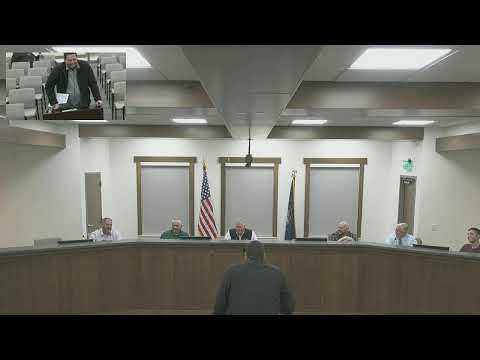
Dustin Rowley, whose family operates an event venue and orchard north of Macy's, told council members the proposal envisions small, well-built "box house" units (a semi‑permanent, compact dwelling similar to a studio) for short stays so visitors can attend events and also take part in seasonal farm activities. "We're interested in being compliant," Rowley said, and noted the need to connect any units to city culinary water, sewer and power.
Council discussion focused on several regulatory topics: whether agritourism should be a conditional use with specific standards (parking, access roads and limits on gravel parking in agricultural contexts), whether overnight units would be treated as permanent dwellings or hospitality uses, utility and sanitation hookups, and potential hospitality-tax implications. Several council members and staff noted that short-term stays should not become long-term housing and suggested caps by acreage or a units-per-acre calculation to keep the use supportive of agriculture rather than converting orchards into full-time lodging.
Rowley said interest from venue clients is high: "About 70% of people who book an event ask if there's somewhere to stay," and that the family is considering clustering a small number of units where utilities can be served. He and staff agreed that a conditional-use process and detailed conditions would be appropriate; Jason said the next step is to refine draft conditions and send the ordinance to the planning commission for public hearing and recommendation before the council considers an ordinance.
No ordinance vote was taken; council members asked staff and the applicants to continue drafting the proposal with clear conditions for parking, access, utilities and limits on unit numbers and to return it to the planning commission for formal review.