Get Full Government Meeting Transcripts, Videos, & Alerts Forever!
Get email alerts on the Professional Exam Policy topic
No spam. Unsubscribe anytime.
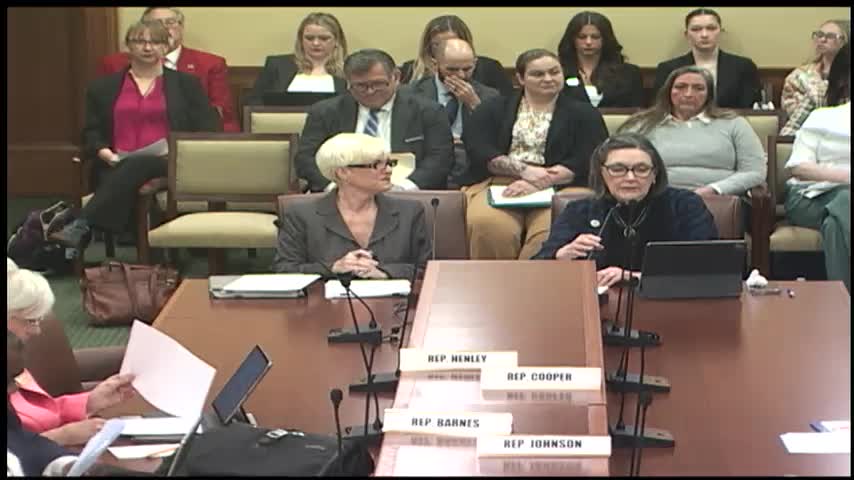
House committee rejects proposal to add state‑administered massage exam option after hours of debate
Summary
After extended testimony and debate, the House Public Health, Welfare and Labor Committee voted down Senate Bill 168, which would have allowed Arkansas to offer a state-designed massage-therapy exam as an alternative to the national exam; opponents raised concerns about cost, test maintenance and professional standards.
Senate Bill 168, as amended, would have authorized the Arkansas Department of Health to offer a state examination as an optional pathway to licensure for massage-therapy graduates and apprentices who meet Arkansas education requirements. The sponsor, Representative Carolyn Brown (District 67), presented an amended bill that removed an emergency clause and clarified the state exam is optional and would not replace the national examination.
Supporters including Julie Eckert and massage‑therapy instructors argued the national exam (the MBLEx) is out of scope for Arkansas’s 500‑hour education requirement and that a state exam based on Arkansas educational texts would be fairer and less likely to penalize local graduates. Eckert described concerns about the national exam’s computer-adaptive format and cited pass-rate data she said indicated Arkansas test-takers were disadvantaged. She also said the state exam had already been drafted and provided to a third‑party vendor for administration.
Opponents — including multiple licensed massage therapists, school instructors and a representative of the Federation of State Massage Therapy Boards — raised concerns about duplicating the nationally recognized test, the cost to create and maintain a separate exam, and the administrative burden on the Department of Health. The Department of Health told the committee it was neutral on the bill, said it could implement a state exam if required, and provided cost estimates discussed in the hearing: earlier estimates from a third‑party vendor were about $10,000 for implementation and roughly $78 per test-taker; a different vendor later said zero implementation cost and $90–$99 per exam. The department said administration and oversight would likely be contracted to a third party and that the applicant (student or apprentice) would pay the testing fee.
Committee members questioned the expected pass rate, portability of state licensure to other states, accessibility considerations for test‑takers with disabilities and whether the state had a shortage of massage therapists. Witnesses and the department gave conflicting statements about pass rates and test logistics; the department said Arkansas’s pass rate on the national exam was about 80% but that it could not reliably project whether the state exam would produce a higher or lower pass rate.
After extended Q&A and public testimony, Representative Bill Clinton (Representative Pilkington in the transcript) urged the committee to support an Arkansas option so Arkansans could choose a pathway that fits their needs. Committee leadership called the final vote by voice; the chair announced “No. The rule of no’s have it. The bill has failed.” The transcript records the committee’s rejection; no roll-call tally appears in the excerpt.
The record shows broad stakeholder disagreement about whether a state exam would increase the number of licensed therapists, how costs would be handled, and whether a separate state exam would affect public safety or human‑trafficking risks. The Department of Health said it would likely contract test administration to a third party and the applicant would pay the fee; committee members did not adopt further amendments to resolve fiscal and portability concerns before voting.