Get Full Government Meeting Transcripts, Videos, & Alerts Forever!
Get email alerts on the Land Use Agritourism topic
No spam. Unsubscribe anytime.
Yakima County pauses agritourism code rewrite after Washington Supreme Court decision raises SEPA and land‑use questions
Summary
Planning staff told commissioners a recent Washington Supreme Court ruling that struck down King County's agritourism ordinance requires Yakima County to reconsider whether it can apply non‑project SEPA and how it classifies wineries, breweries and distilleries within agricultural code changes.
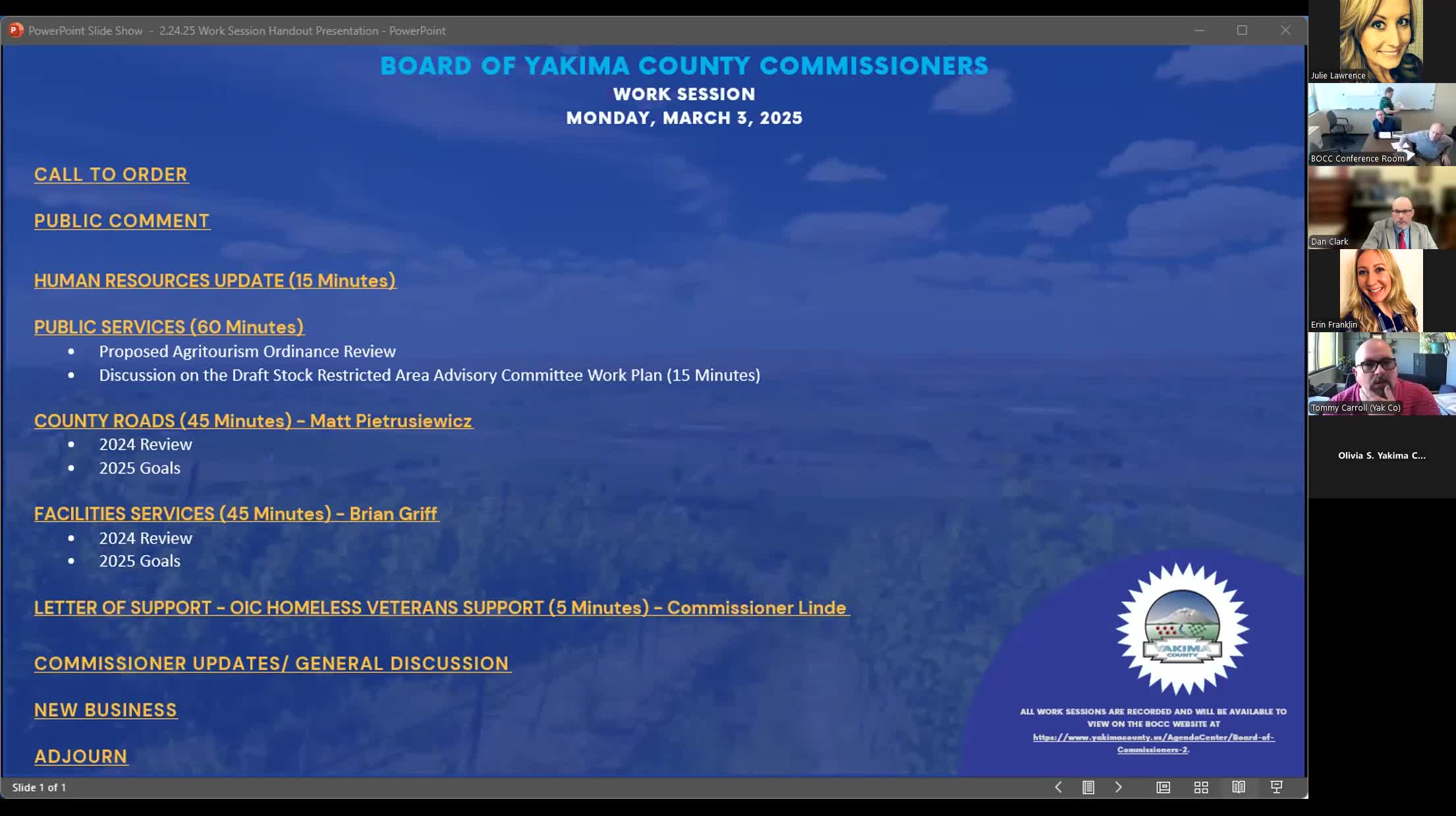
Planning staff told the Yakima County Board of Commissioners on March 3 that a narrow Washington State Supreme Court decision on King County’s agritourism ordinance complicates the county’s proposed changes to agritourism, winery/brewery/distillery and outdoor festival rules.
The county’s planning lead, Tommy Carroll, said the court’s ruling effectively prevents jurisdictions from grandfathering new land uses into existing permits and casts doubt on whether uses such as wineries and tasting rooms qualify as agricultural uses under the state’s land‑use rules. “The Supreme Court ruled that King County can’t grandfather any existing land uses to be allowed to do any new land uses that would be approved in a future ordinance,” Carroll said. He added the decision “insinuates…that certain agricultural things that we would refer to as agricultural uses…may not necessarily be considered agricultural uses.”
Carroll told the board that corporate counsel reviewed the King County opinion and advised staff to compare the court’s findings to Yakima County’s draft ordinance and existing code. Carroll said the ruling also criticized King County’s use of a non‑project SEPA determination (a code‑level environmental review) and suggested the changes could require project‑level environmental review, potentially including an environmental impact statement if the county’s code changes would allow many more event or accessory uses in agricultural zones.
Why it matters: the draft changes in Yakima County would have lowered the lot size threshold for agritourism operations from 5 acres to 1 acre and would have explicitly included accessory uses such as food service and events. Carroll warned that, if Yakima adopts similar code language, the county might be required to complete site‑specific SEPA reviews for each existing winery, brewery or distillery that wants to expand beyond the scope of its current permit. “We might have to do a full environmental review, potentially an environmental impact statement for the whole county,” Carroll said.
Board members and corporate counsel flagged the legal risk and the potential timetable effects. Dan Clark, corporate counsel, said the county needs to work closely with the counsel’s office to ensure compliance and to set a defensible path forward. Carroll said the county previously issued a Determination of Non‑Significance (DNS) and that, if SEPA must be re‑started, staff would withdraw the DNS, re‑notice the code amendment, open another public comment period and potentially extend the timeline by months. Carroll told the board that the procedural step to withdraw the DNS and re‑notice would itself add about two months, and further environmental review could extend the process by six months or longer depending on findings.
Commissioners expressed support for continuing the code update work while incorporating the legal review. One commissioner urged staff not to “put this on a shelf,” but to return with a short plan outlining necessary legal steps and timelines. Carroll and corporate counsel agreed to prepare a follow‑up for the board; the commissioners scheduled a check‑in for the March 17 work session.
What remains unresolved: whether the county will pursue an environmental impact statement; how the county will treat existing permits that do not authorize accessory uses now proposed; and whether adopting the draft code could invite legal challenges to both the proposed changes and to existing code. Carroll cautioned that the King County decision affects existing code as well as proposed changes and could overlap with comprehensive plan updates due by June 2026.
The board directed staff to work with corporate counsel and return with proposed next steps and an estimated timeline for March 17.