Get Full Government Meeting Transcripts, Videos, & Alerts Forever!
Get email alerts on the Education topic
No spam. Unsubscribe anytime.
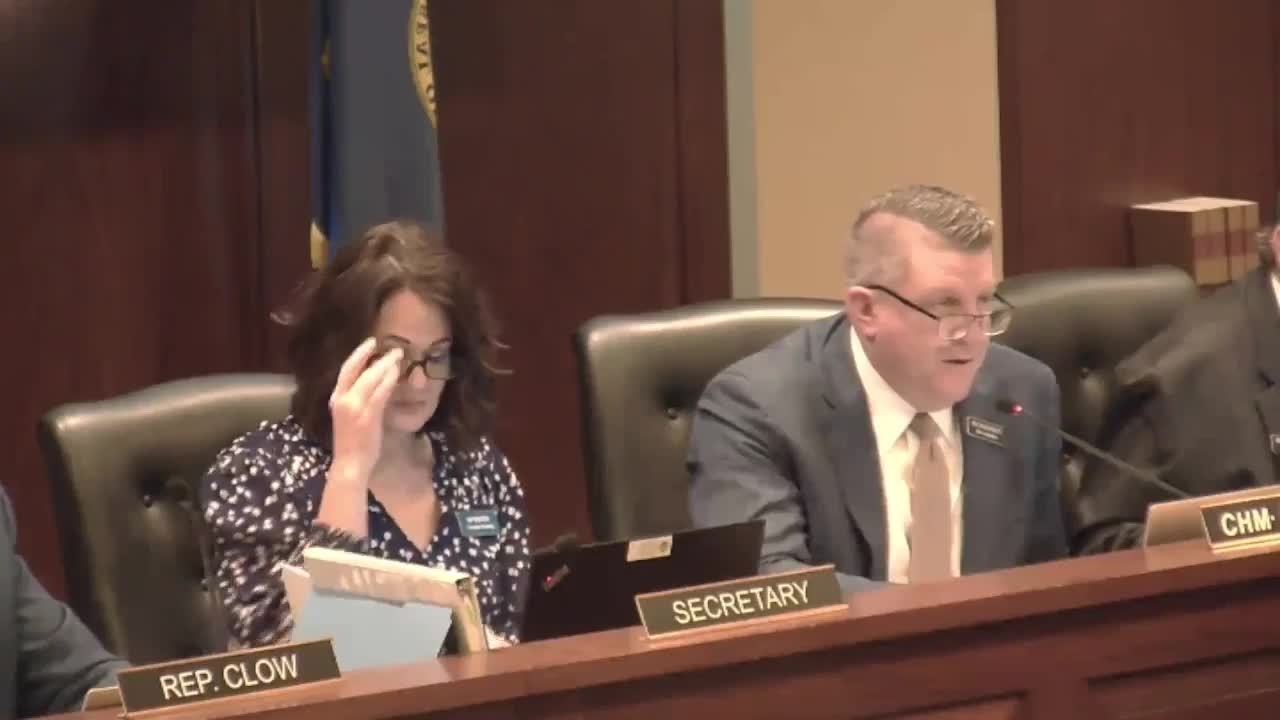
House committee advances bill to create Idaho High Needs Student Fund after extended testimony on special education costs
Summary
The Idaho House Committee on Education voted 11‑3 to advance House Bill 291, creating a proposed Idaho High Needs Student Fund intended to help districts cover exceptionally large special‑education expenses.
BOISE — The Idaho House Committee on Education voted 11-3 on March 4 to send House Bill 291, the Idaho High Needs Student Fund, to the House floor with a due-pass recommendation after more than an hour of testimony from the bill sponsor, state education officials and special‑education directors.
Representative Ben Furman, R‑District 30, introduced the bill as a targeted fund to help school districts cover exceptionally high special‑education costs. "It is known as Idaho High Needs Student Fund Bill," Furman said when presenting the measure to the committee.
The bill would create a dedicated state fund, proposed at $3,000,000, to reimburse districts for high per‑student special education expenses that exceed baseline amounts. "This is another funding stream that will help open up an additional funding source for students who have very high costs," China Hirasaki, special education director for the Idaho Department of Education, told the committee. Hirasaki said for the 2023–24 school year IDEA funds covered about 17 percent of special‑education costs ("which equated to about $70,000,000") and Medicaid reimbursed roughly 15 percent ("around $60,000,000"); the remaining 68 percent (about $271,300,000) came from state and local sources.
The committee heard detailed examples from district special education directors about how costs can escalate. Kendall Mason, special education director for Twin Falls School District, said "2 ASL interpreters last year cost us $117,149," and that residential placements can run $100,000–$200,000 annually. Ramona Lee, special education director for West Ada School District, testified that skilled nursing can cost districts about "$52.99 per hour beyond any Medicaid reimbursement rate" and that her district's lowest contracted ASL rate is "$67 an hour," with online on‑demand interpreting sometimes billed at "$1.99 per minute." Witnesses said those costs often cannot be fully reimbursed by Medicaid and that provider shortages drive up contract rates.
Committee members pressed staff on how the fund would operate and whom it would serve. Hirasaki described a reimbursement application process tied to a student’s Individualized Education Program (IEP) and said districts would need to document expenditures and any Medicaid claims. She said the proposal expects districts to cover the first $15,000 in a student's high costs; after that the fund would reimburse portions of additional costs under a tiered formula discussed in testimony (cited in the bill language as examples): "up to 100% of the cost above $15,000 capped at $65,000; up to 80% of the cost above $65,000; a maximum reimbursement of $100,000 per student" (figures discussed by staff and committee members during Q&A). Hirasaki and witnesses emphasized that exact amounts could vary by district and that the $3,000,000 proposal is a starting point that would be quickly requested by districts with multiple high‑cost students.
Committee members also asked about federal maintenance‑of‑effort rules. Hirasaki said state and local maintenance requirements mean that if the state increases funding one year and later reduces it, the federal IDEA grant could be affected: "if we did not meet our maintenance of financial support year over year, yes, our federal grant would be reduced by whatever we were not able to maintain." She added that the proposed fund would not immediately change current federal allocations but that the state must maintain overall support for special education.
After public testimony from several district directors and a superintendent praising the concept as "a good starting point," Representative Thaiss moved to send the bill to the floor with a due‑pass recommendation. The committee approved the motion by roll call, 11 yes, 3 no; the no votes recorded were Representative Hawkins, Representative Harris and Representative Marmon. The committee printed that result as "the motion carries and the bill will be sent to the floor with a due pass recommendation."
The bill’s supporters told the committee the fund is meant to lessen the burden on local levies and district budgets to cover extraordinary individual student costs, especially in rural districts where provider shortages and travel to services increase expense. Opponents and some members expressed concern that $3 million would be rapidly consumed by a small number of very high‑cost cases and that eligibility and prioritization rules would need careful design before final appropriation decisions on the House floor.
Votes at a glance House Committee on Education (roll call): yes — Chair Pickett, Clow, Mendive, Ehart, Fishniewski, Garner, Nelson, Sauter, Tanner, Matthias, Church; no — Hawkins, Harris, Marmon. Outcome: 11–3, motion carries; bill sent to the House floor with due‑pass recommendation.
The committee record shows additional written testimony was submitted by other stakeholders and that department staff will provide application and oversight details if the measure advances to appropriation committees.