Get Full Government Meeting Transcripts, Videos, & Alerts Forever!
Get email alerts on the Education—Taxonomy topic
No spam. Unsubscribe anytime.
Idaho committee advances bill to move high-school graduation requirements from rules into statute; debate over process and content continues
Summary
Representative Wendy Horman, sponsor of House Bill 298, told the House Committee on Education on Feb. 27 that the bill "takes graduation requirements out of rule and moves them into code," a change she said would raise legislative visibility and require legislative action for major future changes.
Representative Wendy Horman, sponsor of House Bill 298, told the House Committee on Education on Feb. 27 that the bill "takes graduation requirements out of rule and moves them into code," a change she said would raise legislative visibility and require legislative action for major future changes.
The bill would codify existing graduation requirements currently handled in State Board of Education rule and would make several notable changes: it would split a two-credit government requirement into one credit of government and one credit in Western civilization; it would allow students who serve as a page in the Idaho Legislature to count that service toward the government graduation requirement; it would move certain State Board rule language into statute about computer science credits and teacher endorsements (a 30-hour endorsement pathway for math and science teachers to teach computer science); and it would define dual credit in the graduation context as "coursework in which an Idaho public high school student" (text in the RS), reflecting language in the draft bill.
Why it matters: Supporters said moving requirements into statute increases transparency and gives elected representatives, and by extension the public, clearer oversight. Representative Horman, R-Bonneville County, said the bill was prompted in part by concerns from speech and debate teachers and students who worried a proposed rules change might reduce communications coursework as a graduation requirement.
Supporters and opponents
Senator Ben Toews, who spoke as part of the bill presentation, emphasized the workforce and civic case for maintaining speech and debate elements in graduation requirements, saying, "It is so important that... the students graduating from our schools have the ability to think critically and to speak, communicate well." Representative Wendy Horman also said that "if you serve as a page in the Idaho legislature you may count that as a graduation fulfilling your government graduation requirement."
Public testimony split along process and substance lines. Leslie Baker, board chair at Moscow Charter School and a member of the Department of Education—onvened graduation-requirements subcommittee, testified in opposition, saying the bill "appears to remove all input into the high school graduation requirements from anyone who works directly with students or is involved directly in education or workforce training and development." Baker said the subcommittee had held more than 20 meetings around the state and used a public comment period, and she asked the committee to oppose HB 298.
Marcy Kerr, a speech and debate coach at Pocatello High School, testified in favor of the bill, saying the State Board had been "inaccessible" to teachers and that the legislative process provides more direct access for constituents. Superintendent Debbie Critchfield, who is also a member of the State Board of Education, urged caution: she said the department and board—ollowed a negotiated-rulemaking process with public meetings and recommended the committee hold the bill to allow time to work through changes and to avoid implementing new requirements before districts could adapt. She also noted the bill includes an emergency/effective date language that would take effect July 1, and said that could create implementation problems for districts and current high-school students.
Process and implementation concerns
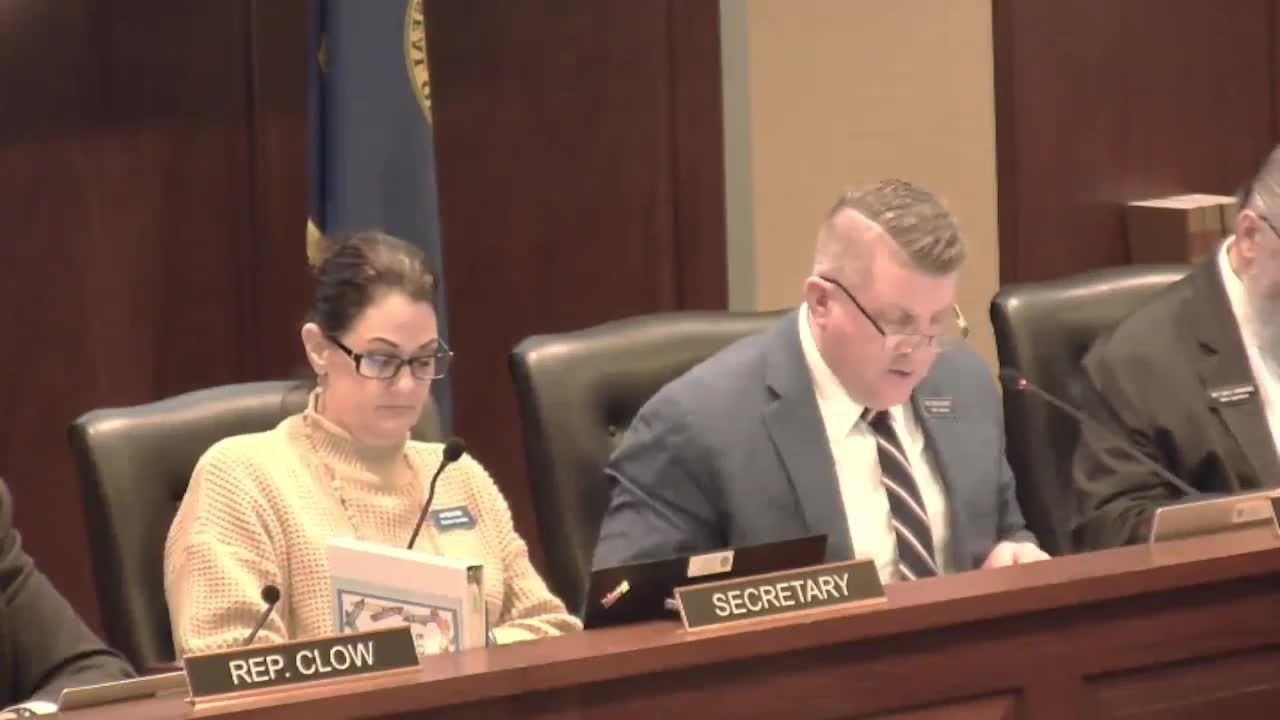
Opponents and some committee members urged delay to allow stakeholder input, grandfathering or a delayed effective date, and clarification of items they called substantive changes rather than simple recodification. Representative Clow and others warned that making Western civilization a stand-alone credit could require districts to create new courses and hire or reallocate teachers, and that moving requirements into statute without transition language could force current juniors and seniors to alter tightly planned course schedules.
Proponents argued the rules process remains available for detail work (including temporary rulemaking), and said codifying a baseline in statute will increase transparency and legislative oversight; Representative Harris said rules would still be promulgated and that moving baseline requirements into statute simply gives legislators greater say.
Formal action
After debate, the committee voted on two motions. A substitute motion to hold HB 298 in committee failed by a vote of 6 to 8. The committee then approved a motion to send House Bill 298 to the full House with a due-pass recommendation by a roll-call vote of 8 to 6. Committee members debated both the substance of the proposed changes (Western civilization credit; government credit reduction; page service counting; computer science endorsement pathways; CPR/contact-hour language) and the pace of implementation.
What—omes next
House Bill 298 will be reported out of committee with a due-pass recommendation and proceed to the House floor for further consideration. Committee members said they may continue to press for clarification, transition language, or amendments as the bill moves through the legislative process.
Ending
The committee chair reminded members the panel would reconvene the following morning at 8:30 a.m.; the committee adjourned at roughly 10:12 a.m. after the roll-call vote sending HB 298 to the House floor with a due-pass recommendation.