Get Full Government Meeting Transcripts, Videos, & Alerts Forever!
Get email alerts on the Council Compensation topic
No spam. Unsubscribe anytime.
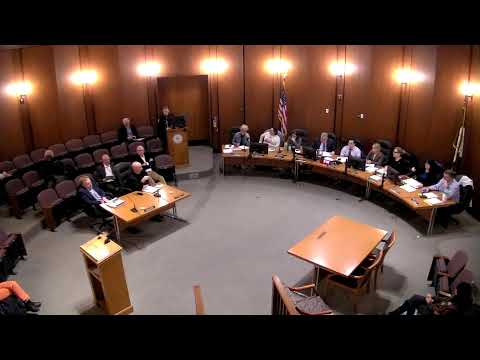
Bethlehem council approves raises for controller, mayor and some council seats after heated public debate
Summary
City Council voted to raise salaries for the city controller and the mayor and to set higher pay for four council seats in future terms; votes split and mayor said he will veto the mayoral increase.
City Council on Feb. 27 approved ordinances to raise pay for the city controller and the mayor and to change the compensation for council members, setting new rates that would take effect for officials sworn into office in 2026.
The council voted 4-3 to approve an ordinance changing council compensation, 6-1 to raise the controller's salary and 5-2 to raise the mayor's salary. Councilwoman Theresa Wilhelm, who sponsored the package, acknowledged the awkward optics of elected officials changing pay but said the increases are intended to broaden who can afford to run for office.
"Just because it's uncomfortable doesn't mean it's not the right thing to do," Wilhelm said in opening the discussion. She and supporters said the council stipend has not risen in about 16 years and that a modest increase would make civic office accessible to people who cannot otherwise afford the time and expense of public service.
Opponents — including several members of the public who brought petitions or urged council to reject raises — argued the city faces economic uncertainty and that elected officials should not increase their own pay now. A petition with roughly 150 signatures urging a no vote was presented at the meeting.
Mayor Reynolds, who spoke during the meeting, said he is opposed to increasing the mayoral salary and told council he will veto the mayor pay ordinance if it reaches his desk. "I'm not in favor of a salary increase," Reynolds said, adding he would veto the measure.
Solicitor John F. Burke Jr. and Solicitor Stewart (city solicitor) advised council about timing and legal limits. Because Pennsylvania law bars changing an incumbent officer's pay during a term, the ordinances set the salary levels for the next term beginning Jan. 1, 2026; that means only newly elected or reelected officials beginning that term would receive the higher pay. Stewart noted the mayoral salary can be structured with annual steps, but the constitutional restrictions prevent incremental changes for council members and the controller within an incumbent's current term.
Council votes on the three ordinances were as follows: the council-salary ordinance passed 4-3 (Ayes: Miss Kwiatak; Miss Laird; Miss Wilhelm; Mister Colon. Nays: Mister Callahan; Miss Grama Smith; Miss Leon). The controller ordinance passed 6-1 (Ayes: Mister Callahan; Miss Kwiatak; Miss Laird; Miss Leon; Miss Wilhelm; Mister Colon. Nay: Miss Grama Smith). The mayoral ordinance passed 5-2 (Ayes: Mister Callahan; Miss Kwiatak; Miss Laird; Miss Leon; Miss Wilhelm. Nays: Miss Grama Smith; Mister Colon).
Council members said the increases would be reflected in the 2026 budget process; City Administrator and finance staff said adding the package to 2026 would amount to about $23,325 across the positions and that the city would incorporate the change as part of its regular budget work. Several council members emphasized the need to show value for the extra money by pressing for more performance and public accountability.
The ordinances will return for final passage at the council's next meeting. The mayor's statement that he will veto the mayoral increase means council would need a two-thirds majority to override a veto; the solicitor noted the applicable timing rules make an override unlikely in this election cycle.
Quotes from public speakers and council members reflected the split view: a resident who delivered a petition said the raises would hurt residents already struggling to afford basic needs; another resident urged higher pay so that people without private means could seek elected office.
The council discussion included practical questions about how the changes would be implemented and whether a regular review could be encouraged in future years. Council members suggested internal procedural reminders for future councils to revisit compensation on a scheduled basis.
The ordinances will be posted for public notice and come back to council for final passage per statutory timing requirements.