Get Full Government Meeting Transcripts, Videos, & Alerts Forever!
Get email alerts on the Homelessness Shelters topic
No spam. Unsubscribe anytime.
City council approves additional inclement-weather contracts after debate over shelters and transparency
Summary
Spokane City Council voted to fund expanded inclement-weather shelter capacity, approving contracts with Salvation Army, Revive Counseling and Catholic Charities after debate about shelter types, transparency and neighborhood impacts.
The Spokane City Council on March 3 approved amendments to its inclement-weather contracts to expand emergency shelter capacity, voting to fund the Salvation Army and Revive Counseling together and separately approving an amendment for Catholic Charities.
Council took the votes after public comment from residents and service providers who urged either more shelter funding or changes to how taxpayer dollars are used. Tracy Guzman Kowalski, a social work student and crisis-response intern, told the council the amendment “allocates an additional $220,000 to expand emergency shelter services,” calling the funding “a lifeline for Spokane’s most vulnerable community members, unsheltered individuals, people with disabilities and low-income families who face extreme risks during severe weather conditions.”
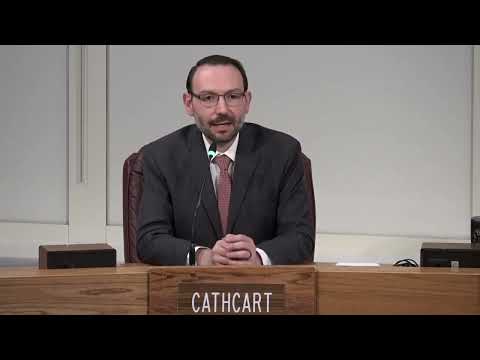
The votes followed a round of commentary both for and against specific providers. Council member Cathcart said she opposed using the Salvation Army site known as the Way Out Shelter for general sheltering because it had been repurposed as transitional housing and “should not remain a shelter in that way.” Council member Zappone, the district representative where the site is located, said neighborhood councils support using the site for inclement weather because the Salvation Army “have actually recommended the use” and the groups can keep separate populations.
Council members moved to take the amendments in two parts. They voted on items labeled A (Salvation Army) and C (Revive Counseling) together; council members voiced approval for those items. The council then voted on item B, the Catholic Charities amendment, and again recorded vocal approval.
Supporters at public comment urged both immediate funding and broader regional coordination. Wendy Fishburne, vice president of the East Spokane Business Association and a licensed marriage and family therapist, urged reactivating a previously organized regional collaboration around overdoses and homelessness, saying “You could start saving lives tomorrow.” Several speakers expressed concerns about specific providers: a caller, Christine Flynn, said she had lived in a Catholic Charities property and described repeated drug activity and asked the council to stop directing funds there; Council members noted those complaints and discussed transparency and oversight.
Council debate focused on two main tensions: whether to expand capacity through existing shelter operators (council members said scaling up existing providers was the most economical approach) and whether certain shelter sites, such as the Salvation Army property that had been intended as transitional housing, were appropriate for winter sheltering. Council members also emphasized the difficulty of finding new providers and sites quickly, and the practical need to boost capacity during cold weather.
The council president called for the votes after discussion. The meeting record shows vocal “ayes” from council for both the combined A & C motion and for B.
Looking ahead, some council members urged more transparency from providers and stronger regional coordination to address overdoses and shelter needs, while others emphasized rapid, practical expansion of bed capacity for cold-weather safety.
Ending: The contracts approved at the March 3 meeting expand short-term capacity for inclement weather; councilors and advocates signaled follow-up work on transparency, regional coordination and longer-term housing and recovery solutions.