Get Full Government Meeting Transcripts, Videos, & Alerts Forever!
Get email alerts on the Parks And Recreation topic
No spam. Unsubscribe anytime.
Council studies park shelter and field rental practices; staff asked to pursue commission review, public survey and enforcement options
Summary
Council received a staff study comparing shelter and field rental practices across nearby jurisdictions, discussed online reservation systems and enforcement, and directed staff to involve the Parks Commission, run a public survey and examine code, deposit and signage options before bringing recommendations back.
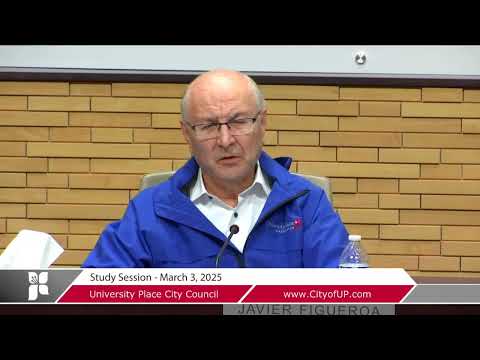
City staff presented a comparative study of park shelter and field rental policies and fees on Monday, and councilmembers used the discussion to press for clearer enforcement tools, a public survey of resident priorities and referral of the matter to the Parks Commission.
Public Works staff said University Place currently processes shelter use as a special-event permit with a total cost of $274 (about $130 of that is the facility usage component and $144 is the permit review fee that covers plan review and fire marshal checks). Staff said the city receives roughly nine formal shelter rentals per year under that system and otherwise allows first'come, first'served use when shelters are not reserved. Staff listed the city's primary picnic shelters as Surt Park (sometimes shown as Sert Park in materials), Kobayashi Park, Sunset Terrace and a band shell on the city's list, and noted an additional shelter at Homestead is planned.
The staff study surveyed 12 neighboring jurisdictions and found wide variation in fees and rules. Shelter fees ranged from roughly $25 to $625 depending on facility size, resident status and added services. Most surveyed jurisdictions (11 of 12) require insurance for rentals; staff highlighted an industry option called Gather Guard (available to WCIA members) that charges roughly $75 for a typical event policy. Nine of the 12 agencies require refundable damage deposits, and most jurisdictions restrict large rentals to peak months when weekend staffing is available. Staff said about half of the surveyed agencies provide online calendars and reservation systems; some jurisdictions use CivicPlus or similar platforms.
Staff told the council a stand-alone online reservation platform could provide a simpler public experience but that commercial systems commonly cited by comparable agencies can carry high startup costs (ballpark figures cited in the study ranged up to six figures for initial implementation plus annual maintenance in the low five digits). Staff said city IT would continue to research system alternatives and pricing.
Councilmembers focused discussion on enforcement and access. Several members said the underlying challenge is not the reservation software but uncontrolled use of parks by people who arrive without permits and leave trash or cause late-night noise. Councilmember Grassi and others recommended a refundable damage deposit for all rentals; Councilmember McCluskey and Mayor Figueroa asked staff to explore signage and code language that would give enforcement personnel clear grounds to address violators. Councilmember Wood and others urged that any fee structure be self-supporting and not subsidized from general revenues.
Council asked staff to take several next steps: return with recommendations after consulting the Parks Commission (park commission work plan already lists a rental/facility assessment item), run a public survey to measure resident demand and usage patterns, research lower-cost online reservation alternatives and clarify the staffing implications (including weekend staffing and spot checks), and draft recommended language on deposits, signage and potential code amendments to strengthen enforcement. Staff said they will incorporate council feedback and return with options for council consideration ahead of the peak rental season.