Get Full Government Meeting Transcripts, Videos, & Alerts Forever!
Get email alerts on the Public Health Funding Federal Risks topic
No spam. Unsubscribe anytime.
Public Health Seattle King County warns federal moves could cut programs and urged local mitigation
Summary
Director Khan told the Board of Health that federal reductions and website removals are creating confusion and potential funding losses for public‑health programs; he highlighted possible loss of nearly $2 million from the White House Office of Gun Violence Prevention and uncertainty for CDC grants such as REACH and public‑health infrastructure.
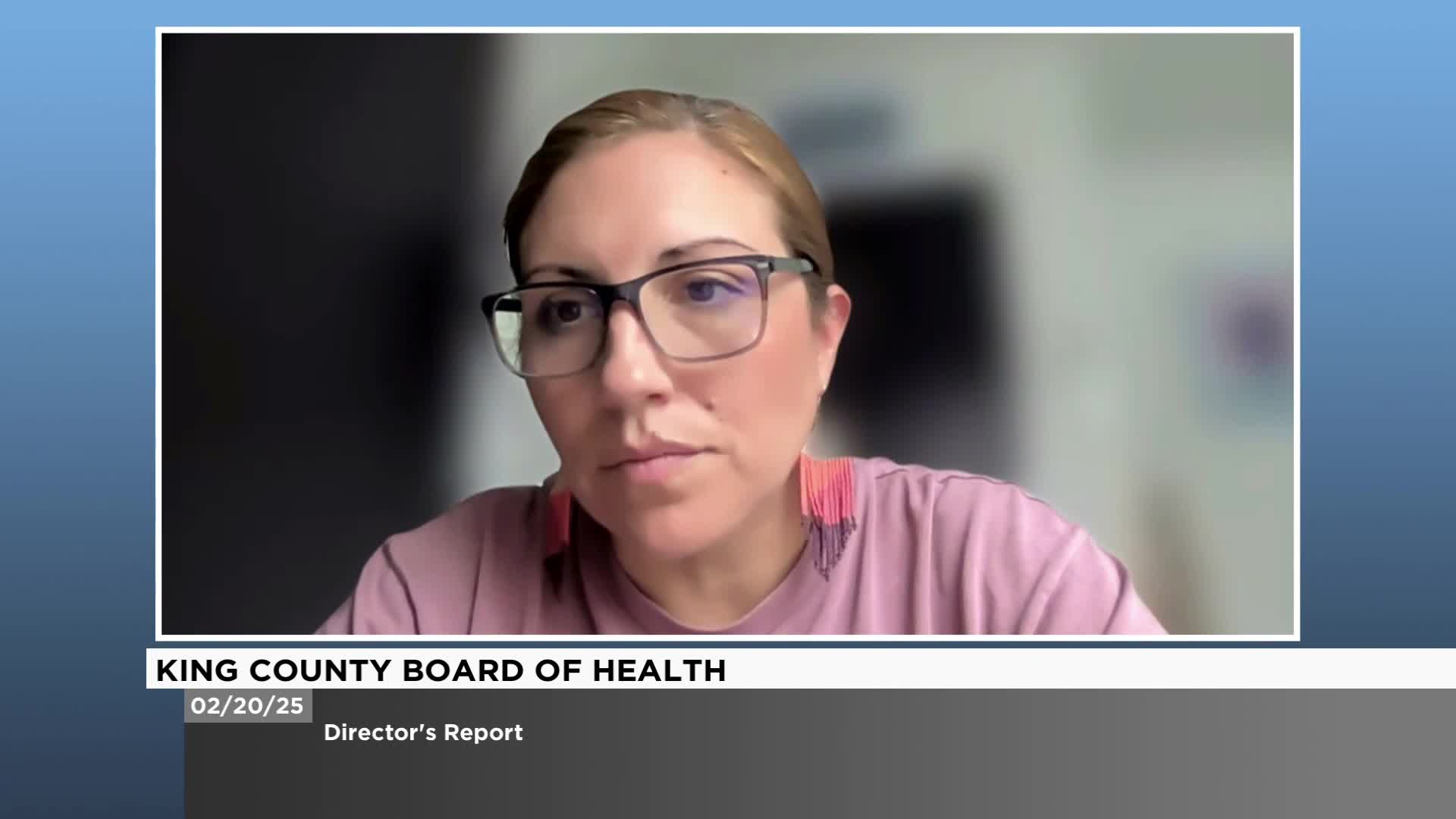
Public Health Seattle King County’s director told the Board of Health on Feb. 20 that recent federal actions and reductions are creating uncertainty for local public‑health programs and funding streams.
Director Khan (as introduced at the meeting) urged caution and preparation, saying the county will not change service delivery models but expects pressure on funding for areas including gun violence prevention, racial‑equity and community health programs and CDC grants that support workforce and data projects. Khan said the county will coordinate a measured response through the executive’s office to understand impacts before reacting to individual federal pronouncements.
Khan cited one concrete example: a nearly $2 million annual grant previously received through the White House Office of Gun Violence Prevention that helped fund local prevention activities. He said the loss of that funding will not end prevention work but will require curtailment of some activities and continued efforts to seek philanthropic or foundation dollars to replace the lost federal support.
Khan also reported concern about federal website removals affecting public‑health guidance (he cited CDC webpages being altered), potential changes to vaccination and reimbursement rules and uncertainty around the CDC’s REACH grant and public‑health infrastructure funding. He said state partners — the Washington State Department of Health and Department of Agriculture — remain operational and reliable partners, but the federal loss of staffing and technical assistance would be “an irreparable loss for the country.”
Board members raised questions about food‑safety capacity, the effect of state budget cuts and the disproportionate effect federal and state funding reductions would have on marginalized populations, including transgender people. Khan said Public Health Seattle King County will continue to provide culturally competent primary care and outreach for transgender, LGBTQ, immigrant and other vulnerable populations and flagged concerns about hospital capacity under federal reimbursement pressure.
Why it matters: Local public health infrastructure — clinics, disease‑control programs, data systems and workforce — depends on a mix of federal, state and local dollars. Director Khan told the board that the county will assess the fiscal picture and communicate priorities and potential impacts to the board as the situation evolves.
Next steps: Countywide coordination led by the executive’s office to model losses and identify priorities; staff to report back as the budget process and grant decisions clarify the scope of federal/state reductions.