Get Full Government Meeting Transcripts, Videos, & Alerts Forever!
Get email alerts on the Emergency Services Medic1 Levy topic
No spam. Unsubscribe anytime.
Medic 1 task force recommends $0.25 levy, six‑year term to sustain regional EMS services
Summary
An EMS advisory task force recommended a six‑year, $0.25 per $1,000 assessed‑value levy for the 2026–2031 period; the plan would raise roughly $1.47 billion (including Seattle/King County split) with county outside‑Seattle allocations focused on ALS, BLS, regional services and reserves.
A regional advisory task force has recommended that King County place a six‑year Medic 1 emergency medical services levy on the November 2025 ballot with a proposed rate of $0.25 per $1,000 of assessed value to fund 2026–2031 system needs.
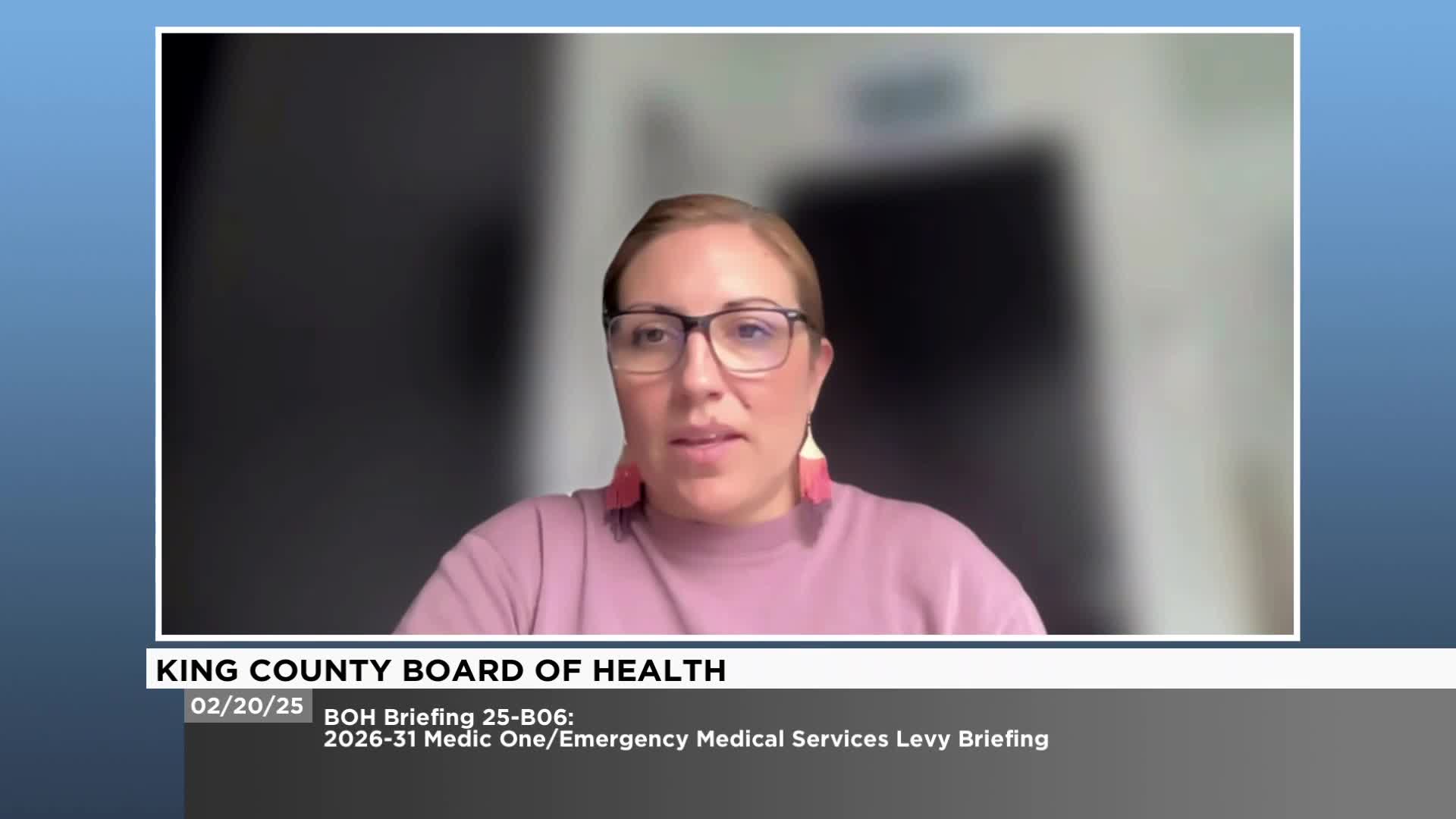
Michelle Plourde, division director for Emergency Medical Services at Public Health Seattle King County, briefed the Board of Health on Feb. 20 on the task force’s programmatic and financial recommendations. The task force — a 20‑member body composed of elected officials and representatives of the county’s cities, fire chiefs, and other stakeholders — oversaw an eight‑month process and recommended the package by consensus.
Why the levy proposal: Task force members said the levy balances support for the countywide paramedic (ALS) layer, funding for basic life support (BLS) agencies, and investments in regional services and strategic initiatives (for example, EMT training, mobile integrated health, emergency‑dispatch improvements and data systems). The ALS layer is the largest single expenditure; the plan also provides reserves to mitigate revenue and expenditure risks.
Numbers and assumptions: The task force estimated total expenditures (outside Seattle) of roughly $919 million for ALS and a total County (including Seattle portions) revenue need near $1.47 billion over six years at the $0.25 levy rate. Using an $850,000 median home value, staff estimated an annual cost to a homeowner of about $212. The finance committee’s risk analysis estimated potential cumulative fiscal risks ranging from roughly $31.8 million to $76.9 million, and the package includes a supplemental reserve the task force judged sufficient (about $47 million under the modeling presented).
Operational points and innovations: The task force recommended modest increases in BLS funding ($5 million in year one split between base allocations and mobile integrated health), continued CPI‑W plus 1% indexing for allocations, an allocation formula that weights call volumes and availability, additional initial EMT training funds and renewed telephone referral programs that aim to reduce low‑acuity 911 transports. Task force members also proposed a placeholder for potential new paramedic units (one or more half‑ or 12‑hour units) to respond to growing demand in some areas.
Regional process and timing: To place a levy on the ballot requires approval by a supermajority of participating cities (cities over 50,000 population) and the King County Council; staff said the same recommendations will be presented to the 11 qualifying cities and the council in coming months. The task force recommended a November 2025 ballot placement and a six‑year levy term (2026–2031).
Comments and questions from the board focused on demographic trends (aging population and multilingual communities), recruitment and training challenges for EMTs/paramedics, and community outreach and partnerships with organizations serving refugee and immigrant communities. Plourde said EMS partners are expanding community‑level engagement, interpreter awareness, and training in native languages and that recruitment and training pipelines remain a high priority.
Next steps: Staff said they will present the recommended package to cities and the King County Council and refine financial modeling and outreach materials ahead of the ballot decision process. No formal action was required or taken by the Board of Health at the Feb. 20 briefing.