Get Full Government Meeting Transcripts, Videos, & Alerts Forever!
Get email alerts on the Municipal Utility Funding topic
No spam. Unsubscribe anytime.
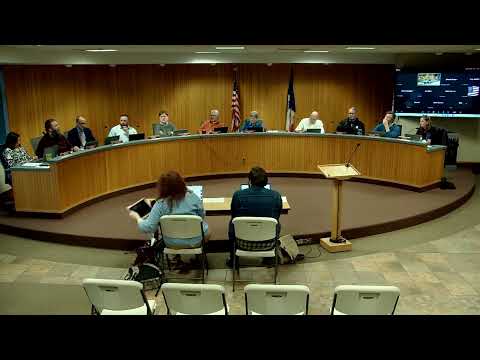
Decorah council adopts limit on tax use for municipal electric utility funding
Summary
Decorah City Council approved a resolution saying existing property tax dollars will not be used to fund a municipal electric utility; councilmembers split on the measure amid concern about timing and state legislation that could change franchise-fee authority.
The Decorah City Council on Monday approved a resolution saying the city will not use existing property tax dollars to fund a municipal electric utility and that, if the measure to form a municipal utility passes in Tuesday’s special election, the city will rely on electric franchise fee revenues or general-obligation bonds following a bond referendum.
The resolution, introduced by Councilmember Neil and seconded by Councilmember Zittagruen, passed after debate about timing and the potential effects of pending state legislation. The roll-call recorded, among others, Veil: “Aye”; Zittagruen: “Aye”; Olsen: “No”; Chissell: “No”; Whittle: “Aye”; Parker: “Aye”; Miss Linage: “No.”
The council’s stated limit is a response to residents’ repeated questions about whether a municipal electric utility (MEU) would raise property taxes. The resolution limits initial funding to three categories: electric franchise fees, grants and donations, and general-obligation bonds only after voter approval. The resolution also requires a subsequent affirmative council vote before any electric franchise fee revenue is spent on an MEU project.
City Manager Travis warned council members earlier in the meeting about pending state action. “Senate Study Bill 1181 would prohibit the collection of franchise fees,” he said, noting that if that or similar bills pass, the city would need to rethink financing options.
Councilmembers split on whether to adopt the resolution before the March 4 special election. Supporters said a pre-election statement would reassure residents that their vote would not be interpreted as carte blanche to raise taxes; opponents called the timing “putting the cart before the horse” and said the commitment should wait until after voters decide.
Votes at a glance - Resolution restricting use of property taxes for an MEU: Motion by Councilmember Neil; seconded by Councilmember Zittagruen; roll-call recorded multiple ayes and nos (see action record). Outcome: approved. - Ordinance, Chapter 2.16 (police residency), first reading: Motion by Councilmember Chissell; seconded by Councilmember Olsen; roll-call unanimous. Outcome: first reading approved. - Consent agenda (minutes, claims, licenses, Dry Run Creek items, property tax notice, urban renewal items, easements, vegetation plan, special event permit): Motion to approve by Miss Linage; seconded by Olsen; roll-call unanimous. Outcome: approved. - Motion to authorize staff to pursue a federal community project funding application: Motion by Councilmember Neil; seconded by Olsen; roll-call recorded as unanimous. Outcome: approved.
Council members asked for additional guarantees in the resolution to protect other locally directed funds. Councilmember Randy raised concern that the language did not explicitly protect the local option sales tax dedicated for street work; supporters replied the resolution sets a maximum funding posture, not a mandatory spending plan, and that any reallocation of local sales tax would require separate council action.
Supporters described the resolution as a reassurance to undecided voters: if the referendum to create an MEU passes, the council will not automatically use property tax dollars to pay for it. Opponents said the resolution could be perceived as advocacy in the run-up to the election and preferred to wait until after voters decide.
The council did not adopt any immediate spending on an MEU. Instead, the approved resolution creates a funding-policy limit and requires subsequent council votes for any expenditure of electric franchise fee revenues.
Ending — what happens next If voters approve the municipal utility measure, the council will move into feasibility, business-plan and legal-fee work within the funding constraints the resolution sets. If state law changes to restrict franchise-fee collection, the council said it would revisit funding options and any related resolutions.