Get Full Government Meeting Transcripts, Videos, & Alerts Forever!
Get email alerts on the Air Quality Landscaping topic
No spam. Unsubscribe anytime.
Committee narrowly approves bill requiring electric handheld landscaping tools at state properties on Wasatch Front
Summary
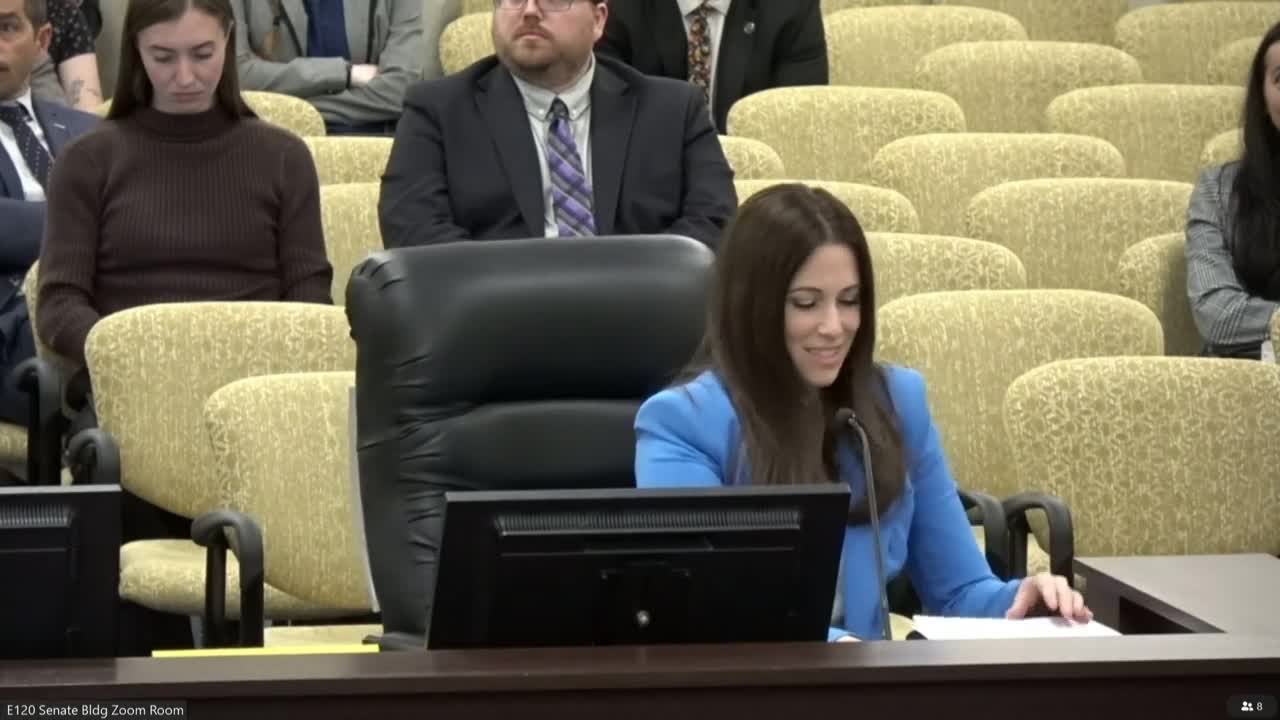
Senator Pitcher told the committee SB 124 would require state facilities on the Wasatch Front to replace two-stroke handheld landscaping equipment with electric tools as equipment retires.
Senator Pitcher told the committee SB 124 would require state facilities along the Wasatch Front (Weber, Davis, Salt Lake and Utah counties) to replace two-stroke handheld landscaping equipment with electric equivalents when the existing gasoline-powered equipment reaches retirement.
Pitcher described the measure as a measured, limited step prompted by a 2021 pilot conducted by the Division of Facilities and Construction Management that tested electric equipment on state campuses; the pilot’s report showed positive feedback and lower maintenance costs, he said. The bill applies only to state employees working on state properties and excludes private contractors and sod farms; the sponsor stressed the bill is limited to handheld two-stroke equipment and to the specified counties.
Public testimony included both support and opposition. Piper Christian of Stewardship Utah urged passage and cited agency data that “volatile organic compound emissions from lawn equipment exceed that of all industrial activity on the Wasatch Front by 2 tons per day.” Opponents — Easton Harris (a sod farmer) and Kirk Harris (All American Sod Farm) — said battery-powered equipment has operational limitations: shorter run times, frequent recharging, higher replacement costs for batteries, and potential needs for on-site charging infrastructure or portable generators; they warned mandates could increase labor and equipment costs and reduce efficiency for crews that move between sites.
Nick Meekum of the Department of Government Operations said the department is neutral on the bill and that Senator Pitcher had been responsive to operational concerns. Representative Owens, who moved the favorable recommendation, said two-stroke engines are a “low-hanging fruit” for improving air quality and reiterated that the bill targets a narrow set of state facilities and equipment.
On a roll-call vote the committee approved SB 124 (fourth substitute) 6–4. The transcript roll call recorded the following positions: Yes — Representative Bennion, Representative Coford, Representative Monson, Representative Owens, Representative Shallenberger, Representative Watkins; No — Representative Bollinger, Representative Chu (Chew/Chew spelled in transcript as “Chew”), Vice Chair Shipp, Chair Albrecht. The sponsor said sod farms are excluded and noted the pilot program’s positive results.
Why it matters: the bill aims to reduce volatile organic compound (VOC) emissions from small gasoline-powered landscape tools in the Wasatch Front air basin and to test the operational practicality of electrification on state properties; opponents raised short-term operational and cost concerns for landscape contractors and sod farms.
Votes at a glance: Motion to pass SB 124 with a favorable recommendation (mover: Representative Owens). Roll-call result: yes 6, no 4.