Get Full Government Meeting Transcripts, Videos, & Alerts Forever!
Get email alerts on the Election Administration topic
No spam. Unsubscribe anytime.
Committee sends revisions to election law to interim study after split testimony on faster results
Summary
Senators split on legislation aimed at speeding election‑night reporting and restructuring processing deadlines. Sponsors said the changes would increase public confidence; county clerks and election officials warned of large unfunded local costs and operational risks. The committee voted to send the bill to interim study, 6–1.
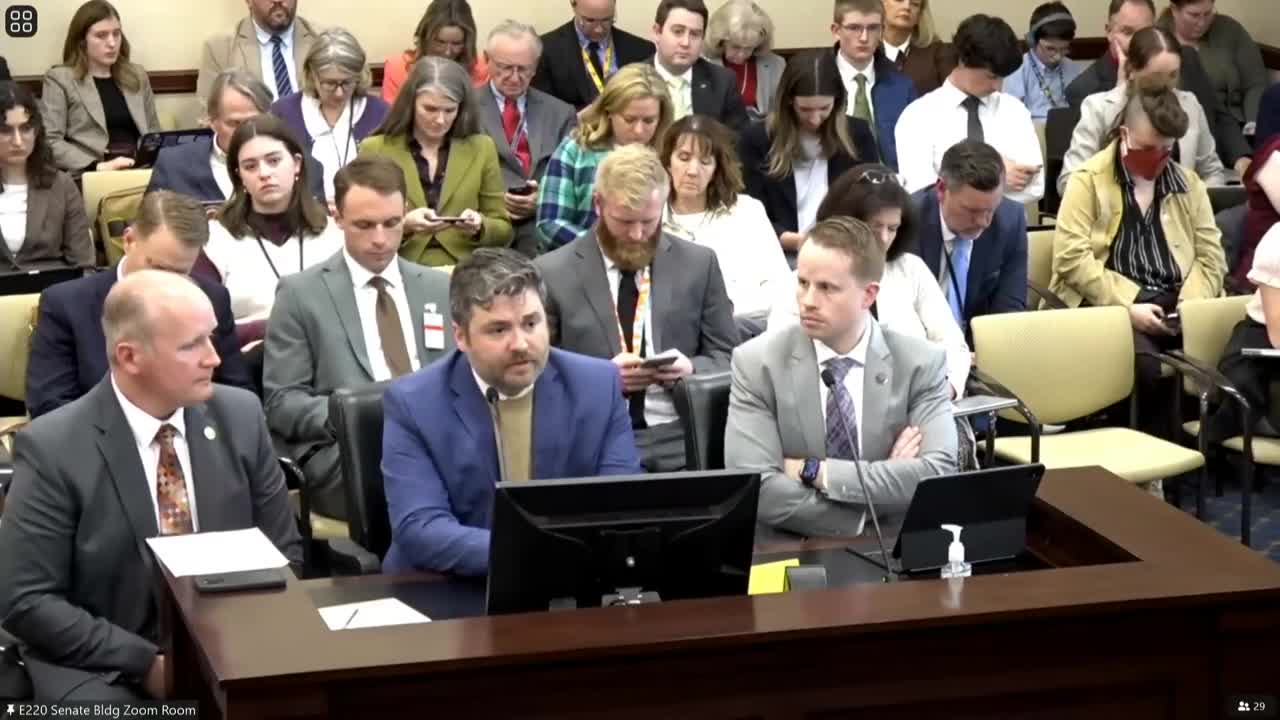
The Senate Government Operations Political Subdivision Committee on March 3 voted to place second substitute House Bill 445, a measure aimed at accelerating election‑night results reporting, on the committee’s interim study list.
Representative (sponsor) described the bill as a package of reforms developed with county clerks and other election officials. The sponsor said the bill sets clear timelines for registration and ballot processing, cleans up reconciliation procedures, and allows clerks flexibility to finish batches rather than stopping processing at a fixed time. The bill also moved the voter registration deadline to 21 days before election day and the ballot request deadline to 14 days before election day; same‑day registration would remain available in person or during early voting, the sponsor said.
County clerks and the Utah Association of Counties opposed the measure in its present form. Weber County Clerk Ricky Hatch and Salt Lake County Clerk Lanny Chapman told the committee the bill would impose large upfront and ongoing costs on counties — estimates given included roughly $7 million in one‑time statewide costs and $2.3 million ongoing for Salt Lake County alone — to expand facilities, staffing and equipment to meet tighter processing timelines. Clerks also cautioned that pushing to meet strict deadlines on election night could increase error rates and described existing long hours for election staff.
Other public commenters were split: the League of Women Voters, Mormon Women for Ethical Government and others opposed the bill, citing potential voter confusion, added costs and the risk of disenfranchisement; the Utah Republican Party and several county clerks and citizens testified in favor and urged adoption of best practices to restore public confidence.
Senator Thatcher moved to put HB 445 on the interim study list to further refine fiscal and operational details; the motion passed on a 6–1 vote. The committee’s action sends the bill to interim study rather than forwarding it directly to the Senate floor.