Get Full Government Meeting Transcripts, Videos, & Alerts Forever!
Get email alerts on the Gender Identity In Schools topic
No spam. Unsubscribe anytime.
Senate committee rejects bill clarifying how public employees address gender identity
Summary
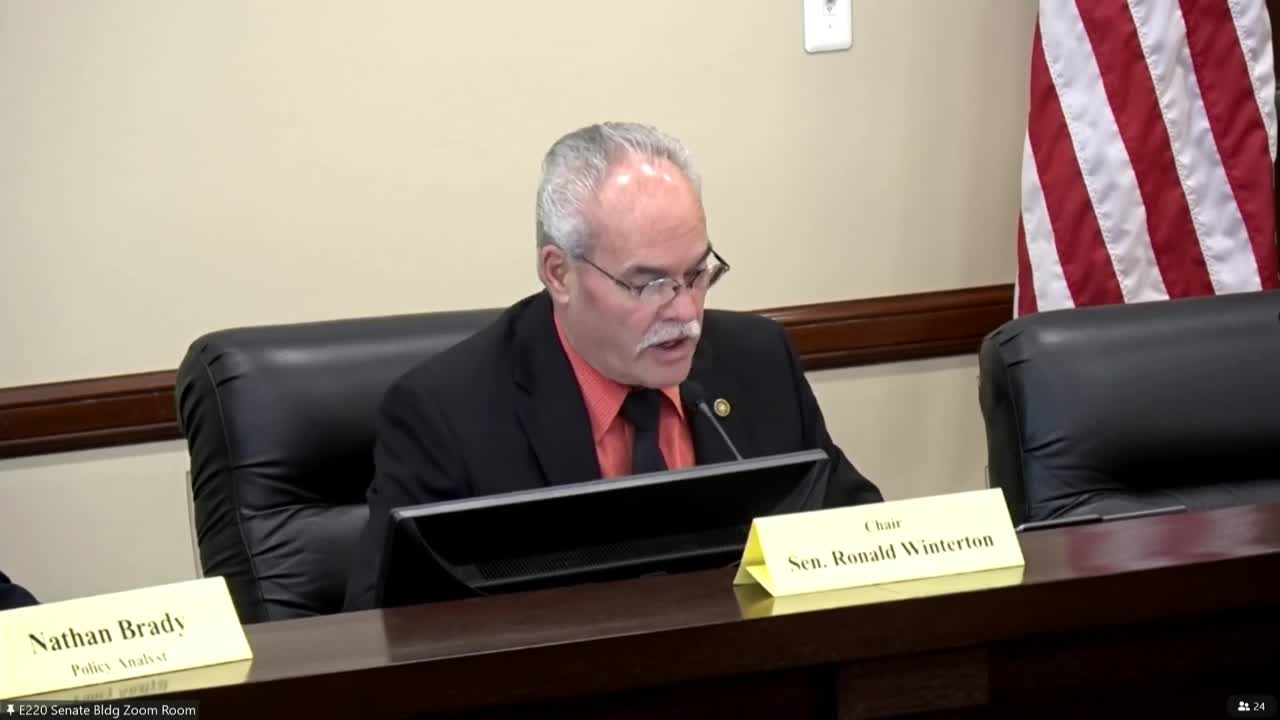
The Senate Government Operations Political Subdivision Committee on March 3 declined to favorably recommend first substitute House Bill 250, a measure that sought to clarify how public employees — especially teachers — address students’ gender identity while protecting employees’ religious‑liberty claims.
The Senate Government Operations Political Subdivision Committee on March 3 declined to favorably recommend first substitute House Bill 250, a measure that sought to clarify how public employees — particularly teachers — may address students’ gender identity while protecting employees’ religious-liberty claims.
Supporters said the bill provides ‘‘clarity and consistency’’ so teachers know how to respond when a student requests a different name or pronoun and when a parent’s stated preference differs from the student’s request. Representative Miranda Peck introduced the first substitute and said the measure includes a ‘‘good faith’’ protection so employees are not disciplined for accidental mistakes and language drawn from the so‑called Utah Compromise to preserve employees’ First Amendment rights.
Representative Jimenez and Tooele Junior High teacher Carlos Jimenez told the committee that school staff receive inconsistent guidance from districts and need uniform procedures. ‘‘We need to have some consistency with the protocols of what to do in that situation so that we’re protecting the individual student as well as meeting the wishes of the parents,’’ Carlos Jimenez said.
Opponents — including Equality Utah, prominent parents, and transgender community members — urged the committee to reject the bill. Marina Lowe of Equality Utah said existing state law (the Utah Compromise) already balances free‑speech and religious rights and that the bill ‘‘seemingly targets the transgender community.’’ Multiple public commenters said the bill could be used to justify intentional misgendering or harassment.
Committee members debated whether the measure would protect only accidental mistakes or could be relied on to excuse intentional demeaning conduct. Senator Thatcher expressed concerns that the bill would permit punitive inaction: ‘‘If a teacher isn’t intentionally and deliberately trying to impose and force their beliefs on someone else’s child, I find that wildly inappropriate,’’ she said, but later acknowledged the draft contains language to prevent harassment.
After public comment and committee discussion, Senator Vickers moved to favorably recommend the first substitute. The committee voted and the chair ruled the motion failed by a 2–3 tally. The committee record does not list a roll‑call attribution in the transcript; the chair announced the vote as failing 2 to 3.