Get Full Government Meeting Transcripts, Videos, & Alerts Forever!
Get email alerts on the Outdoor Signage topic
No spam. Unsubscribe anytime.
Senate committee backs bill widening relocation options for highway billboards
Summary
The Senate Economic Development and Workforce Services Committee voted unanimously to pass out fourth substitute House Bill 198, which extends the allowable relocation radius for billboards affected by highway projects and requires municipal agreement for moves inside city limits.
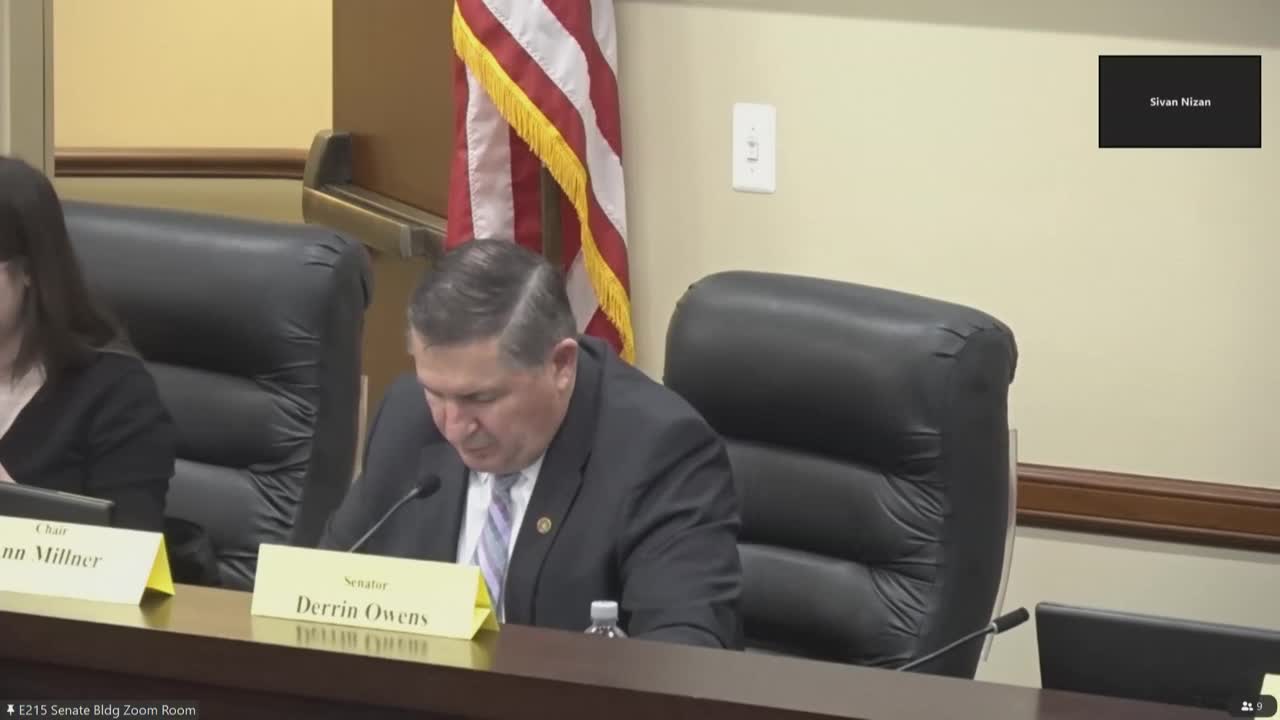
The Senate Economic Development and Workforce Services Standing Committee on Monday voted unanimously to pass out fourth substitute House Bill 198, the “highway expansion impact on signage” amendment, after testimony from the bill sponsor, state transportation officials and members of the signage industry.
Representative Joel Peterson, the bill sponsor, told the committee the legislation gives two primary choices to property owners and sign companies when highway work affects a sign: the state can either buy the sign or allow the sign to be relocated. "You got really 2 options here. You can either buy the sign or you can relocate the sign," he said, summarizing the measure.
Why it matters: The bill increases the relocation radius from a half-mile to one mile along freeways and requires that, if a sign must be moved within a municipality, the new location must be mutually agreed by that municipality and the billboard company unless the parties agree otherwise. Supporters said it creates flexibility for Utah Department of Transportation (UDOT) projects such as the planned I‑15 expansion and could reduce taxpayer expense by enabling relocation rather than costly buyouts.
UDOT testimony and industry support Carson Eilert of the Utah League of Cities and Towns thanked the sponsor and stakeholders for negotiations and said the league remained neutral. A UDOT representative, identified in testimony as Liefelder, said the bill “has the potential to make things a lot easier for us when we go to move signs,” citing upcoming freeway expansion and potential time and cost savings.
Billboard industry witnesses made two arguments in favor. Dewey Reagan, general manager of Reagan Outdoor Advertising, said the bill does not increase the number of billboards but allows existing signs that would otherwise be condemned to be relocated, and that the larger radius can permit placements that comply with federal requirements. He told the committee it would help companies find compliant sites.
Opposition and federal compliance concerns Speakers from Scenic Utah and a longtime preservation advocate raised concerns about federal agreements and recent Federal Highway Administration (FHWA) reviews. Kate Kopichke, co‑founder of Scenic Utah, said a FHWA review found Utah’s Outdoor Advertising Control Program out of compliance with federal rules and that the federal‑state agreement (adopted by the state in 1968) prohibits signs within 500 feet of interchanges or rest areas on interstates. She said HB198 would move in the opposite direction of the FHWA action plan and urged caution.
Gary Ureska (testifying as a private citizen) pointed the committee to the 1968 federal‑state agreement and asked whether the state was contravening that agreement by allowing relocations nearer interchanges.
Committee discussion and outcome Committee members pressed the sponsor and witnesses about whether the bill creates new billboards (the sponsor and industry witnesses said it does not) and about the cost difference between buying out signs and relocating them — testimony noted buyouts can be expensive and “can be a million dollars per sign or more” depending on location. Senator Yoon made the motion to pass HB198 out of committee with a favorable recommendation; the motion carried unanimously.
Ending: The committee recorded unanimous support to send the fourth substitute of HB198 to the full Senate for further consideration.