Get Full Government Meeting Transcripts, Videos, & Alerts Forever!
Get email alerts on the Elder Justice topic
No spam. Unsubscribe anytime.
Committee backs changes to adult-protection definitions and evidence rules, including adverse-inference remedy for withheld documents
Summary
First-substitute House Bill 534 aligns definitions for vulnerable adults with criminal code, allows substantiated findings when alleged perpetrators refuse to provide requested documents (via an adverse-inference standard), and passed unanimously out of committee.
The Senate Judiciary committee favorably recommended first-substitute House Bill 534, a set of technical and substantive changes to the state’s adult-protective-services (APS) statutes intended to align civil definitions with criminal code and strengthen APS’s ability to substantiate abuse, neglect and exploitation findings.
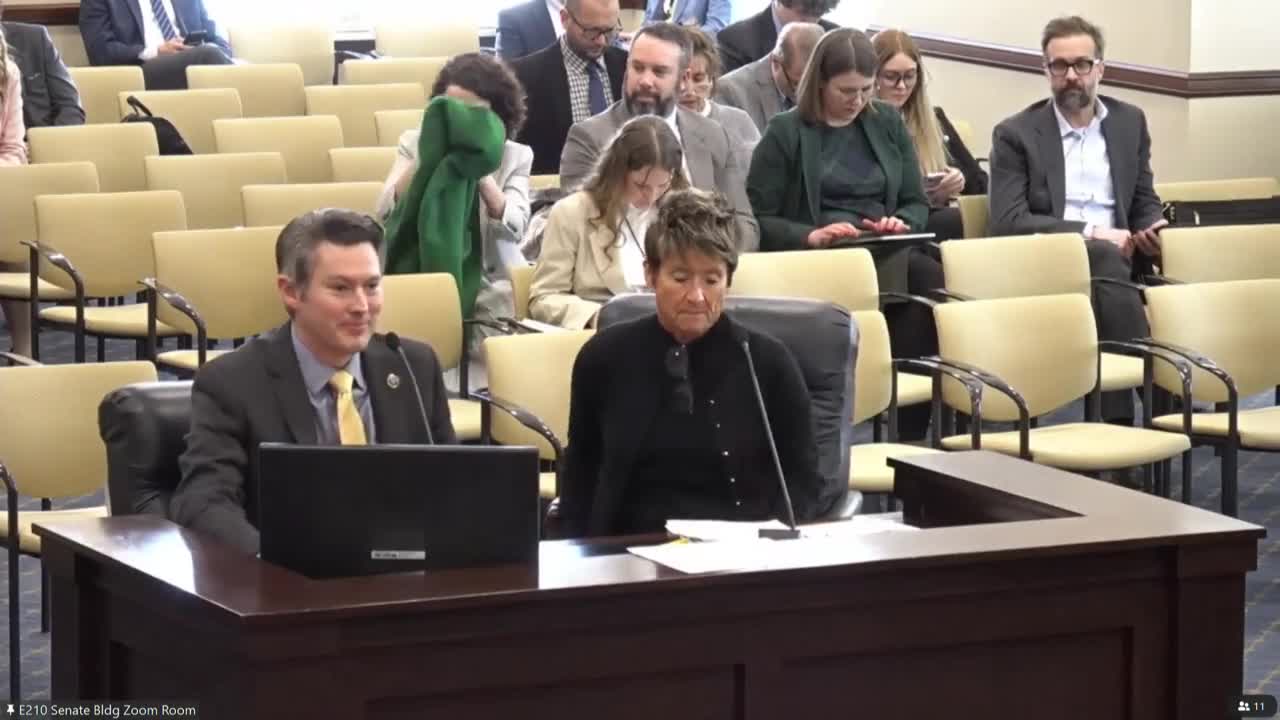
Representative Loubay, sponsor, said the substitute removes language that conflicted with administrative rules and brings definitions into alignment with criminal code section 76-5-111 (vulnerable adult statutes). Nan Mendenhall, director of Adult Protective Services, explained a substantive change: APS investigators sometimes subpoena documents and are refused by alleged perpetrators; the substitute adopts an adverse-inference approach drawn from civil procedure so that refusal to produce documents may support a substantiated finding.
Mendenhall emphasized the changes apply in the civil APS context, not criminal proceedings, and that the statute would specify the notice, appeal and placement process for inclusion on the elder-abuse registry.
Senator Baldry moved adoption of the first substitute and a favorable recommendation; the committee adopted the motion unanimously and advanced the bill to the Senate floor.
Sponsor and APS staff said they would continue technical drafting with the attorney general’s office as needed before floor action.