Get Full Government Meeting Transcripts, Videos, & Alerts Forever!
Get email alerts on the Military Installation Development Authority topic
No spam. Unsubscribe anytime.
Committee narrowly advances MIDA changes after debate over local control and environmental review
Summary
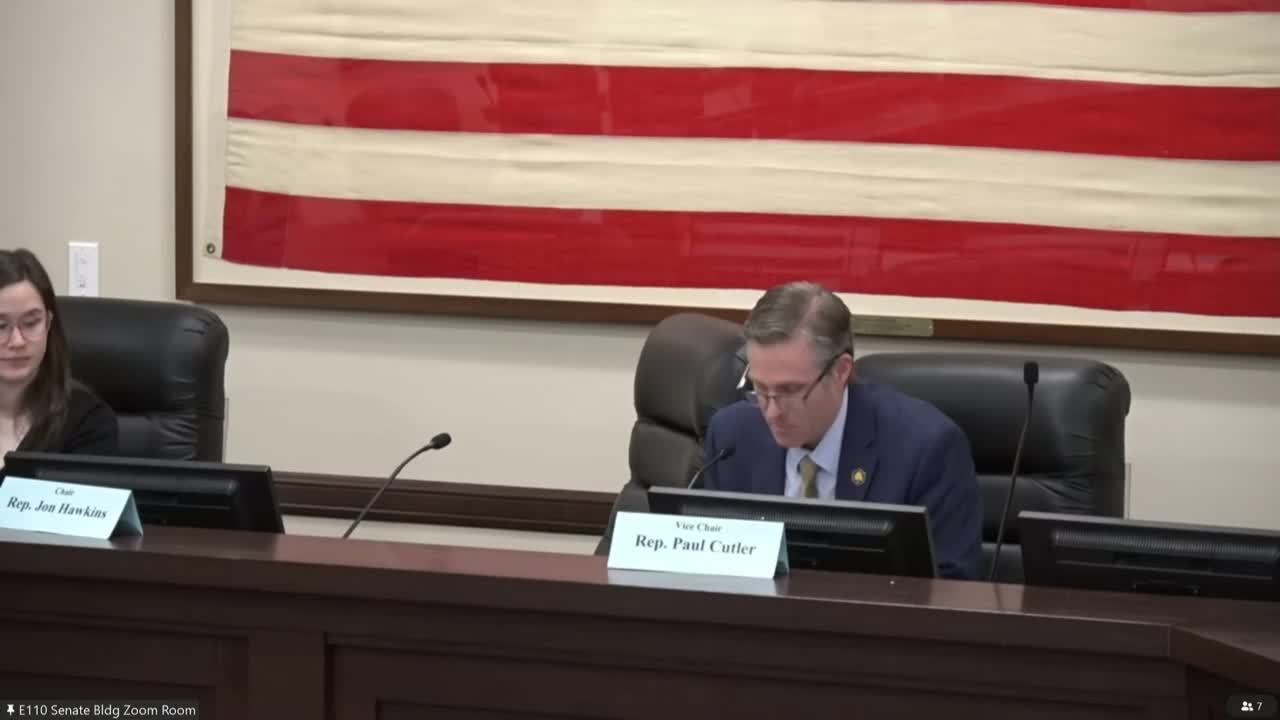
The House Economic Development and Workforce Services Committee on March 4, 2025, adopted and then favorably recommended third substitute Senate Bill 316, the Military Installation Development Authority amendments, after an extended committee Q&A and a narrow roll-call vote.
The House Economic Development and Workforce Services Committee on March 4, 2025, adopted and then favorably recommended the third substitute of Senate Bill 316, titled "Military Installation Development Authority and other development zone amendments." The committee first adopted the third substitute on a recorded voice vote that the chair summarized as 6–1, with Representative Shelley recorded as voting no. Later the committee took a roll-call on the motion to favorably recommend the bill to the full House; the roll-call result was recorded as 4–3 in favor. The motion to adopt the third substitute was made by Chair Hawkins; the motion to favorably recommend was made by Chair Hawkins as well.
The bill’s sponsor, Senator Stevenson, told the committee the measure does three primary things: clarify how sales tax on construction materials in qualified development zones is allocated (so the portion belonging to the project entity can be collected and used for development, while state sales-tax shares are unaffected); allow MIDA flexibility to form PIDs either as MIDA subsidiaries or as independent entities; and confirm that MIDA can contract for revenue use from certain state-owned properties in project areas — for example, military-associated properties where MIDA’s work supports installation needs and adjacent development.
Committee members asked about several concerns raised in public correspondence. Representative Miller asked whether MIDA projects had provided public funding to private ski-resort developers; Senator Stevenson responded that MIDA worked with private developers in some projects (Mayflower was cited) but said those projects are privately owned and that the military connection involved property exchanges and discounted accommodations for military personnel, not ongoing public ownership. Representative Miller also pressed about environmental review language; Senator Stevenson said that an earlier request to allow MIDA to lead environmental analyses had been removed in the second substitute, and a staff witness (Nicole) confirmed: "That request was actually removed from the second sub, so that is no longer there." Nicole also said the second sub removed that item because it created confusion and was unnecessary.
Representative Shelley and others pressed on local control and revenue diversion concerns. Senator Stevenson and his witnesses explained that MIDA project areas proceed only by invitation of local jurisdictions and that agreements with cities and counties set out inspection roles, utilities, revenue sharing and other operational details. The sponsor described prior MIDA projects tied to Hill Air Force Base, Camp Williams and Tooele, and emphasized that local municipalities had participated in boards and contracts for utilities and services.
The committee record shows two formal actions on SB 316 during the session: the adoption of the third substitute (adopted 6–1) and the motion to favorably recommend the adopted third substitute to the full House (passed 4–3 on roll call). The sponsor and supporters said the third substitute is primarily cleanup and grants MIDA operational flexibility; opponents raised concerns about local control and the earlier environmental-review language that the committee noted had been removed earlier in the process.
The bill will advance to the full House with the committee recommendation.