Get Full Government Meeting Transcripts, Videos, & Alerts Forever!
Get email alerts on the Privacy Technology topic
No spam. Unsubscribe anytime.
Committee backs limits on reverse-keyword search warrants for serious felony investigations
Summary
The committee favorably recommended second-substitute House Bill 273, restricting reverse-keyword searches to violent-felony investigations under a multistep judicial review process, and passed the recommendation 5-0.
A Senate Judiciary committee voted to favorably recommend second-substitute House Bill 273, which limits the use of reverse-keyword search warrants to investigations of violent felonies and imposes multi-step judicial review intended to narrow the pool of returned results.
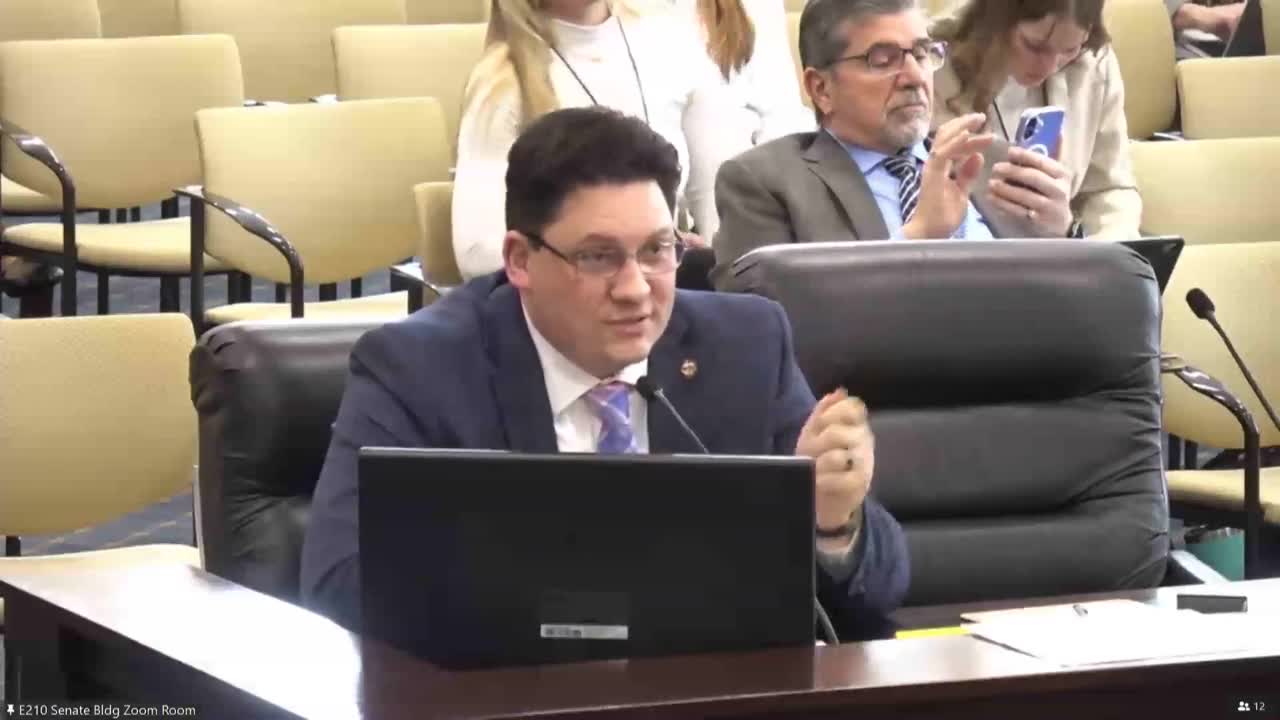
Representative Wilcox, sponsor of HB 273, said the measure is the result of multiple years of negotiations and seeks a compromise between a full ban and unfettered law-enforcement access. He referenced prior debate over geofence and reverse-keyword warrants and described the substitute as “a ban for everything except for violent felonies” that includes judicial safeguards at three steps in the process.
Nate Mudder, chair of the law enforcement legislative committee and acting chief of investigations for the attorney general’s office, testified in support and said the warrants are typically used “primarily for major case investigations,” while acknowledging courts have rejected overly broad requests. He told the committee the bill “appropriately puts the guardrails around the use of reverse keyword search warrants and therefore balances the right to privacy with the appropriate use of the technological information law enforcement can utilize to solve major crimes.”
Senators and the sponsor discussed the Colorado and Pennsylvania cases referenced during testimony (including Seymour v. Colorado and Kurtz v. Commonwealth) and the need for judicial oversight. Representative Wilcox said the bill applies a multistep narrowing test similar to earlier geofence warrant legislation and requires judicial review at three stages before reaching a specific individual.
Senator Musselman moved to favorably recommend the second substitute. The committee recorded a vote of 5 to 0 in favor of the motion; the transcript shows the motion passed unanimously.
The bill’s text, as described by the sponsor, keeps reverse-keyword searches available in a tightly limited set of violent-felony investigations and attaches procedural protections to reduce collection of data on uninvolved individuals.