Get Full Government Meeting Transcripts, Videos, & Alerts Forever!
Get email alerts on the Water Reuse topic
No spam. Unsubscribe anytime.
Washington County outlines $1 billion regional water-reuse plan to bolster supplies
Summary
The Washington County Water Conservancy District presented a two-phase regional water-reuse plan that would expand nonpotable reuse by 2030 and move toward potable reuse around 2040, aiming to free potable supplies amid drought and projected population growth.
Melissa Anderson, Community Education News, summarized a regional water-reuse plan the Washington County Water Conservancy District is promoting to increase local water supplies and reduce reliance on imported sources. The plan calls for a two-phase regional reuse purification system that would expand use of reclaimed water for irrigation by about 2030 and pursue purified potable reuse around 2040.
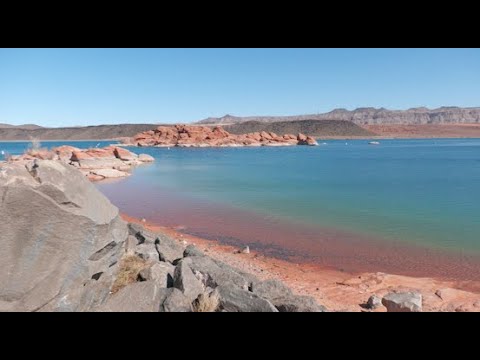
"By 2042, which is the life of the district's 20 year plan right now, we're anticipating Washington County will have 300,000 permanent residents," Anderson said, linking population growth to increased demand. She said the district currently manages five reservoirs with a combined capacity of more than 100,000 acre-feet — nearly 33,000,000,000 gallons — and treats both surface and groundwater for municipal delivery.
The district's Phase 1 would produce "type 1" reuse water for outdoor and other human-contact irrigation uses and rely on a regional network that moves reuse from St. George's reclamation plant to an advanced treatment facility near Ash Creek Special Service District. Anderson described a roughly 60-mile pipeline to carry flows to Quail Creek and Sand Hollow reservoirs for further treatment and redistribution. "The regional reuse advanced purification system would need to be built near Ash Creek Special Service District along with 60 miles of pipeline to transport the water to Quail Creek and Sand Hollow Reservoirs for further treatment and redistribution," she said.
Under the plan, agriculture water drawn from the Virgin River would be exchanged on a one-to-one basis for reuse water. Anderson said those exchanges would require acquiring reuse water rights and contracts with agricultural users so more Virgin River water could be redirected to drinking-water reservoirs. "Reuse exchange for non potable reuse is a 1 to 1 exchange," she said.
Phase 2 would move to indirect potable reuse: purified water would be released to reservoirs and used for both surface-water and groundwater augmentation. Anderson said Sand Hollow functions as an aquifer-recharge reservoir and that purified water discharged there would improve local reservoir water quality before conventional treatment for culinary use. "Once it's in Quail Creek Reservoir it could go through the conventional treatment plant that's already located at the reservoir so treat it to culinary standards and deliver it into the culinary system," she said.
Anderson estimated the program would cost in excess of $1 billion and described a funding strategy combining grants, new-development impact fees and water-user rate increases. She said program partners have secured more than $250,000,000 in loans and grants from local through federal agencies and are pursuing additional funding. "The program partners have secured over $250,000,000 in funding, and that's through both loans and grants through local up to federal agencies," Anderson said.
She noted the district previously considered a pipeline from Lake Powell to Sand Hollow Reservoir but said the focus has shifted to regional reuse because of inconsistent flows and prolonged drought. "The focus has shift from Lake Powell Pipeline to the reuse regional reuse system, but they haven't given up on the Lake Powell Pipeline it'll just have to come at a later date," Anderson said. She also described current drought conditions, saying the area had been in the worst drought on record until a recent storm and that reuse is part of a broader "1 water" approach that treats water as a resource across the entire cycle.
The presentation described no formal vote or directive recorded in the transcript; Anderson said the district is pursuing loan and grant opportunities and planning system buildout on the stated timelines. The transcript did not specify contract awards, permitting milestones, or which agencies must approve water-rights exchanges.
The district's remarks also described ongoing use of St. George's regional reclamation facility for secondary irrigation uses on golf courses, parks, cemeteries, schools and some residential areas and said the regional system would expand that capability to serve the county more broadly.