Get Full Government Meeting Transcripts, Videos, & Alerts Forever!
Get email alerts on the Immigration Policy topic
No spam. Unsubscribe anytime.
Evanston updates ordinance to block city data from immigration enforcement
Summary
Evanston officials described an updated ordinance that bars city databases and third-party data brokers from providing information for civil immigration enforcement, closes prior cooperation loopholes and extends protections to private entities working with federal immigration authorities.
Evanston on Monday described a revised local ordinance that city officials say will prevent the city’s data from being used in civil immigration enforcement and close prior exceptions that permitted local cooperation with federal immigration agents.
Liza Robertson Young, chief legislative policy adviser for the city, said the updated ordinance “ensures that data collected by the city will not be used for immigration enforcement.” She told the community the rule also bars sharing city databases with federal agencies or with third-party data brokers unless the third party certifies the data will not be used for immigration purposes.
The ordinance updates a 2016 “welcoming city” rule that previously directed city officials not to participate in federal civil immigration enforcement and that prohibited inquiries into an individual’s immigration status. Robertson Young said the law was revised in early January to address technological and legal developments since 2016, including the federal government’s increasing use of local government data.
Robertson Young outlined three principal changes: a prohibition on using city data for immigration enforcement; elimination of exceptions that previously allowed cooperation when someone appeared in a gang database, had been charged but not convicted, or had an old unrelated conviction; and an expansion of the ban to include other federal agents and private entities, such as private prison corporations operating immigration detention facilities.
She said the city will continue to comply with valid criminal warrants that meet constitutional probable-cause requirements. Robertson Young also said a state bill that would mirror the data-sharing provision is on file and that neighboring municipalities are reviewing similar measures.
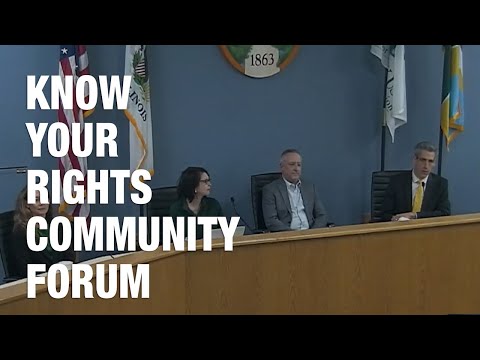
Mayor Daniel Biss introduced the session and framed the ordinance change as part of a broader city commitment to keep community members together and protected amid shifting federal enforcement practices.
The Moran Center for Youth Advocacy provided the evening’s know-your-rights presentation following the ordinance overview. Robertson Young said Evanston’s updated ordinance is among the earliest local laws in the state to include explicit protections against the use of municipal data for immigration enforcement.
The city did not announce a formal vote or implementation date during the presentation and did not provide text of the ordinance in the session transcript.