Get Full Government Meeting Transcripts, Videos, & Alerts Forever!
Get email alerts on the Electricity Dispatchability topic
No spam. Unsubscribe anytime.
Sen. King pushes system for dispatchable‑generation credits; ERCOT, PUC and advocates debate design and risks
Summary
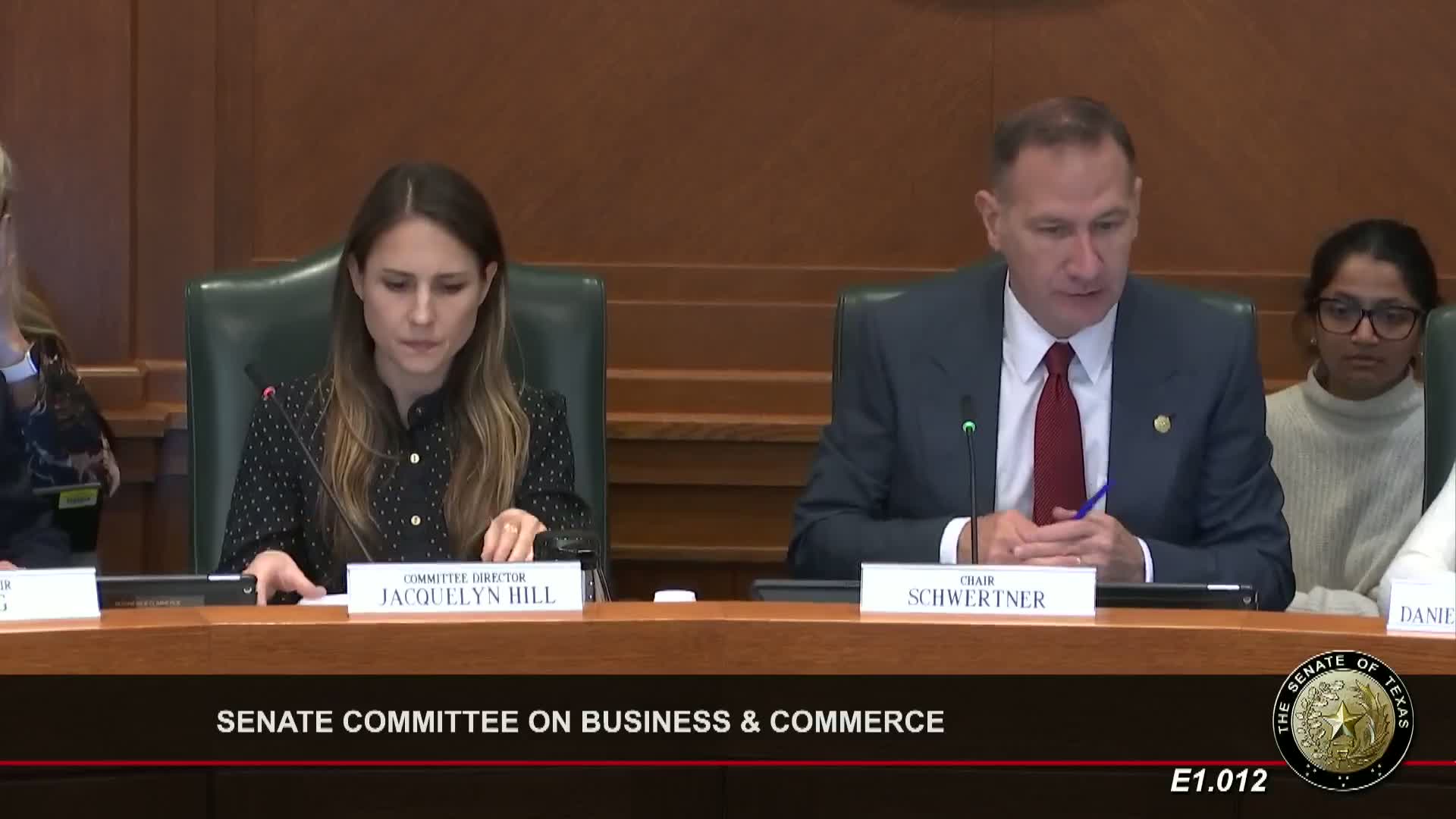
Vice Chair Sarah King told the committee SB 388 would update a 1999 statute by setting a 50% dispatchable target for newly added generation and creating a credit trading program to incentivize firm resources.
Vice Chair Sarah King presented Senate Bill 388 to update a long‑standing statutory target for natural‑gas generation by requiring that 50% of newly added system‑wide generation capacity be “dispatchable” and creating a credit trading mechanism administered under existing Public Utility Commission (PUC) rules. The first compliance snapshot would be the generation built in 2026, reviewed on Jan. 1, 2027.
King said the 1999 statute set a natural‑gas goal that excluded renewables. SB 388 would count renewables when assessing the composition of new generation and set a 50% dispatchable floor for new additions, which would trigger credit allocations and potential compliance payments if the goal is not met.
Energy stakeholders and agency witnesses discussed implementation details. Keith Collins, vice president of commercial operations at ERCOT, said dispatchable generation is needed for reliability and noted other market mechanisms are under development, including the dispatchable reliability reserve service. Barksdale English from the Public Utility Commission said a credit trading program is feasible and that a retrospective assessment of prior year builds—rather than an instantaneous math problem—would be used to determine obligations and credit allocations.
Senators and stakeholders focused on how to value batteries and other resources that are not continuously dispatchable. King and witnesses acknowledged batteries are generally considered dispatchable but for limited hours; committee members discussed downgrading credit value for shorter durations. Several witnesses recommended designing the crediting mechanism to reflect hours of firm output rather than nameplate capacity.
Opponents warned SB 388 could introduce market complexity, create contradictory incentives and encourage withholding of resources in hopes of higher credit prices later. Mark Stover of the Texas Solar & Storage Association and Adrian Shelley of Public Citizen argued market changes already underway (PUC/ ERCOT reforms after Winter Storm Uri) should be given time to work. Cyrus Reed of the Sierra Club said recent days showed high renewable penetration without reliability issues and recommended a load‑side, megawatt‑target approach rather than placing obligations on generators.
Several witnesses recommended additional safeguards: limit perverse incentives to withhold capacity, involve the independent market monitor, and set formulaic adjustments for batteries’ capacity value. ERCOT and the PUC said collaboration on rulemaking would be necessary if the bill proceeds. The committee closed public testimony and left SB 388 pending.
Ending: The hearing focused on tradeoffs between incentivizing firm, dispatchable capacity for reliability and avoiding market distortions; the committee asked agencies and stakeholders to provide technical refinements and possible substitute language.