Get Full Government Meeting Transcripts, Videos, & Alerts Forever!
Get email alerts on the Project Labor Agreements topic
No spam. Unsubscribe anytime.
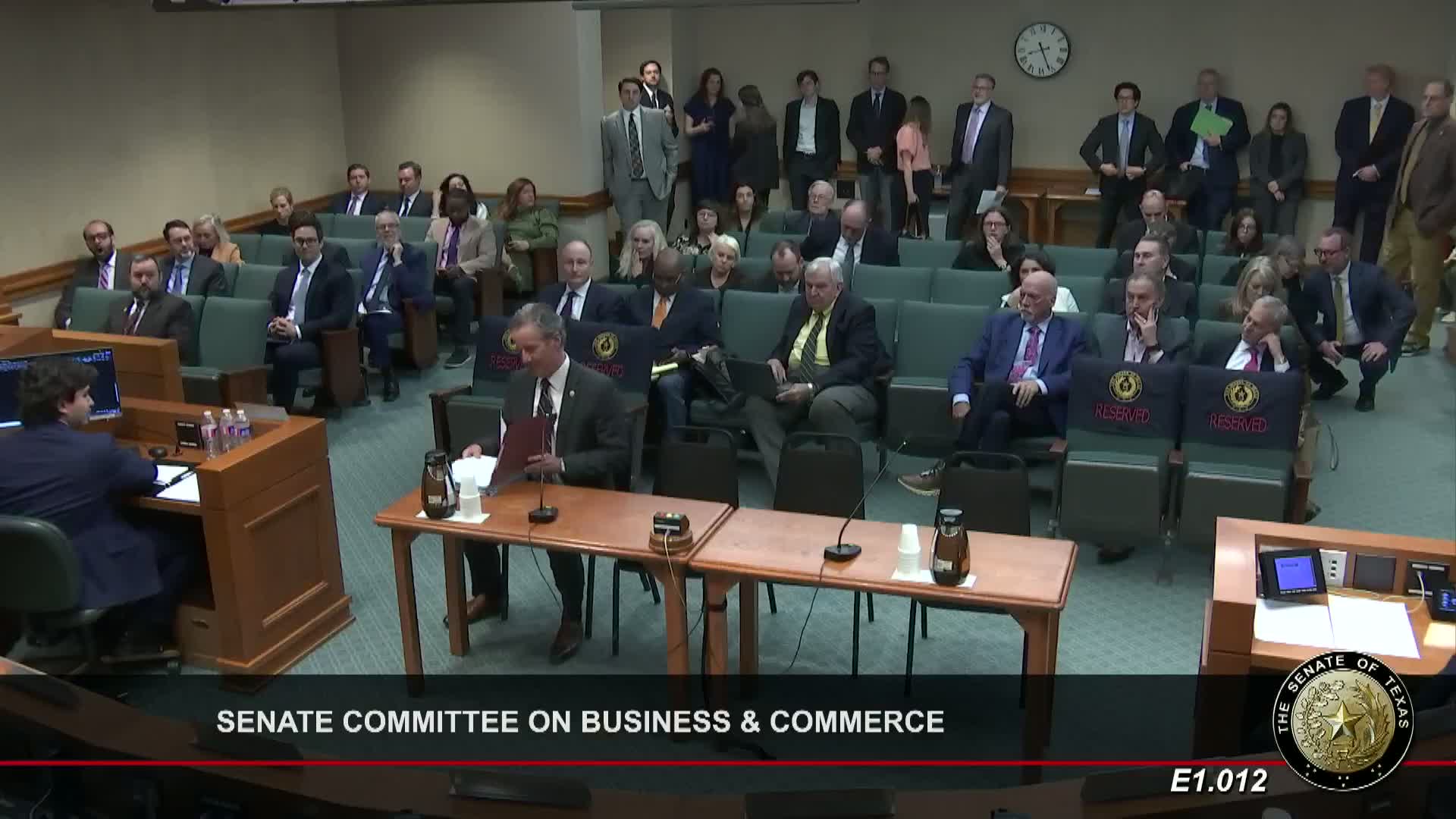
Bill to ban public funding discrimination for project labor agreements draws union and contractor debate
Summary
Sen. Hancock presented SB 925 to expand the state’s ban on discrimination based on project labor agreements so the prohibition applies to local tax dollars and certain federally matched funds.
Sen. Hancock presented Senate Bill 925, which would expand an existing prohibition on discrimination—currently applied to state‑funded public works—so that local tax dollars, government‑administered financial assistance, ratepayer funds and certain federal matching programs could not be used to require or to disfavor bidders based on project labor agreements (PLAs) or collective‑bargaining arrangements.
Hancock said the bill “levels the playing field” by ensuring procurement decisions are made on cost and competitiveness rather than labor agreements. The committee substitute under consideration clarified inclusion of federal matching dollars and defined the federal match program language used in the bill.
Opposition testimony came strongly from organized labor and PLA proponents. Rick Lord, executive director of the Texas Building Trades, told the committee PLAs increase productivity and local hiring, reduce skilled‑labor shortages on projects and require training programs that connect community college graduates to construction jobs. “Using a PLA reduces total cost by 4% and projects are 40% less likely to experience shortages of skilled manpower,” Lord said. Amanda Pawson, senior policy analyst at Every Texan, summarized peer‑reviewed research the group has compiled showing PLAs can improve timeliness, accountability and cost predictability on large public projects.
Leonard Aguilar, secretary‑treasurer of the Texas AFL‑CIO, said PLAs do not exclude nonunion contractors and support local hiring and safety protections. He told the committee the bill “ties the hands of local governments” and could reduce opportunities to secure federal or other funds that include PLA preferences.
Proponents of the bill argued the state should not limit how local governments use taxpayer dollars or local procurement tools; opponents warned the ban would prevent localities from using PLAs on large projects where they believe PLAs improve outcomes. The committee heard multiple witnesses and closed public testimony; the bill was left pending for additional work.