Get Full Government Meeting Transcripts, Videos, & Alerts Forever!
Get email alerts on the Insurance Surplus Lines Arbitration topic
No spam. Unsubscribe anytime.
Senate committee hears competing views on bill to require Texas arbitration for surplus-lines insurance
Summary
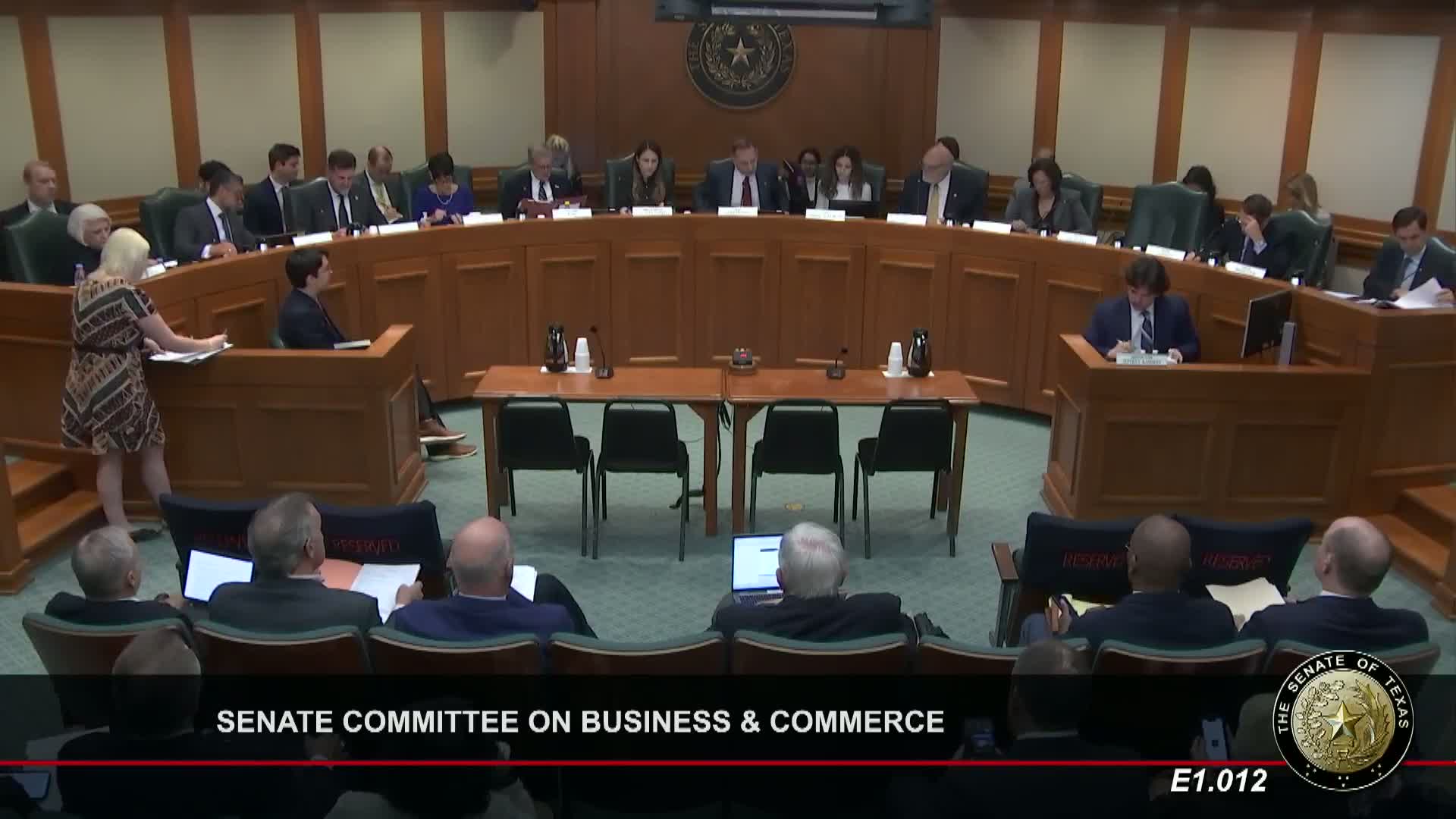
Senate Bill 455, which would require arbitration of certain surplus‑lines insurance disputes to take place in Texas and be governed by Texas law, drew extended testimony before the Committee on Business & Commerce on Oct. 12, 2025.
Senate Bill 455, which would require arbitration of certain surplus‑lines insurance disputes to take place in Texas and be governed by Texas law, drew extended testimony before the Committee on Business & Commerce on Oct. 12, 2025.
The bill’s author, Senator José Middleton, told the committee the measure is intended to keep routine dispute resolution for Texas policyholders in Texas: "For many claims, the statute of limitations for breach of contract and property damage in New York is 1 year. On the other hand, in Texas, it can be up to 4 years," Middleton said, arguing that New York arbitrations make claims "much more expensive, cumbersome, time consuming and frankly dissuade policyholders from seeking better outcomes."
The bill’s nut graf is straightforward: proponents said arbitration clauses that send Texas disputes to New York impose time and travel costs and unfamiliar law on Texas insureds; opponents said the bill is too broad and would restrict contracting freedom for large or multi‑jurisdictional commercial risks.
Testimony split along trade and consumer lines. Jay Thompson of the Wholesale & Specialty Insurance Association said surplus lines are a safety valve for hard‑to‑place risk and warned the bill "applies to all surplus lines contracts regardless of the coverage and regardless of the line," limiting negotiated freedom of contract for large commercial risks. Jeff Raisner, a board‑certified insurance lawyer who said he represents Texas school districts, described prolonged New York arbitrations and large bills: "As of today, we have written checks for over $80,000 to a New York arbitration society," he said, noting arbitrator fees and travel costs that affected a school district he represented.
Public interest and consumer advocates sided more with policyholders. Chas Bostick, president of the Texas Association of Public Insurance Adjusters, said arbitration in New York ‘‘is anything but expeditious and inexpensive’’ and argued Texas consumers should not be required to go to New York to resolve a Texas insurance claim. Several trade witnesses for surplus‑lines insurers, including Shannon Maroney of Velocity Risk Underwriters, opposed the bill as written, urging protection for freedom of contract for specialty risk markets. Maroney cited Governor Abbott’s prior veto message and warned that restricting contractual terms could increase premiums and drive surplus lines carriers away from Texas.
Committee members asked whether the bill’s scope had been narrowed compared with last session’s vetoed measure. A panelist noted the bill is attached to section 981 of the Texas Insurance Code, which generally applies when the insured’s home state is Texas: "it is not as broad as some may say; it only applies to situations where the home state of the insured is Texas," a witness told the committee.
Multiple witnesses urged compromise and technical changes. Several speakers suggested limiting the bill to risks located solely in Texas or otherwise narrowing scope to avoid affecting multinational commercial coverages and complex ocean marine or cargo risks. Resource witness Jamie Walker from the Texas Department of Insurance answered committee questions but the department did not recommend specific drafting language on the committee floor.
The committee closed public testimony and left the bill pending for further work.
Ending: Committee members asked staff and stakeholders to continue negotiating technical fixes and brought the measure forward with the bill pending to allow further drafting discussions.