Get Full Government Meeting Transcripts, Videos, & Alerts Forever!
Get email alerts on the Backyard Chickens topic
No spam. Unsubscribe anytime.
House committee holds bill that would limit HOA bans on backyard chickens after public health and local-control debate
Summary
The House Agriculture Affairs Committee held Senate Bill 10 26 in committee after hours of testimony and divided committee votes. The bill would bar homeowners associations from enforcing deed restrictions that prohibit keeping chickens on single-family lots and sets a baseline of four chickens per 0.2 acre, with other limits and exemptions.
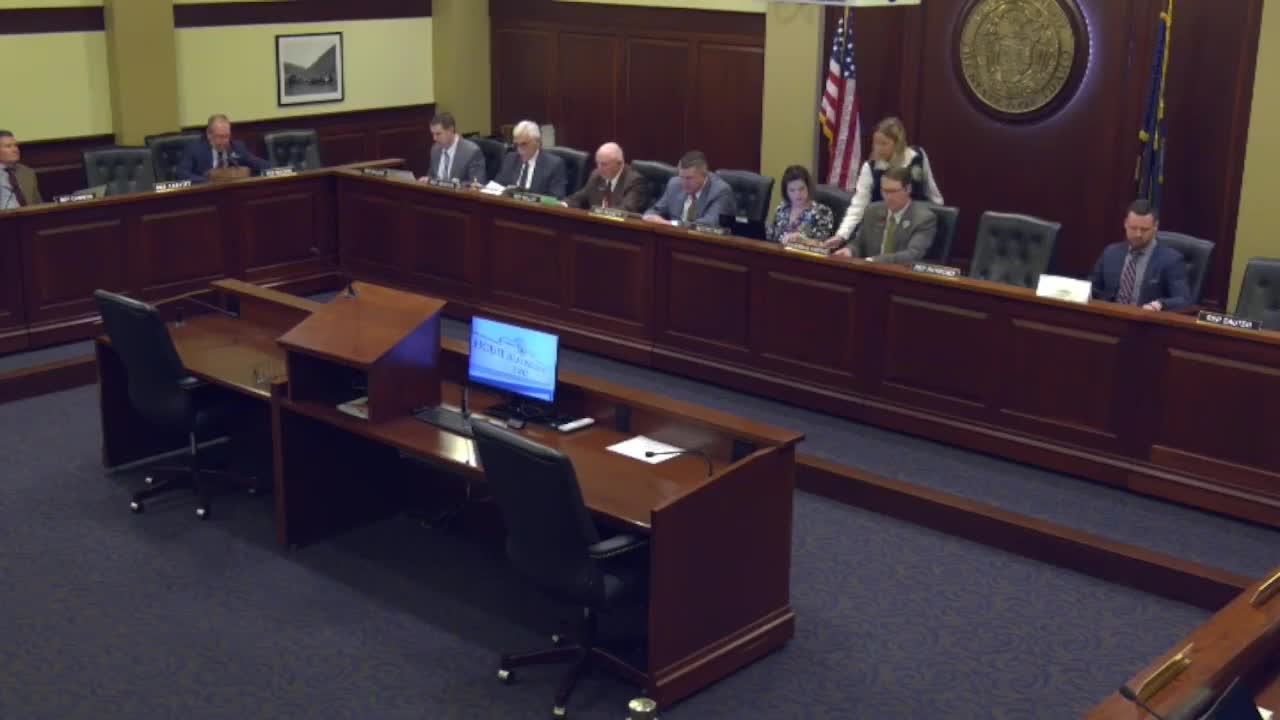
BOISE — The House Agriculture Affairs Committee voted to hold Senate Bill 10 26 in committee after members heard several hours of testimony on whether the state should limit homeowners associations’ ability to restrict backyard chickens.
The bill, introduced to the committee by Representative Steve Tanner, would prevent an HOA from using deed restrictions or covenants to prohibit keeping chickens on single-family lots. "We don't want any entity such as an HOA to be able to use deed restrictions or covenants in order to restrict the ability of homeowners to have chickens on their property," Representative Steve Tanner said when he introduced the bill. The text discussed a baseline of "4 chickens for every 2 tenths of an acre," which Tanner said would scale to 20 chickens on an acre, and allowed HOAs to adopt "reasonable rules" governing issues such as roosters, odor and other nuisances.
The measure applies only to single-family dwellings and, as written in committee, would not apply to multifamily units, agricultural zones, rural properties, farms or hobby farms, Tanner said. He also said the bill would not preempt city or county ordinances that prohibit chickens.
Why it matters: Supporters said allowing limited backyard flocks can help families offset egg shortages and teach food production, while opponents said a statewide override of private covenants would strip local control and invite public-health and nuisance problems in dense subdivisions.
Committee discussion and public testimony focused on three recurring concerns: how the bill would interact with existing HOAs and municipal ordinances, whether the language is clear enough about per-lot limits and which birds are covered, and public-health risks such as avian influenza and salmonella.
Several committee members pressed Tanner on technical and legal details. Representative Ehlers asked whether the 4-per-0.2-acre formula was a floor or a ceiling; Tanner replied that an amendment from the Senate sponsor would allow previously higher allowances to remain in effect where they already exist. Representative Dygert and others asked whether state or veterinary authorities had weighed in on disease control; Tanner said he had "not heard of any discussion" and had no documentation on that point.
Opponents who testified included William "Bill" Schultz, a former president of the Kingsbridge Homeowners Association, who said the subdivision's covenants were a major reason buyers chose the neighborhood and urged the committee to "please at least push this bill off or just kill it outright." John Osmond of Star, who testified as a homeowner, described a personal health and pet-safety concern: "That chicken poop from those neighbors on that little 0.2 acre lot killed my best friend," Osmond said, saying his dog died of kidney failure he attributed to salmonella exposure after a neighbor kept chickens in a small lot.
Scott Emerick, another homeowner in Ada County, raised questions about predators, nuisance complaints and enforcement: he asked how HOAs would adjudicate situations where a state rule allowed many birds but covenants prohibited running a business from a lot. Noel Rauschendorfer, a property-law attorney with VF Law who represents HOAs, told the committee the Idaho Supreme Court has treated CC&Rs as private contracts and said the bill would make existing covenants that restrict chickens "unenforceable." She recommended revisions to clarify the 0.2-acre language and to define terms such as "reasonable rules" to avoid litigation.
The committee debated three competing motions after closing remarks from Tanner and others: one motion (moved by Representative Dygert) to hold the bill subject to the chair's call until Senate Bill 10 63 (a trailer bill that Tanner said would replace and clarify part of the language) could be considered with it; a substitute motion (moved by Representative Ehlers) to send SB 10 26 to general orders so amendments could be added there; and an alternate motion (moved by Representative Nelson) to hold the bill in committee. The committee conducted a roll-call vote on the amended substitute motion to hold in committee; the motion passed 8 to 7 and the chair announced the bill would be held in committee.
What was decided: The committee recorded an 8-7 vote to hold Senate Bill 10 26 in committee. No substantive policy changes were adopted at the hearing; members asked for clarifying language, and supporters and opponents indicated they wanted SB 10 63 or other edits available for future consideration.
Background and next steps: Tanner told the committee he could add the Senate sponsor's amendment and that proponents want to include the trailer bill's language; several members said they preferred to see the trailer bill before taking further action. The committee can bring the bill back by majority vote or consider it again if and when the trailer bill is available.
The hearing included extended public comment and multiple technical questions from committee members; the committee adjourned after the roll-call vote to hold the bill.