Get Full Government Meeting Transcripts, Videos, & Alerts Forever!
Get email alerts on the Agriculture Seed Commissions topic
No spam. Unsubscribe anytime.
House panel advances bill to change Alfalfa and Clover Seed Commission makeup and cap assessment at 1 cent
Summary
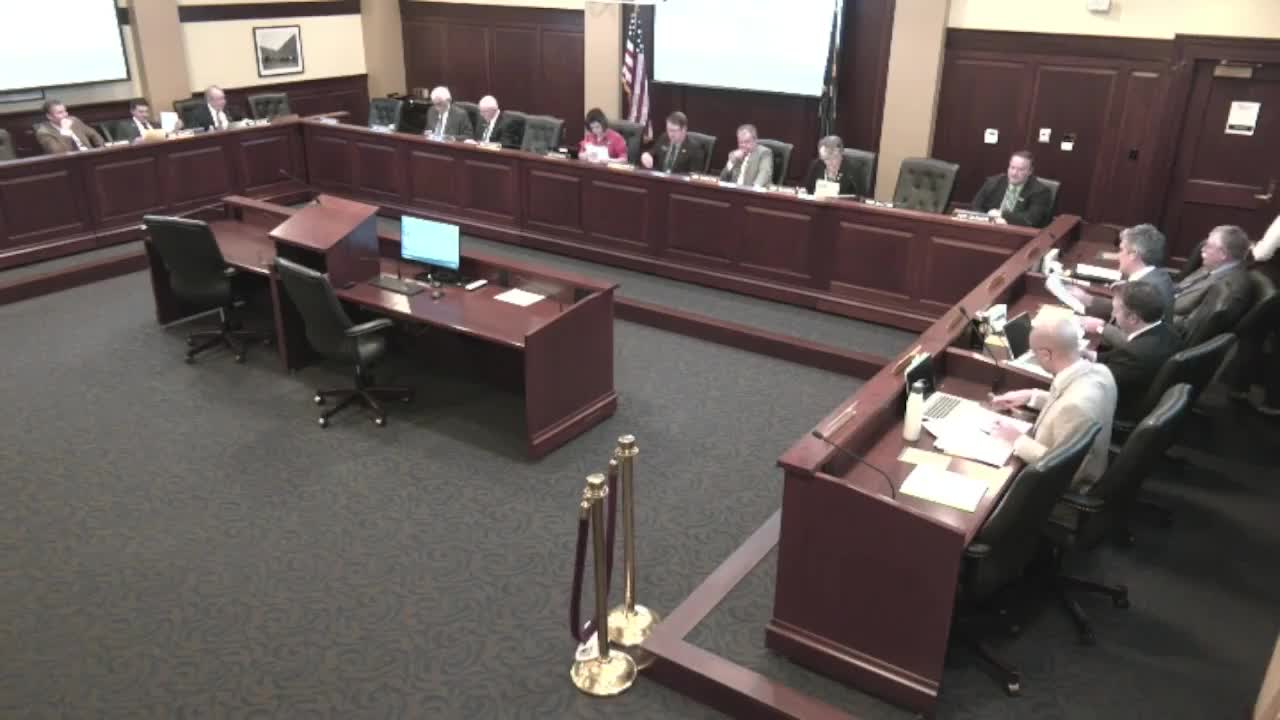
The House Agriculture Affairs Committee voted to send House Bill 173 to the floor with a due-pass recommendation after sponsors and industry representatives described shrinking membership and a proposed cap on a per‑pound assessment to support research, education and national representation.
Representative Sean Deigert, sponsor of House Bill 173, told the House Agriculture Affairs Committee that the bill would change the composition of the Idaho Alfalfa and Clover Seed Commission and cap a per‑pound assessment at one cent.
"House Bill 173 is relating to the alfalfa and clover seed commission," Representative Sean Deigert said, describing proposed membership changes that would reduce the number of grower positions and add a dealer seat and a University of Idaho seat. He said the commission would go from six to seven members, with five growers, one University of Idaho representative and one dealer.
The bill would also change the commission’s assessment structure. "The assessment is gonna go from 1 fourth cent to a cap of 1¢," Deigert said. Committee testimony clarified the commission’s current assessment level and the role of an existing statutory safety valve: the commission’s current assessment was described during the hearing as 0.005 (a half‑cent), and HB 173 would set a single ceiling of one cent per pound while allowing increases between the current level and that ceiling.
Rick Whateley, identified as administrator of the Idaho Alfalfa Clover Seed Commission and executive director of the Bridal Alfalfa Clover Seed Growers Association, told the committee the industry has shrunk and the commission has had trouble filling board positions. "We are have shrunk so small in our production due to the growth of urban development and some other factors," Whateley said, explaining why the commission proposed reducing the number of grower members. He also gave a brief history of recent emergency legislation that added clover to the commission’s remit following litigation involving a seed company.
Paul Raskershek, a farmer from south of Nampa, testified that national membership dues and work with the National Alfalfa Forage Association (NAFHA) consume a majority of the commission’s budget and said the proposed increase would help cover those costs and support entomology work at the University of Idaho. "We need to maintain our relationship with our local grower group with help funding and working on projects with the U of I with an entomologist," Raskershek said, citing insect control as a major industry concern.
Committee members asked technical questions about the bill’s assessment language. Representative Cannon asked why the bill wording appeared to remove an intermediate safety increase and whether the measure would prevent future increases; Representative Deigert explained that the current assessment is already at 0.005 and the bill would allow increases up to the one‑cent cap while removing the separate half‑cent safety clause.
Representative Miller moved that the committee send House Bill 173 to the floor with a due‑pass recommendation. The motion carried on a voice vote; the committee recorded no roll‑call tally in the hearing transcript. Representative Deigert will serve as the floor sponsor.
Because the assessment is collected at the first point of sale, Whateley told the committee the commission cannot practically collect from small private sales and instead collects from a small number of dealers. He said dealers are generally compliant and that the commission has long offered refund procedures for those who object to assessments.