Get Full Government Meeting Transcripts, Videos, & Alerts Forever!
Get email alerts on the Water Resources topic
No spam. Unsubscribe anytime.
Legislative budget panel hears water resources request for staff, $30 million ongoing recommendation
Summary
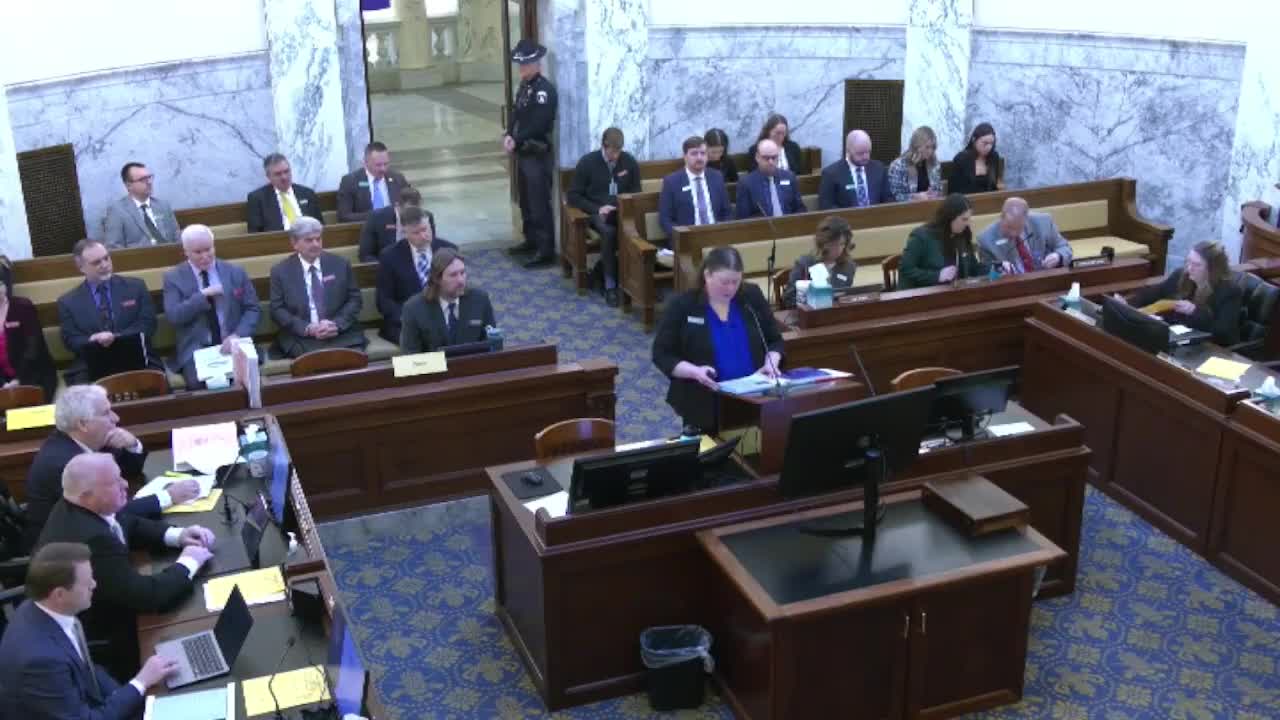
The Joint House and Senate budget committee on March budget session heard a presentation from the Idaho Department of Water Resources and the Idaho Water Resource Board on the agencies' budget, project commitments, and staffing needs.
The Joint House and Senate budget committee on March budget session heard a presentation from the Idaho Department of Water Resources and the Idaho Water Resource Board on the agencies' budget, project commitments, and staffing needs.
The presentation outlined that the department and board are administering large, multi‑year water projects funded in part by American Rescue Plan Act (ARPA) state fiscal recovery funds, and that the governor recommended adding $30,000,000 in ongoing general funds to the department's base to support water projects. Janet Jessup, budget and policy analyst with legislative services, told the committee the agencies' materials are available on SharePoint and pointed lawmakers to the natural resources section of the legislative budget book.
Why it matters: committee members pressed department leaders on how quickly large appropriations can be spent, which projects are already committed, and whether the department has sufficient staff to meet increased administrative demands tied to basin adjudications, water‑district creation and expanded recharge work.
The department said much of the agency's recent spending increase in fiscal 2023 resulted from ARPA allocations. Director Matt Weaver and Idaho Water Resource Board Chairman Jeff Raybould described projects funded from the water management account and other dedicated funds and answered lawmakers' questions about balances and loan activity.
"That ending balance at the end of fiscal year 2024 was $293,000,000," Weaver said when describing the water management account's cash position, then added that committed funds—for projects the board already approved—total about $290,000,000, leaving roughly $29,000,000 uncommitted. Weaver also told the committee, "we know of $213,000,000 worth of projects that we've identified that currently don't have any funding" on the board's statewide list of water sustainability projects.
Raybould enumerated projects the board has supported from the water management account and ARPA money: "It's going in lots of different places, coupled with ARPA funding. It's going to places like, some of it's going to Mountain Home Air Force Base, water supply project... Anderson Ranch raise... pipeline out of Dworsha Dam to the fish hatcheries... work on additional storage in Bear Lake... Priest Lake water management project... loans... groundwater to surface water conversions." He also described loans and grants made to local districts, reuse and conversion projects, and engineering and planning work that can delay outlays.
Staffing and administration: Weaver asked for five additional full‑time positions (FTEs) to create a Water Administration Bureau by pairing the five requested positions with about 11 existing staff now inside the water compliance bureau. Weaver said the five positions would include a bureau chief, resource agency liaisons, and a technical records specialist to help the department meet demand for formation and support of water districts and to fulfill administrative requirements stemming from basin adjudications and a recent settlement in the Eastern Snake Plain area. "The 5 new positions... contain a FTE for a bureau chief who would run that bureau, a couple of resource agencies, and then a technical records specialist," Weaver said.
Recharge and longer‑term needs: committee members pressed the department on recharge goals for the Eastern Snake Plain Aquifer (ESPA). Weaver and Raybould discussed raising the average annual managed recharge target in the aquifer management plan from 250,000 acre‑feet to 350,000 acre‑feet and the need for more recharge capacity and conveyance to deliver high‑volume, short‑duration runoff into storage basins or injection wells. "We have focused a lot of attention on the Eastern Snake Plain," Weaver said, and described recent state and private recharge and pumping reductions that together averaged about 600,000 acre‑feet of aquifer management activity annually over 2016–2024.
Spending cadence and loans: lawmakers asked how long funds remain in accounts before being spent. Weaver and Raybould explained large capital projects commonly require engineering and phased payments, so board commitments can remain as committed balances for several years while work proceeds and funds are sent as milestones are reached. Raybould estimated roughly $20,000,000 of water management account money is out in loans and that the revolving development account had roughly $23,000,000 outstanding in loans.
Other budget items described: Jessup noted the department spent a large share of personnel dollars in 2024 (~87%), and that ARPA state fiscal recovery funds made up nearly 74% of operating expenditures in one chart illustrating fiscal 2024 outlays. The department also requested ongoing funding for ArcGIS license increases ($58,500), a public information officer (repurposed vacancy), and a second year of a Laserfiche forms conversion (one‑time request Jesse corrected should be shown as one‑time).
What was not decided: the hearing was a briefing and Q&A; committee members discussed the governor's recommendation and agency requests but did not vote on appropriations. Committee members asked for follow‑up material, including the project's statewide list of unfunded projects and more detail on committed balances.
Looking ahead: lawmakers requested more detail about projects, timing and the department's plan to spend large appropriations; the department pledged to provide project lists and balance detail and said it will continue working with local water users, districts and federal partners to advance engineering and construction work.