Get Full Government Meeting Transcripts, Videos, & Alerts Forever!
Get email alerts on the K12 Funding topic
No spam. Unsubscribe anytime.
JFAC hears statewide public school support budget as enrollment-based units fall
Summary
Legislative analysts and the state superintendent told the Joint Finance-Appropriations Committee that changes in how student counts are measured, the end of federal COVID funding and statutory formula mechanics are driving a drop in support units even as total appropriations remain large.
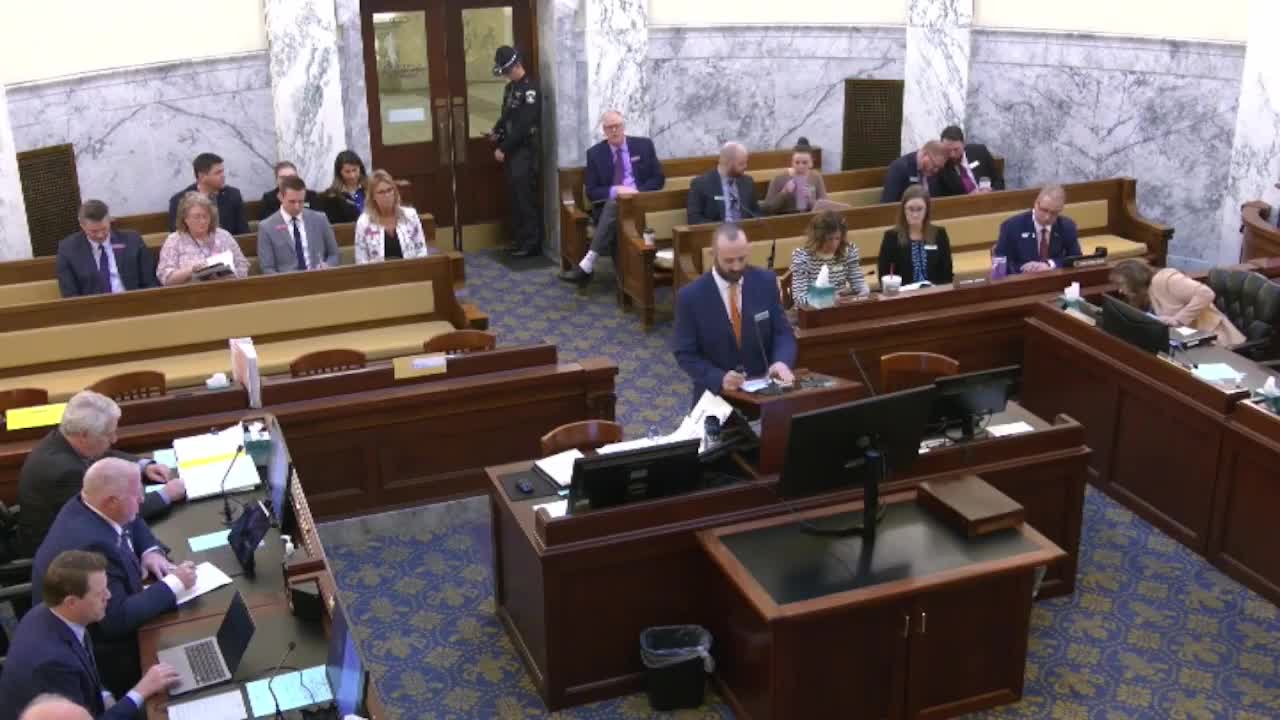
Jared Tetrault, deputy division manager with the Legislative Services Office Budget and Policy Analysis Division, told the Joint Finance-Appropriations Committee on March 4 that Idaho’s public school support program is seeing fewer "support units" even as overall dollar appropriations remain high.
Tetrault said the state funds public schools through statutory formulas in Idaho Code Title 33 and noted the program covers 115 local school districts and roughly 75 charter schools. He said the state funds 1.55 full‑time equivalent positions per support unit and that the average amount per support unit is about $147,000.
The change from enrollment-based to attendance-based counting, required under Idaho law, is one driver of fewer funded support units, Tetrault said. He explained that during the COVID period the hybrid counting method temporarily raised counts to roughly 98–99 percent of enrollment; reverting to attendance has produced statewide rates nearer 94–95 percent and thus fewer support units in the current year.
That decline in support units has pushed some dollar changes across budget lines: career ladder allocations, salary‑based apportionment for administrators and classified staff, discretionary funds, and pupil transportation all reflect population‑forecast adjustments, Tetrault said. He also described the Public Education Stabilization Fund (PSIF) as the reconciliation mechanism: under‑appropriations can draw from PSIF and over‑appropriations are deposited back.
Tetrault walked members through the budget “big sheet,” showing general fund, dedicated fund and federal fund totals. For the current year he listed roughly $2.7 billion in general fund appropriation for public schools, about $277 million in dedicated funds and about $260.6 million in federal funds. He said about $99.9 million in the current year remains the last of COVID/ARPA dollars in the public schools budget.
Committee members asked how support units can fall while enrollment is steady. Tetrault reiterated that the grade‑level divisors that define a support unit differ by elementary and secondary levels: the number of pupils needed to generate a unit changes as students move between grade bands. He also reiterated that health insurance funding is allocated per staff allowance rather than per full‑time employee, and that districts set actual salaries locally.
Superintendent (name in transcript variably recorded) expanded on use of federal ESSER funds and recent district practice. She said many districts used one‑time federal funding for personnel and that the state is now near the end of that funding stream; she said in fall 2023 she advised districts to plan for the federal funds’ end. She also described the school district facilities fund (House Bill 292) and the $1 billion maintenance allocation that districts may spend over up to 10 years under submitted plans.
Why it matters: the shift in counting method, the removal of one‑time federal funding, and statutory distribution formulas can change how much money flows to districts even when student headcount is similar. The committee will decide appropriation levels and whether to treat newly continuous funds differently in future budgets.
Tetrault and the superintendent provided follow‑up offers to supply district‑level breakdowns of facility distributions, counts of employees covered by the state health plan, and a more detailed breakdown of federal versus local revenue in district budgets.